Fear of tattoo regret is fear of a well-lived life
Outgrowing a tattoo doesn’t mean we failed, it means we lived.
By JACKSON SNEERINGER
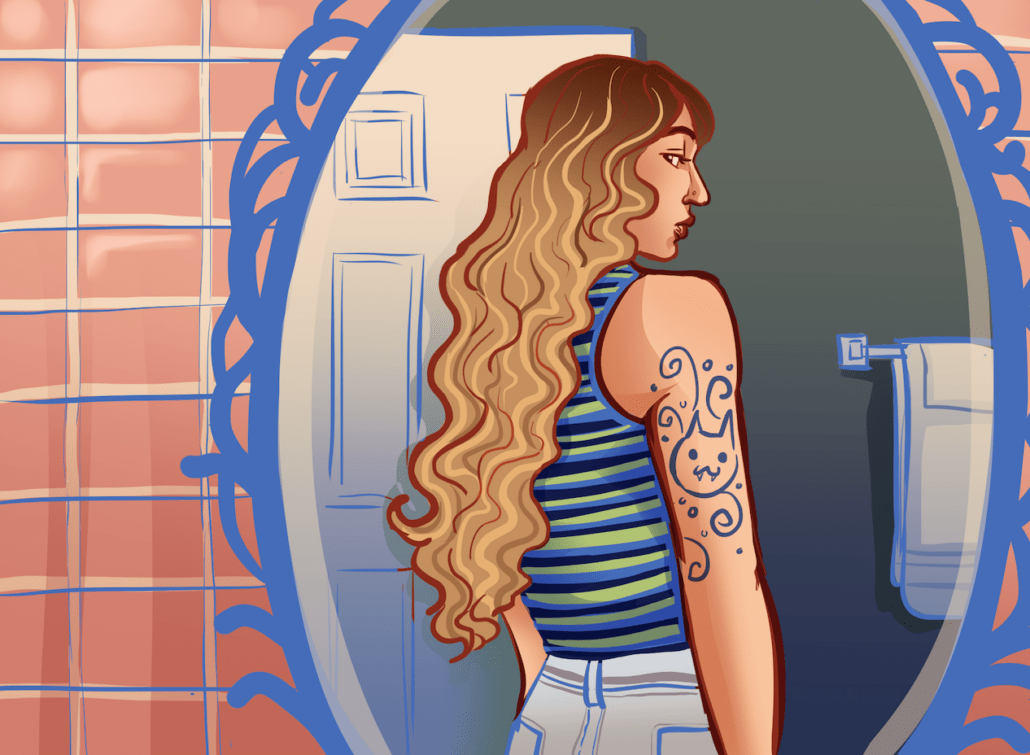

Outgrowing a tattoo doesn’t mean we failed, it means we lived.
“Do you regret any of your tattoos?” “You’re going to regret those when you’re older.” “What are you going to do when you start to regret them?”
Regret. Regret. Regret.
This is what some people, particularly older folks, seem to focus on when they see my tattoos — their belief that I’ve made an irresponsible and irreversible mistake on my body. The conversations become my personal Judgment Day, where I must justify my life choices leading up to the permanent ink.
As the proud bearer of four tattoos, I don’t see myself ever regretting them. I may not always like them, perhaps as they age and fade away, but I will never hate them to the point I regret getting them in the first place.
One of the most common causes for tattoo regret is not liking the design anymore, with factors such as the skill of the artist and placement also kindling dissatisfaction. Though, the way I see it, factors as menial as the sharpness of the lines or how far up the arm the tattoo is aren’t enough to make someone regret it — there is a deeper basis for why people don’t want their tattoos anymore, and it is because they are not comfortable with the permanence of who they used to be.
There is a reason why over 50% of individuals who regret their tattoos started getting tattooed during the ages of 18 to 25 — who we are at 18 is not who we are at 24, and is not who we are at 30. However, the tattoos we got when we were younger reflect a version of us that once was, or even partly still is. That permanent, visible reminder of who we used to be is where people’s regret stems from, with emphasis on the visible.
It is much harder to dismiss the past when it is drawn on your arm for anyone to see and judge. However, holding the mentality that we should be erasing our past decisions to appear polished or in accordance with the latest popular aesthetic pushes society’s perception of us as the most important factor in who we are, or at least, who we appear to be.
I refuse to curate myself and my identity based on how people perceive me because I know my present doesn’t necessarily define my future, but it is integrated into the layers of who I will become. Complexity is not a flaw.
Only one of my tattoos has a solid assigned meaning — a tribute to my family. My other three, while not completely random in design, were chosen primarily based on aesthetics. Still, they all are a reflection of the person I am and the situation of my life at the time I got them — where I lived, what I was doing with my time, who my friends were.
The ink memorializes the freedom and spontaneity I have at 18 that I would be remiss to abandon later in life, regardless of whether I look back on the specifics of the designs or placement with some rue. That is not to say I’ve never had moments of doubt. After my first tattoo, I had a moment of what is known as tattoo shock, or a brief period of unease or regret over new ink.
I chalked it up to the sudden revelation that I had just changed my body permanently — and in a way that will literally outlive me. It didn’t help that my parents were always vocally opposed to tattoos and gave me consistent “you’ll regret it” spiels.
However, being able to accept a significant change to my body prepares me for the inevitability of life changing rapidly and permanently. If I couldn’t fathom having an ode to my family on my ribs forever, I wouldn’t want to know how I would respond to more drastic changes, such as illness, loss or aging, which are not only permanent but occur without permission.
My tattoos are a controlled, chosen practice in sitting with permanence without constant, existential dread to fully experience a body and life that never remains static, and without fear of making monumental decisions.
So, to everyone — past, present and future — who asks “what if you regret them?”
So what?
We all have regrets, and if my greatest one is getting a permanent blue fish on my wrist, I think I’ll be okay. We cannot assume to live a meaningful life without outgrowing parts of ourselves as time passes. Don’t let the fear of regret stop you from fresh ink; we should be comfortable with who we used to be, especially if it is of something that mattered enough to be recorded forever.