CHRONICALLY ONLINE
The Best New Artist performances were mostly that bad
The Grammy Award category reflected an imbalanced range of experience among the nominees.

By ANNA JORDAN
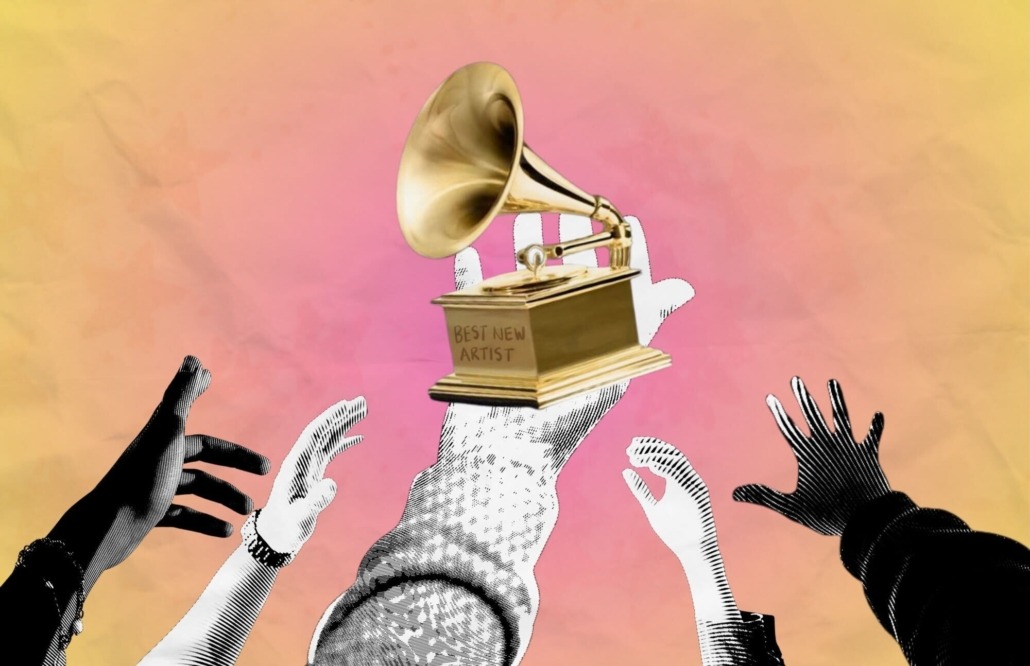

The Grammy Award category reflected an imbalanced range of experience among the nominees.
Every year, no matter who is nominated or who wins, Grammy discourse always finds its way to a single question: “Why is the Best New Artist Category even called that? That nominee isn’t even new.”
It’s a valid question; every year, there is almost always a nominee who made a name for themself at some previous point in their career. This year, it was The Marías. In the past, it’s been veteran artists who have had a breakout into pop culture, whether it’s child stars like Sabrina Carpenter and Coco Jones or international mainstays like Måneskin.
So, by the time the artist is nominated, the people have had their fill and want to see someone fresh, someone who adheres to the literal meaning of the category’s name. But in reality, “new” has nothing to do with what the Grammys are looking for.
If renaming the category “Best Breakout Artist” wouldn’t lower the amount of complaints surrounding already established musicians being nominated for the category, butter my butt and call me a cracker.
My suggestion is a better description of what the Grammys themselves have identified as the goal of the category, which is to “highlight newcomers” who have both “achieved a breakthrough into the public consciousness” and also “impacted the musical landscape during the year’s eligibility period.” Notice that it’s not just about having a singular breakout moment, which is what the Grammys inaccurately chose to describe as being “new,” but also about impact.
There are plenty of artists who gain traction for the first time in their careers during a Grammys cycle. Still, only a select few manage to do so while also redirecting or redefining the musical discipline from which they emerged, and an even smaller number can defend their nominations with an impressive live performance at the competition evaluating them.
Several of this year’s performances did hold their own against Best New Artist’s standards, already set high by last year’s batch: Olivia Dean’s set made me, a die-hard Marías fan, accept her win without much ado. She’s a wonderful example of someone playing to her strengths without being generic, an acoustic black sheep in a world currently obsessed with over-produced electro-pop.
Similarly, my beloved Marías and Best Pop Solo Performance winner Lola Young let themselves stay rooted in the moment; they are performers behind their instruments who still bring a sense of dynamism that keeps viewers interested in the emotional highs and lows of the performance.
These performances also landed because those artists aren’t too new — and yes, there is such a thing within a category incorrectly featuring the word “new” in its name. The Marías have had time to figure out who they are on and off stage, as have Lola Young, Olivia Dean and Leon Thomas, someone who’s been writing hits for years but chose to embrace their solo act for a change.
As someone trying to shed some of the hater spirit in my heart, the remaining performances from the Best New Artist nominees aren’t helping. If those clips show up on my For You page, you better believe I’m going to watch them all the way through, shaking my head and tsk-tsking through my pitchless vocal cords.
I can criticize their performances all I want, but at the end of the day, the nominees’ inability to fulfill the second half of the category’s requirements reflects more on those who nominated them in the first place than the artists themselves.
Technical difficulties aside, the only cultural impact that Alex Warren’s performance had was making me giggle while remembering the “9-1-1” ad where massive balls of fire fall from the sky and first responders prepare to address an Avengers-level threat.
KATSEYE and Addison Rae’s performance felt better-suited to the Kids’ Choice Awards and was more about cult fandom than the artistic impact of their discographies. Sombr’s vocals were great, but his stage presence and lyricism leave something to be desired — things that would be developed by more time spent on stage, if not for his overnight, gargantuan virality.
For a breakthrough to happen nowadays, the artist needs to receive a quantifiable magnitude of attention; as a result, lots of breakthrough artists had a viral moment. To a degree, it could be argued that all of them did.
Alternatively, artists like Mk.gee, Ravyn Lenae, MJ Lenderman and Djo also had relatively sizable or impactful breakouts in their respective areas and are all early on in their careers, but were ignored in favor of their more viral counterparts.
Streaming statistics certainly factor into the size of the public consciousness, but virality often catches artists early in their careers and doesn’t allow them to develop enough to fulfill that crucial impact clause essential to the Best New Artist category. The Grammys need to identify the person with the most impactful breakthrough rather than centering on numbers if they want their Best New Artists to stick around.
It might seem picky to require both, but award shows are — or should be — all about prestige, celebrating the best of the best. Next year, I hope they let a few artists’ careers breathe before thrusting them into the spotlight — and change the name, damn it!
Anna Jordan is a junior writing about pop culture controversies in her column, “Chronically Online,” which runs every other Thursday. She is also Chief Copy Editor at the Daily Trojan.