Liking what everyone else likes is not a crime
Tearing down popular eateries in the name of taste misses the bigger picture.
By LAYAN ALASSEEL
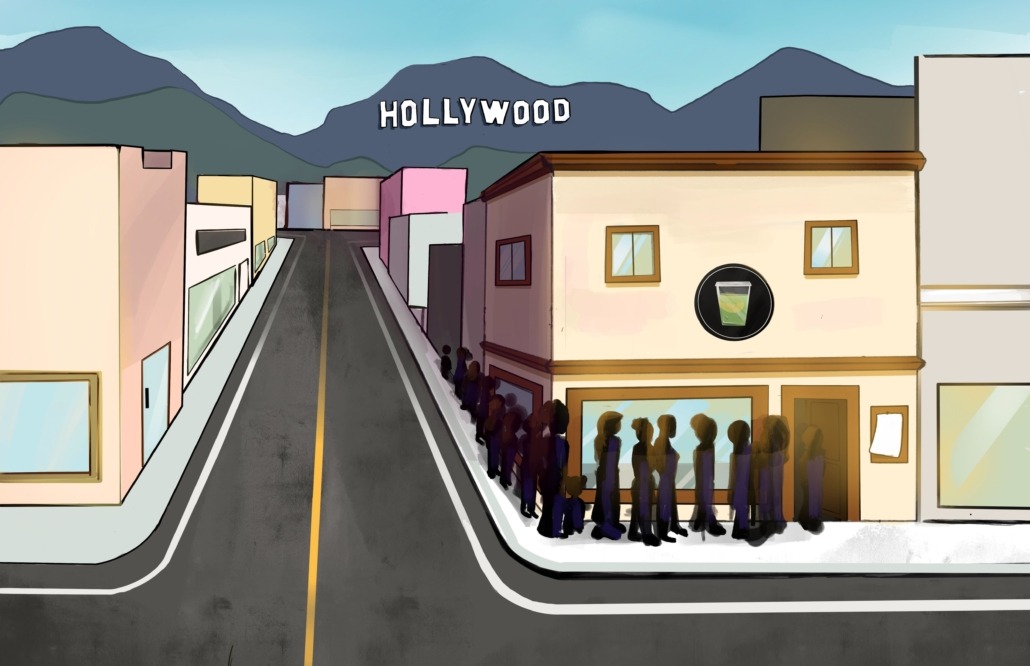

Tearing down popular eateries in the name of taste misses the bigger picture.
Recently, my Instagram explore page has taken an unfortunate leap from aesthetic cafe snapshots to food review wars. Among them, a series titled “L.A. fine dining is a scam, and I’m done pretending it’s not” by @comfywithkerry caught my attention, largely because of its overly dramatic approach to criticism.
In several review videos of popular food spots, the creator takes a bite and promptly rejects it in the name of proving these spots don’t deserve their fame or their price tags. Meanwhile, she lavishes praise on small businesses, depicting a clear contrast between “overhyped, overpriced” eateries and hidden gems.
In one video, for example, @comfywithkerry takes a bite of a popular cafe’s kale Caesar wrap and is almost disgusted as she picks it apart, while in another, she gushes over a hole-in-the-wall Himalayan dumpling spot.
However, if these critiques were truly unbiased, the pattern wouldn’t be so predictable. Yet nearly every widely loved spot receives the same verdict: overrated, overpriced, undeserving. The comments often tell a different story, with viewers insisting they genuinely enjoyed the very dishes being dismissed.
In response to the backlash, the influencer has dismissed responsibility and hate comments by framing the reviews as nothing more than “personal opinion.” But when someone has over 60,000 followers, their opinions are no longer inconsequential; they can genuinely shape their followers’ behavior.
Many may rethink where to eat based on a single viral Instagram review, or feel invalidated simply because a viral video criticized a dish they loved. At that scale, taste critique turns into influence — whether the creator intends it or not.
Still, I wasn’t surprised at the content of these videos. According to the unspoken rules of the online foodie scene, the more obscure your recommendations, the better your palate must be. I mean, someone who’s spent years hunting down every taco hole-in-the-wall would never admit they like Taco Bell, right? But I believe that liking something popular doesn’t make your taste any less valid.
Instead of random disagreement, we’re left with a clear trend in food reviews: mainstream equals suspect, and popularity signals that an eatery has been “compromised” for the sake of hype and profit. In this way, many influencers redirect systemic critiques of capitalism and corporate consolidation into a judgment of taste-based superiority.
Popular chains and restaurants are not inherently evil, but because of their association with corporate ownership and high-profit margins, they are treated as symbols of moral compromise, while a tiny artisanal shop is elevated to ethical heaven simply because it is lesser-known.
By equating popularity with ethical failure, we obscure the structures that actually deserve scrutiny. It’s easy to fling insults at the “undeserving” crowded brunch spot; it is harder to grapple with why harmful labor conditions and corporate practices exist and how to dismantle them. The former is just a way to signal being “woke,” without actually engaging with systemic issues.
As a result, today’s ethical expectation to support small businesses or niche creators — a positive and meaningful act — has come with a requirement to knock down anything that’s widely loved.
Nowhere is this trend more evident than in Los Angeles, where food culture is as performative as it is passionate — obscure matcha orders become aesthetic identity markers, and dining out often doubles as content creation. In that environment, liking what everyone else likes can feel like a loss of individuality. So, rejecting the mainstream for local shops can be a way to stand out.
Now, don’t get me wrong. Supporting small businesses is an incredible act, one we should be influenced to participate in. In a city like L.A. — where rising rents and social media algorithms that favor big brands already make survival difficult for small businesses — directing attention and dollars toward local small businesses is vital.
That support is especially meaningful when directed toward immigrant-owned establishments that sustain cultural traditions, while operating with far fewer resources than corporate competitors.
But such efforts don’t have to come at the expense of tearing down popular cafes and restaurants, nor does it require turning personal taste into a moral ranking system. In this way, we lose sight of the systemic forces shaping the food industry and replace meaningful critique with self-proclaimed judgment.
Ironically, in attempting to support small businesses by tearing down popular ones, some influencers amplify the very inequalities they claim to oppose, shaping consumer attention based on hype cycles rather than thoughtful critique.
Advocacy shouldn’t pit popularity against morality; it should recognize that both niche and widely loved establishments can coexist and contribute to local culture, thereby deserving nuanced consideration. Rather than amplifying negativity, money, and social media attention toward popular spots, those resources could be redirected to uplift small businesses — highlighting their stories and offerings.
L.A.’s food scene, like its culture at large, is too rich to reduce to a binary of overhyped versus “lowkey.” By overzealously tearing down the mainstream, we risk missing the very experiences, stories, and flavors that shape the city we know and love.