Writers need to persist, now more than ever
We need defiance and originality, despite threats to deter journalism.
By SHRUTHI NADATHUR
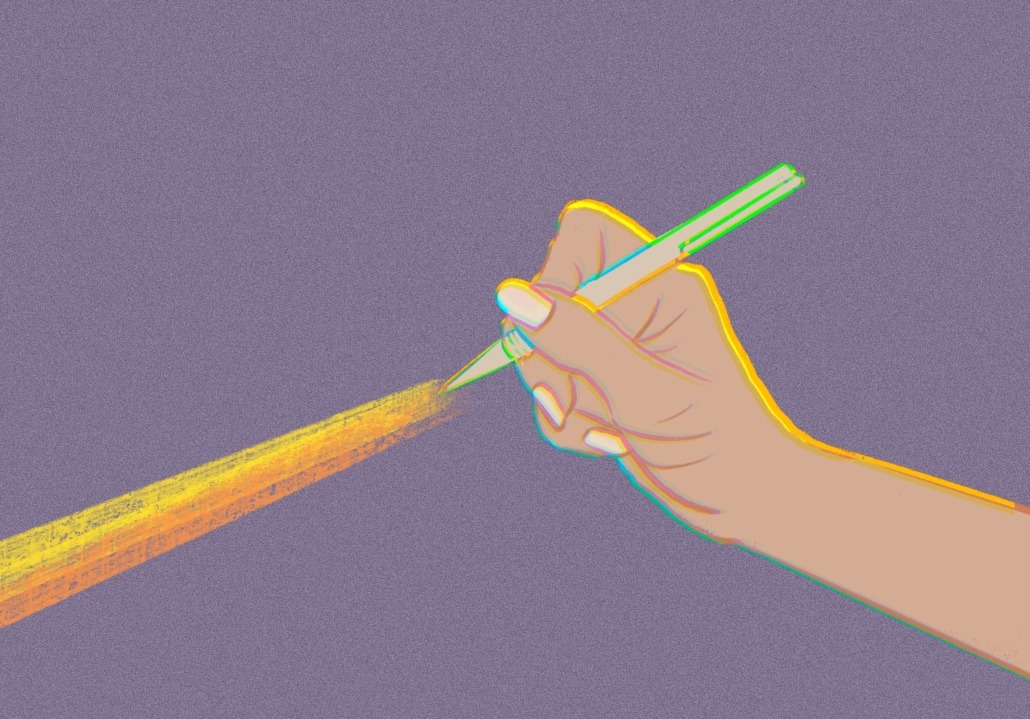

We need defiance and originality, despite threats to deter journalism.
Sitting in my journalism classes at USC, I feel inquisitive — ready to grasp the weight of what a writer can do. We dissect headlines on contemporary issues, and I am constantly eager to comprehend the power of the press. Thus, through academic experiences, I, along with other journalism students, grasp the importance of factual storytelling.
Being surrounded by like-minded students who explore the art of storytelling and comprehend its significance as a public responsibility only urges me to keep writing, knowing that I’m uplifting other perspectives through my voice. Yet, when I leave the classroom and enter real-world discussions, this optimistic message is contradicted.
We live in a time when journalism is threatened, with a specific target on truthful storytelling, which treats writing as an expendable skill. Reporters who ask rigorous questions are scrutinized by lawmakers, undermining accountability and the representation of public interest.
The growing tension against journalists denotes a contraction in civic liberties. In December 2025, the CIVICUS Monitor, a research tool that analyzes civic society freedoms in 197 countries and territories, downgraded the United States’ civic space rating from “narrowed” to “obstructed,” citing threats against media freedom and peaceful assembly.
This timing falls directly under the commencement of President Donald Trump’s administration, in which he and other political officials continue to disregard the public interest by exploiting their power against journalists.
During a Dec. 8, 2025 news conference, Trump made blatantly disrespectful comments towards ABC journalist Rachel Scott, when he referred to her as “obnoxious” and a “terrible reporter.” This was a direct response to her question regarding a video of a military strike on a Venezuelan boat: “Are you committed to releasing the full video?”
Reporters are conditioned to uncover blind spots and to stand against obscurity, especially regarding public safety and government accountability. Publicly belittling and name-calling Scott not only insults her credibility but also signals that scrutiny is unwelcome. The irony remains: the threatening rhetoric from lawmakers sends the message that journalists must remain complacent.
The pressure doesn’t derive solely from public officials; it also emerges from rapid technological shifts that shape how writing is produced. The rise of artificial intelligence promotes indolent habits among journalists, with tools that generate articles and evidence within seconds; yet dangers arise as these mechanisms prioritize efficiency rather than creative, individualized storytelling.
There is also diminished demand for people to learn to write as artificial intelligence advances, as supported by a study by Education Week. By examining classroom habits, AI has made impossibly fast writing to meet tight deadlines possible by removing all human voice and “hallucinations.”
We are promoting a world that devalues critical thinking and rewards robotic rephrasing. Studying the art of storytelling is being lost in a world that esteems the result, not the process of creating it. AI is presented as the easy way out; however, this contradicts all commitment to verification and public trust.
With such barriers that threaten the resourcefulness of writing, persistence is critical. Journalism isn’t comfortable; through tough questions and reporting on convoluted crises, journalists are prompted to pursue the truth. When there is substantial external pressure to crack down on pursuing journalism, it is difficult not to be deterred from that dream.
As students and writers at USC, we possess the power to promote public awareness. Student reporters can uplift stories that would otherwise go undercovered — as evidenced by Annenberg Media investigations uncovering mold in the dining hall, posing a serious public health risk, and the Daily Trojan’s report revealing that USC reached 1,000 layoffs.
Our stories must not disappear into a void. Writers must continue facilitating pieces that bring forth complex ideas. Journalists are not the only ones affected by such dynamic changes; anyone who uses writing to convey and communicate ideas, from researchers to creative writers to humanities students, feels the consequences.
Writing needs to be defiant. Stories must carry unique perspectives and draw on difficult material to yield complex takeaways. If you are passionate about articulating stories, keep persisting despite the pushback. We need writers — distinct and revolutionary writers — more than ever.