The human spirit is indomitable
Our perceived limitations are illusions that safeguard against our internal threats.
By PIRIL ZADIL
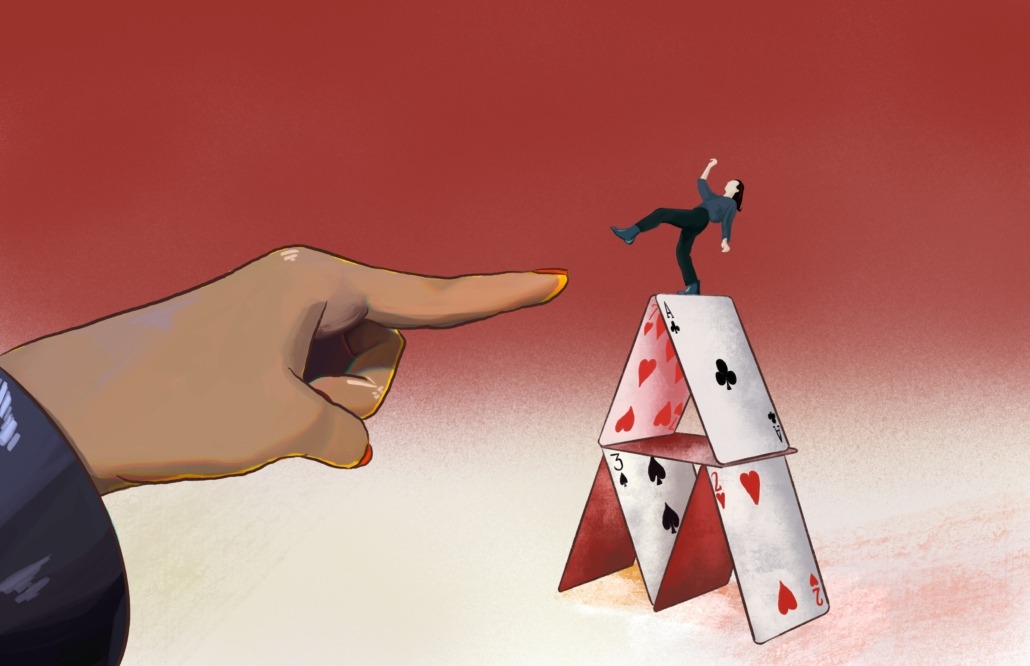

Our perceived limitations are illusions that safeguard against our internal threats.
On Jan. 30, the Appelbee Family — a mother and her three children — was swept out to sea from the coast of Quindalup, Australia and stranded in the expanse of the Indian Ocean.
Torn between patiently waiting for help that might never come or pursuing it, Joanne Appelbee asked her 13-year-old son, Austin Appelbee, to swim to shore.
Austin swam for four hours, covering about 2.5 miles of rough tides, and did not even stop when he reached the beach, where he ran over 1 mile, according to CNN. Ironically, his swimming instructor had recently failed Austin for his alleged inability to swim more than 383 yards.
Ultimately, all four members of the family survived thanks to Austin’s exceptional efforts, described by a police commander in a press release as “remarkable” and “pivotal in bringing about a successful outcome.”
How was Austin able to swim more than 11 times beyond his original limit? More importantly, why did Austin originally stop at a distance under 383 yards if he had always been capable of swimming further?
Answering the question begins with defining “limit.”
In 1997, physiologist Tim Noakes proposed the central governor model, which distinguishes between physical ability and psychological restraint. Essentially, while we may still have the physical capability of continuing, our subconscious mind prevents us from doing so to avoid harm.
From an evolutionary perspective, this biological mechanism makes sense; for most of human history, unnecessary exhaustion and injury could lead to death, as humans did not always have easy access to rejuvenating resources. In modern times, however, this regulatory system helps by preventing strain in low-stakes situations while allowing excessive activity when needed, such as Austin’s 2.5-mile swim toward survival.
What if Austin thought he was closer to the shore than he really was? Would he still exhaust himself, or would he pace himself, leading to the eventual death of his family?
While physiologically prioritizing the swim worked in the moment, this mechanism suggests a fundamental structural problem: In prioritizing urgency and immediate potential consequences, larger, delayed issues can be overlooked.
Unlike being stranded in the middle of the ocean, many of the problems and potential consequences we face today do not announce themselves with crashing waves and treacherous waters.
Critical concerns ranging from climate destabilization to the erosion of civil liberties often arise through a series of incremental changes rather than a single, notably calamitous event. Structural imbalance rarely feels like a 2.5-mile life-or-death swim; it feels like a 383-yard swim test — uncomfortable, but survivable.
If the threat is gradual or initially invisible, do we act, or do we resign?
This question is not merely applicable to physical scenarios; it is relevant to situations in which we expend mental, social or occupational resources in line with our priorities. Candidly, I observed firsthand the disparities in how we chose to prioritize our resources.
I have been asked, on multiple occasions, why I continue to write about “sensitive” topics — immigration, activism, totalitarianism — when it puts me at risk as an international student and can cause me to make enemies of powerful individuals.
The other day, in my human rights class, we were visited by a human rights activist and journalist from Georgia. One student asked why he kept writing, even though his country is known to imprison journalists with views its government deems undesirable — those who oppose the current government.
From the perspective of observers, the continued efforts of journalists may seem futile and foolish; why put oneself at risk for an article that countless others in more secure positions could write just as easily? After all, the immediate threat appears to be the consequences we could face for our writing.
On the other hand, imagine a world in which people, especially journalists who have been trained to transmit information, do not possess the freedom to express their thoughts because of their opinions, backgrounds, cultures or any other factor related to their identity.
While this reality may not be immediate, silencing ourselves out of fear paves the path for it. That is what we need to recognize: often, the problems that are not immediately in front of us are the ones that pose the biggest threats.
Unfortunately, many underestimate situations that should be taken seriously, dismissing them online with phrases such as “It’s not that deep,” which Iris Attil described on Medium as “the digital equivalent of a shrug.”
Rewiring the human brain is an incredibly difficult task. Frankly, it is exceptionally challenging to change the mind of a single individual. Nevertheless, crucial situations call for drastic measures. We are just as likely to drown in an ocean of dangers we can see as we are to drown in the consequences of problems we didn’t recognize in time.
We need to recognize that we are no longer solely dependent on our biological instincts and mechanisms; we have access to a wide array of resources that can help us determine the significance of potential problems.
The good news is that we possess both the strength and the capability to solve our problems; performance in ordinary conditions does not reflect our permanent capability. Difficulty is not identical to impossibility.
Despite this, we cannot effectively preserve our individual and collective well-being without taking the leap to recognize the problems that are not blatantly apparent. The next time you stop because it feels uncomfortable, ask yourself whether the greater risk is your discomfort or the issue that grows quietly in the wake of your stagnation.