The fight for freedom belongs to everyone
International students have a stake in campus activism, too.
By ARMAND SJARIFFUDIN
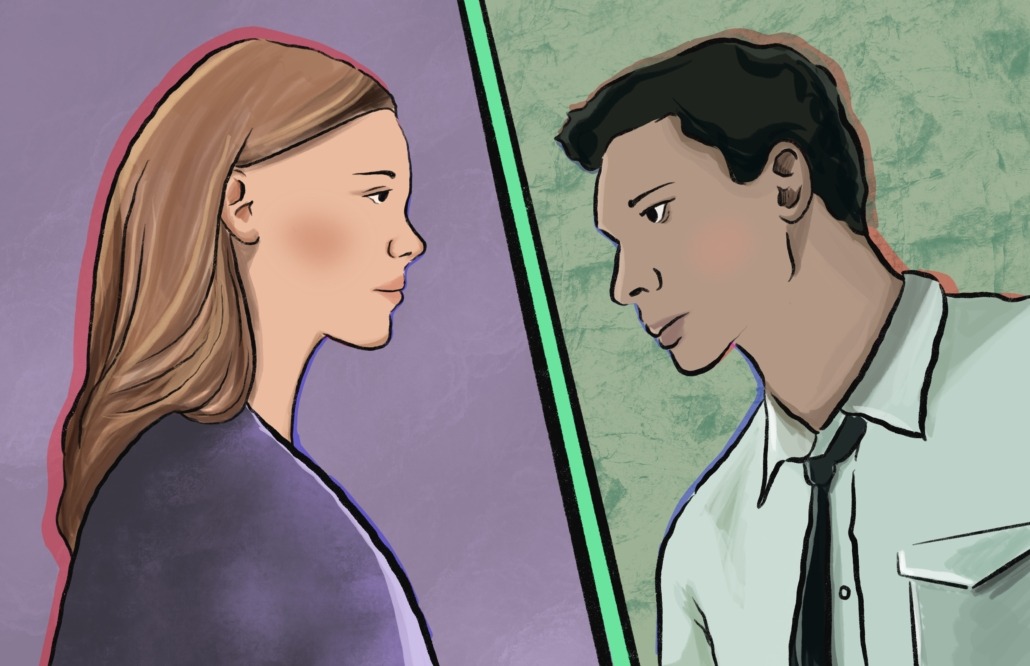

International students have a stake in campus activism, too.
There’s a line between you and me. It isn’t a literal line, of course, not one that you can see marked up with chalk on the ground. It’s something that separates us based on a simple fact: I didn’t grow up where you did, and that makes us different.
When Liam Conejo Ramos, a 5-year-old boy, was taken away by United States Immigration and Customs Enforcement agents, I couldn’t help but think about these lines that we make, and how much power we assign to them. It made me realize that I was on the same side as Liam, as an international student. Many of us fear this: one call, one report, one transgression away from being in his shoes.
So when the new year came, and with it, an uproar in student activism alongside several widely reported incidents of police violence, I was caught in a divide that many international students know. It hinged on the crossroads between fantasy and truth: to either do more for the home that I choose to claim, or do nothing out of fear of losing my status in this home altogether.
The situation highlights the stark reality that diaspora activism exists in now. Heightened scrutiny has led to more caution. Social media screenings, minor infractions leading to deportation and punishment due to protesting now all shape how international students use their voices.
This heightened control over international protest isn’t just restrictive, it’s dangerous. It encourages the University’s diaspora to be fine with inaction, and tells them a fight isn’t theirs to join.
When that happens, complexity flattens and history is forgotten. USC exists in the heart of Los Angeles, a city built by immigrants, and which continues to host 4.4 million of them. And through all of L.A.’s history, diaspora activists have formed the foundation for change.
Throughout the 1960s–70s, amid growing concerns about the Vietnam War, it was Asian voices, particularly direct descendants of Asian immigrants in L.A., who mobilized and marched in historic numbers, exposing how the war was not only immoral but connected to other systemic issues in domestic inequality and racism.
In 1990, the “Justice for Janitors” campaign, which aimed to secure better benefits and working conditions for cleaners, was successful in large part due to how immigrants organized and leveraged their identities to incorporate other immigrant networks.
And of course, in 2025, protests against ICE became so much more than just a domestic immigration issue. International voices, including the immigrant families that are directly affected by ICE, helped frame federal misuse of power as a violation of international human rights, contextualizing how ICE’s actions could be a greater call for systemic change.
All of these examples are key parts of Los Angeles history, but they also show the edge that international activism brings. Mobilizing the underrepresented provides perspective. It can shed light on the forgotten nuances of larger societal issues, and can do the opposite, bringing in a globalized importance to smaller issues.
On the college campus, this isn’t any different. International student activism bridges transnational gaps in a student body and fosters solidarity by showing how social issues, regardless of where they happen in the world, are part of a universal struggle for change.
As students studying in America, international students will always represent a legacy of immigration. It is for these reasons that we have to consider the rights that we have in this country.
The First Amendment protects free speech for everybody on U.S. soil, including international students and scholars, within the bounds of immigration law. Understanding those boundaries is important in grasping how international students can fight for causes they consider important. And even then, we have the right to protect what our voices can do.
In March of 2025, Rümeysa Öztürk, a Turkish Ph.D. student studying at Tufts University, was forcibly detained by federal agents in a Boston suburb. Her arrest drew national attention after Öztürk challenged her detention in federal court; her family and her lawyer suggested the arrest was connected to her political writing — a claim the government has not confirmed.
Öztürk held a stand for something she believed in, regardless of risk, and through all of it, came out victorious. Despite being detained, Öztürk fought for her rights in federal court, eventually leading to her removal proceedings being terminated by an immigration judge.
Her story is a reminder that the fight for international voices is still ongoing, and brings to mind others who are still defending their place here, such as Mahmoud Khalil, a Palestinian student activist who is still battling against deportation.
Stories such as these say to international students that we have stakes in what happens in this country, and that the power of any voice can never be truly suppressed.
If it isn’t obvious already, this piece is a condemnation of the lines that we make in society. Lines organize; they provide structure, but they also divide and set the parameters of who belongs where. Diaspora activism is part of the fight to erase these lines, and represents a shared responsibility to nurture a community where issues and the responsibility to solve them fall on everyone, whether we were born here or not.