COMIC RELIEF
Are internet shows really the ‘new late night,’ Vanity Fair?
Jimmy, I’m sorry, it’s over. Gen Z has come for you.

By NINA KREMER

Jimmy, I’m sorry, it’s over. Gen Z has come for you.
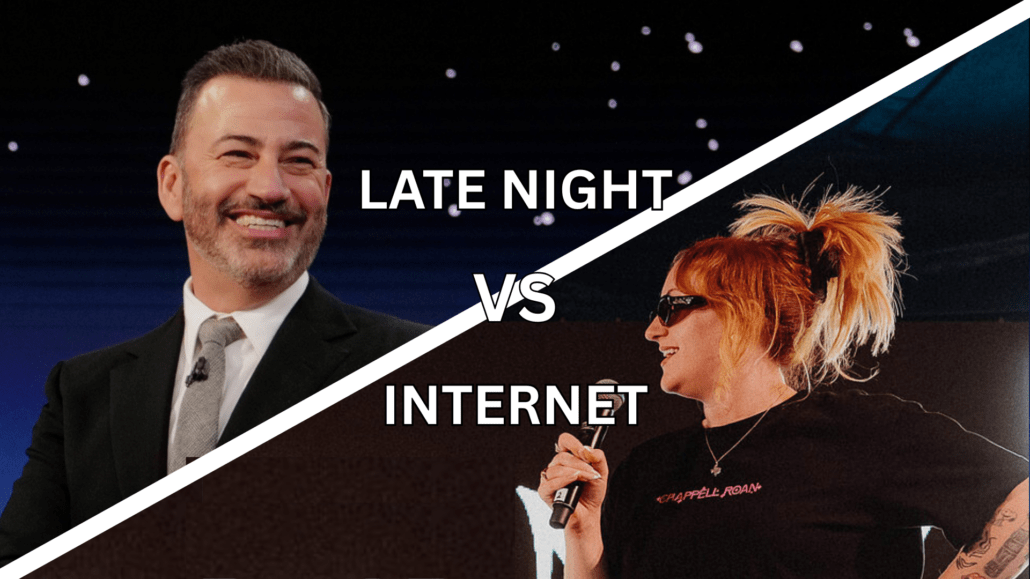
Jimmy Kimmel and Brittany Broski are not two people who I would have considered contemporaries. Then again, I never would have thought that the samurai, pirates and Victorian England all existed at the same moment in time.
With all of the discussion about the death of late-night television following “The Late Show with Stephen Colbert’s” cancellation, the temporary suspension of “Jimmy Kimmel Live!” and decreasing ratings for “The Tonight Show Starring Jimmy Fallon,” Vanity Fair’s Joy Press argues that online personalities like Jake Shane, Amelia Dimoldenberg, Bowen Yang and Matt Rogers have taken up the late-night-host mantle.
Of the comedians on this list, some are internet show hosts, podcasters or simply celebrity interviewers. But none of these shows are much like the others, making “late night” seem like more of a mischaracterization than a common denominator.
“The new late night is lo-fi and unpredictable — and live, from your phone, all the time,” Press wrote. “As broadcast television recedes, we present a cast of digital creators who boldly go where no Jimmy has gone before.”
While these shows have somehow quickly become a routine stop on nearly every movie press tour, the new online format isn’t directly comparable to a talk show. They are much more akin to the silly YouTube videos that entertainment magazines and legacy media outlets have produced for quite some time: celebrities making pizza, reading thirst tweets to each other and taking Vanity Fair’s lie detector test, to name a few.
The shows that Vanity Fair’s listed comedians have created are all based on similarly great comic premises, and in the grand scheme of the algorithm, may simply generate random, viral moments, which become repetitive quickly. Still, though I protest the grand false equivalence that is calling these comedians the “new late-night hosts,” I must give credit where credit is due.
The hosts themselves and their ability to not only engage an audience but to also achieve a hilarious rapport with their celebrity guests is remarkable. Though the quality of these shows varies episode to episode, duller episodes are usually the fault of the guest being unable to hold their own comically — and the hosts are all undoubtedly comedic geniuses.
Whether you find them funny or not, these entrepreneurs have successfully created a comedic persona and a brand for themselves, which is not only recognizable but also sustainable.
Unlike the primarily white-men late-night hosts with little personality and the cadence of a carnival barker reading a drive-through menu, the comedians Vanity Fair has chosen to spotlight represent a much more diverse group with more impressive comedic timing and creative ideas.
Some of these shows actually approach talk show status. Sean Evans from “Hot Ones,” who has a journalism background, really is a great interviewer. The show has been around for much longer than most of the others and boasts a large number of A-list guests. The comedy of “Hot Ones” derives not from Evans’ antics, but the challenge he poses to his guests to stay calm under pressure and face the heat, literally and figuratively, when he asks pressing questions.
Similarly, Ziwe also has excellent interview tactics, with cutting-yet-hilarious, poignant social and political commentary; she has hosted notable guests such as former Sen. George Santos and former New York City Mayor Eric Adams. Her show, which is actually a parody of a talk show, comes the closest out of all of these shows to truly taking over the late night format.
But before we declare late night dead and buried, let us ask ourselves, from what legacy are we parting a not-so-tearful goodbye? Political commentary is certainly a strength of the modern medium.
These hosts, albeit often stale in their delivery and indebted to their writing staff, say what many media outlets won’t dare to, calling out the obvious insanity of our country’s politics, and somehow managing to make audiences laugh in unfunny times.
However, late night shows have certainly not always been politically progressive and inclusive. David Letterman clearly made many a female celebrity uncomfortable in recently resurfaced clips of his “Late Show.” Interestingly enough, the show ended in 2015, the same year “Hot Ones” began, suggesting perhaps a true line of succession has indeed taken place.
This new era of comedians reflects Generation Z’s, and the wider modern audience’s, desire to see more diverse, innovative and, to be honest, funny shows. The late night formula has become so repetitive that it has finally bored viewers to death — its own death.
So, goodbye, “Late Night” — the white man-dominated, too often unfunny, uncomfortable interview format. Seth Meyers, please, there’s still one more life raft — get out while you can and co-host “Good Hang with Amy Poehler.”
Nina Kremer is a sophomore writing about comedy in her column, “Comic Relief,” which runs every other Wednesday. She is also Arts & Entertainment editor at the Daily Trojan.