NO STRAIGHT ANSWERS
Love shouldn’t disappear in daylight
When affection disappears in public, it forces you to decide whether almost being chosen is enough.

By ANDREW CARDENAS
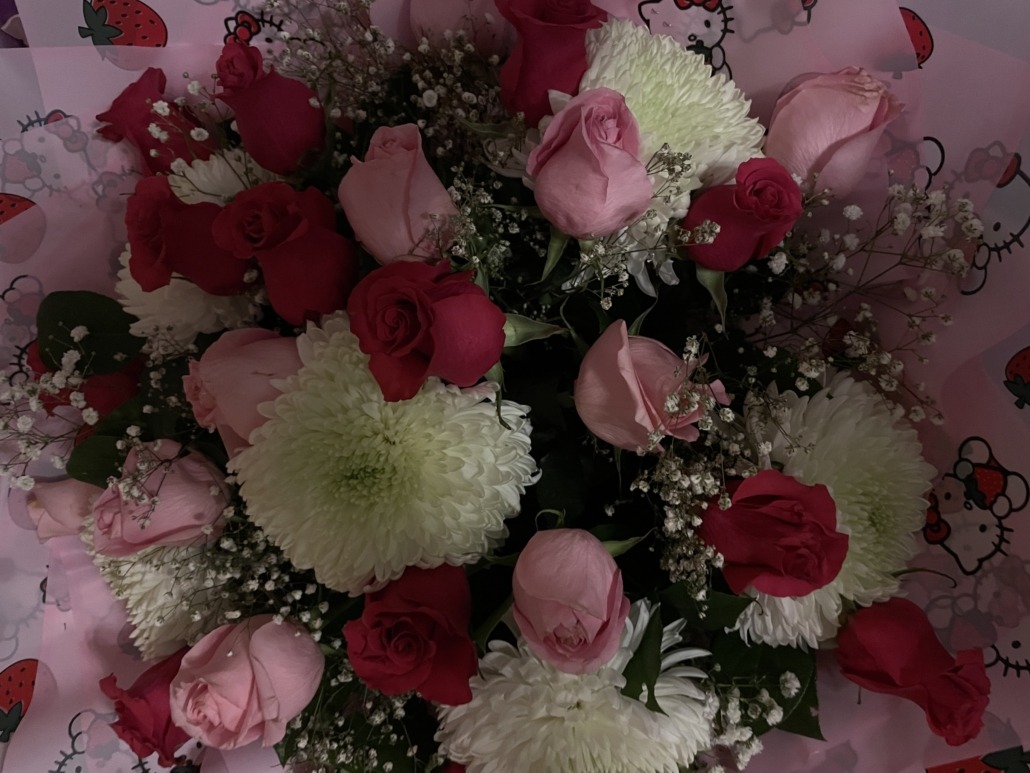

When affection disappears in public, it forces you to decide whether almost being chosen is enough.
I used to think love was defined by intensity — how urgently someone reached for you when no one else was around and how their voice softened when they told you that you’re beautiful. If it felt real behind closed doors, I thought that was enough.
He was a business student I met in passing — someone I did not expect to matter. He was funny, attentive and quick to compliment. In private, his certainty about wanting me felt expansive — like there was room for something real to grow. In public, that certainty narrowed, as if what we were only made sense in private. I do not write to indict him, but to understand what his narrowing did to me.
Fear has a way of dividing someone into two versions of themselves: one who reaches for what they want, and another who pulls back the moment the world might see their desire. A small humiliation settled in when he introduced me as a friend. I laughed, as if agreeing to the role. Each time, I felt myself adjusting — stepping into the smaller space he made for me.
Sociologist Erving Goffman argues in “The Presentation of Self in Everyday Life” that social interactions are a performance — that we manage impressions the way actors manage a stage.
“[A disciplined performer] does not give the show away by involuntarily disclosing its secrets,” Goffman wrote. “Actual affective response must be concealed and an appropriate affective response must be displayed.”
I felt that discipline in my body. In public, I kept my voice even. I didn’t linger; didn’t reach first. I learned how to look unbothered. What we built was not imaginary. It was simply fragile. It depended on lighting, on the audience. It could survive in private. It could not survive exposure.
For a month, we built something tender inside that room. We studied together, shared playlists and talked about our childhoods. It felt meaningful because it was. Brief does not mean trivial.
We dress it up as patience, as timing. But sometimes it is simply us negotiating with our own needs — persuading ourselves that almost being chosen is enough.
Some connections are real even when they are brief. That’s why I wrote in a previous column that not all relationships have to last to mean something, how some loves end before they begin and still leave permanent marks. Some loves — even quiet, undefined, almost-relationships — are real, even when they are brief. Their duration does not determine their depth; sometimes what they teach you outlives the time you actually had.
This love taught me to distinguish between intensity and security. Intensity feels like urgency while security feels quieter. I do not regret him, but I regret the version of myself that believed that I had to accept invisibility to keep something alive. Love is not just about who holds you in private, but who stands beside you in public.
“Since the reality that the individual is concerned with is unperceivable at the moment, appearances must be relied upon in its stead,” Goffman wrote. “Paradoxically, the more the individual is concerned with the reality that is not available to perception, the more must he concentrate his attention on appearances.”
I was deeply concerned with the reality of us — the truth of what we shared in private. And so I began concentrating, almost reflexively, on appearance. I managed every glance, every word, every gesture. The more real it felt to me, the more carefully I concealed it. Some people need privacy to survive. Some people need visibility to feel secure, and both are valid, but they are not always compatible. I learned I was shrinking to fit someone else’s fear.
Time moves quickly in a month. Fast enough to fall into something. Fast enough to fall out. But long enough to change.
I am still searching — not just to be loved, but to learn what love demands of me and what I will no longer negotiate. I want a love that feels the same at noon as it does at midnight. Some love lives in the dark. That does not make it unreal. It just means it may not be yours to keep, and that, too, is a choice.
We don’t get to decide how someone else shows up. We do get to decide what we accept. We can name when something leaves us half-seen. We can recognize the moment we begin to shrink. And we can decide not to stay there.
No one is inherently wrong for choosing a different lifestyle. But you are not required to contort yourself to fit it. Listen to yourself. If you’re searching to be loved — and to learn about love — let that search expand you, not reduce you. Choose the kind of love that remains when the light turns on.
Andrew Cardenas is a junior writing about love in all its forms in his column, “No Straight Answers,” which runs every other Wednesday. He is also the DEIA Director and Talkin’ Troy Editor at the Daily Trojan.