CHRONICALLY ONLINE
Ice skating music has never been so back
Olympic gold medalist Alysa Liu’s music marks an exciting individual-based change in the sport.

By ANNA JORDAN
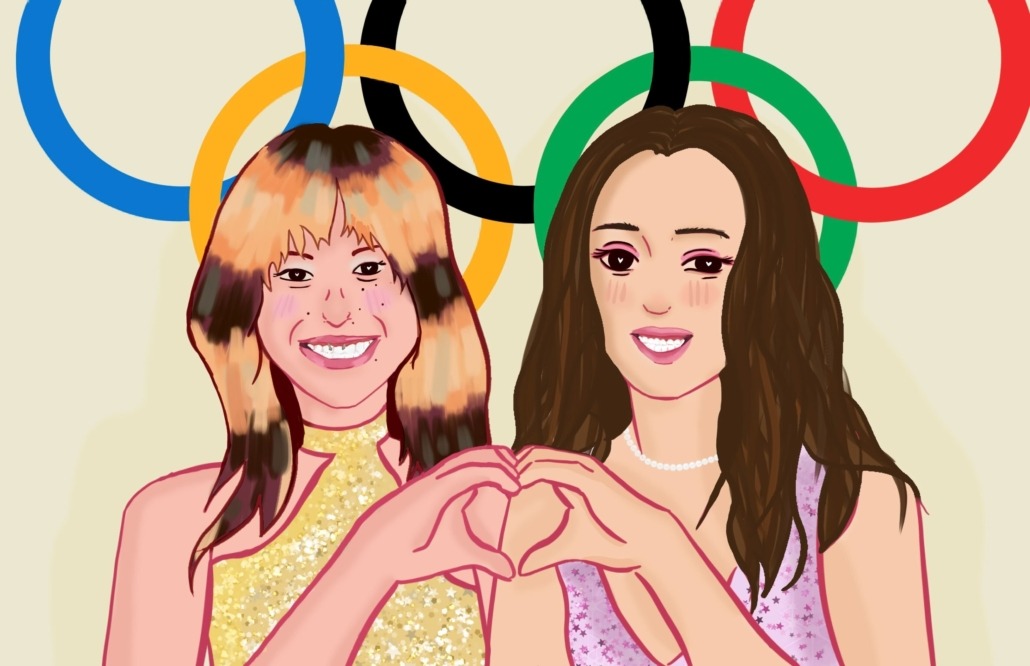

Olympic gold medalist Alysa Liu’s music marks an exciting individual-based change in the sport.
I’m not the sportiest person alive, nor have I ever been. Sure, I have my fair share of Sports section bylines here at the Daily Trojan, but unlike Sports editor Bennett Christofferson or associate managing editor Sean Campbell, I can’t write upwards of 30 articles spanning any sport at the drop of a hat.
But talking about queer and alt women who have great taste in music? Well, now we’ve wandered into “Chronically Online” territory.
Like most of the world, I’ve been following the Winter Olympics like it was my day job. Both the Summer and Winter Olympics stand apart to me as a global sporting platform, not just because they’re the top of the food chain, but because they offer a centralized hub for so many types of sports that feature artistry as a focal part of the performance.
Gymnastic floor routines and ice skating programs are mini pop culture moments unto themselves, beyond the greater moment of the Olympics: The performances can recontextualize the music they feature or the costumes and makeup the athletes wear by drawing on both the flavor of the competition and the athlete’s personal story.
As a result, this year’s Winter Olympics coverage — especially that of men’s and women’s figure skating — went incredibly viral online, largely fueled by the narratives behind individual competitors and the compelling aspects of their performances that athletes choose to feature in their programs. And there was arguably no athlete more compelling than U.S. skater — and regrettably, UCLA student — Alysa Liu.
She’s easy to spot on the ice with her halo hair and smiley piercing, but she’s impossible to look away from when her program’s music kicks off and her routine draws you in. Obviously, Liu wasn’t the only talented skater in the competition. But she was certainly one of the most relatable, and her music choices played a massive role in amplifying her personal story.
After retiring from the sport in 2022 at just 16 years old, despite having already made an international impression on the sport, Liu couldn’t stay away from skating. It was what she loved, what she felt her life was leading toward, but she wouldn’t let it hurt her emotionally or physically as it had before.
Liu only returned from her hiatus on the condition that she would do it her way as opposed to her coaches having total control: She would dictate her training schedule, oversee her diet, and have direct control over her costumes, choreography, and music.
Sure enough, her programs were rays of light in a competition notorious for being ridiculously controlled. To make it onto the Olympic team and place high enough to medal, most programs are centered around maximizing scores based on what judges tend to value — backloading super complicated jumps, following rigid classical standards for costumes or music, and overall playing a numbers game to ensure a high score.
It’s not a secret strategy — in fact, it’s relatively ubiquitous at higher levels of most judge-based sports. But Liu’s passion and authorship made her performances tactile and relatable, an extension of an already compelling journey as opposed to a score maximalization technique.
Throughout the competition, she skated with visible joy to songs like “Promise” by Laufey and “MacArthur Park Suite” by Donna Summer, even sneaking in the Zara Larsson remix of PinkPantheress’ “Stateside” in her Gala performance after taking home the gold medal for the whole shebang: Gone were the days of rigid technicality and sleepy classical pieces long forgotten.
Her song choices highlighted her grace on the ice while also speaking to her current joyful mindset, an auditory manifestation of self-love that worked in tandem with her distinct hair, modern makeup and fluid style. Liu’s performances — and eventual gold medal — prove that personalization at the highest level of prestige in the sports world isn’t tacky or unprofessional. It’s earnest and healthy.
The need to bring individual flair into competition becomes even more apparent when examining a similar case with an alternate ending. Fellow U.S. skater Ilia Malinin is also a young skater known for his off-beat music choices, which included clips of his own voice over “The Lost Crown (Prince of Persia)” by 2WEI, Joznez and Kataem.
His song choices tell a story of passion under immense pressure, something that manifested in the favorite scoring low during his free skate for a shocking loss, despite being the clear favorite to take the gold.
As a result, in his Gala skate — a performance unharbored by judging parameters surrounding what is appropriate for skaters to perform, wear or skate to — he chose “FEAR” by NF. He wore black jeans and a sweatshirt. And, with a face full of angst, he performed anguish-filled choreography, aching to make a statement about his fall from grace.
Compare that to Liu’s skate, or Tomàs-Llorenç Guarino Sabaté’s intense Minion-themed performance, or routines set to Lady Gaga and “Kung Fu Panda” (2008), complete with triple axels in a panda costume, and you have a mismash of talented skaters, weighed down by the expectations of prestige skating alongside other athletes trying to have fun against immense pressure. And yet, both ends of the spectrum are perfectly valid.
Professional athleticism doesn’t mean a lack of self; it means elevating the self to a professional stage via prowess and showmanship. By redefining the criteria of what is most likely to earn a gold medal, performances from athletes like Liu, Malinin, Amber Glenn and Mikhail Shaidorov during the competition give me hope that professional skating will take a turn for the artistic as opposed to the rigid — and hopefully sneak in a few more smiley piercings into the rink.
Anna Jordan is a junior writing about pop culture controversies in her column, “Chronically Online,” which runs every other Thursday. She is also Chief Copy Editor at the Daily Trojan.