DOWNLOADABLE CONTENT
Interactive media deserves your respect
The idea that video games are a lowbrow pastime is an antiquated, uninformed product of a bygone era.

By AUBRIE COLE
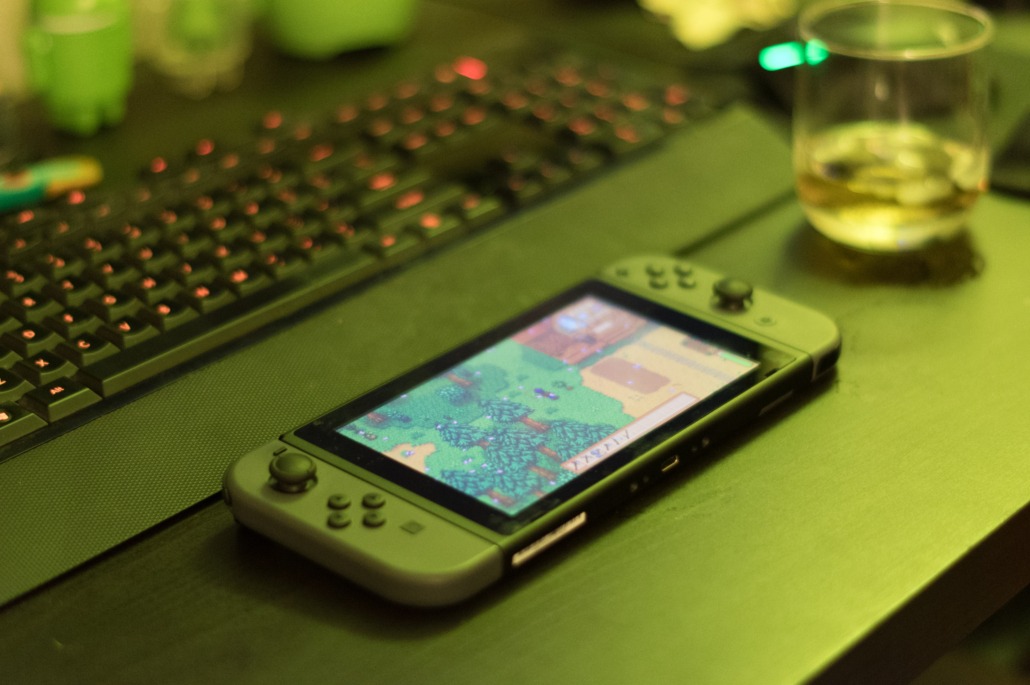

The idea that video games are a lowbrow pastime is an antiquated, uninformed product of a bygone era.
Growing up, I, too, was a victim of the “you’ll be such a fantastic lawyer” curse.
My parents, meaning well, pushed me to my limits throughout my childhood and teenage years. They saw endless potential, and I’m grateful that they had the foresight to invest in what I might become. However, I’m almost certain that their idea of my future was far different from the path I currently walk.
Being a high-achieving, first-generation college student and an eldest daughter isn’t a particularly unique experience. Still, its nuances and minutiae remain veiled to those outside of it. Walking across the stage at high school graduation, the life I envisioned involved law school, academia and Aritzia pantsuits. Oh, how times have changed.
My start in the games industry didn’t look like the typical USC Games student’s tale of fulfilled dreams and romantic pursuit. USC does have the best collegiate interactive media program globally, which is why it draws such high-flying talent from around the world.
But my transition into the industry was jump-started by the divine realization that nothing was preventing me from coalescing my passions — philosophy, sociology, history, writing, art and interactive media — into one deeply fulfilling career.
I feel a bursting sense of pride and joy when thinking about the professional life I’ve built. I have not denied myself a single facet of my interests, and the life I’ve developed is better than I could’ve imagined when I was 18. I couldn’t be happier.
And yet, sometimes, I dread telling certain people about my career path.
Despite my drive and determination, I’ve often been met with a confused half-smile or even a disdainful look when explaining my career choice to older people, or even those in my own generation.
“Oh, I thought you were pursuing a career in journalism,” they say as I watch their respect for me get knocked down a few notches.
If it were two decades ago, I’d call this phenomenon a sign of the times. Video games were consistently villainized in public cultural consciousness by fearmongering, bipartisan voices. Games were associated with nerds, losers, violence and unchecked patriarchy.
But over time, interactive media’s positive impact has blossomed into an undeniable force. Video games have been one of the most influential phenomena of the 21st century, both culturally and economically. The archaic, aloof attitudes that some still harbor toward interactive media are not only snobbish but uninformed.
Let’s start from the economic perspective. The video game industry is a booming power seated at the intersection of technology and entertainment. The games industry’s yearly revenue consistently sits higher than both the film and music industries’ yearly revenues combined, and is “expected to grow to nearly $300 billion in 2029,” according to PwC.
Of course, cultural impact aligns with this profitability. Between pre-existing gaming avenues such as traditional, mobile and virtual reality, and quickly developing concepts like mobile gamified betting and browser puzzles, interactive media touches the lives of billions.
In fact, most people are gamers. If you have a subscription to The New York Times games, or even just solve the Wordle every day, you are a gamer. If you play “Candy Crush,” you are a gamer. Activate Consulting projects that “virtually all online adults in the world will become gamers in the near future, with active gamers reaching 3.7 billion by 2029.”
Gaming intellectual property is more popular than ever. Franchises such as “Super Mario,” “The Last of Us,” “Fallout” and “Minecraft” have received mainstream attention and acclaim through film and television adaptations. Games like “Fortnite” and “Roblox” have ushered in a new era of hyper-mainstream gaming, driven by multiplayer user-generated experiences and appealing to non-stereotypical gaming demographics.
Even non-gamers are influenced. Gaming slang — “final boss,” “spawn,” “side quest,” “NPC,” among countless others — has crept its way into mainstream, cross-generation linguistic use. This slang has become so common that many who use these terms don’t even register that they stem from interactive media origins. In fact, some of these colloquialism conduits are the very people who peer down their noses at gamers and developers.
All this to say, you’d think that after the past 20 years, the negative stigma surrounding gaming should have dispersed. Yet, I’m still met with the same negative attitudes.
I’m not ashamed of my career path or my accomplishments by any means. Rather, I feel a deep-seated irritation and rage toward the antiquated notion that games are a lowbrow, cringeworthy waste of time.
I’ve written about the pompous pretension that art critics and legacy media outlets feel toward video games at length, and I’m not so naive as to kid myself that those pieces might have a significant impact on the opinions of those with the power to shift the narrative. However, this piece serves a different purpose: I am speaking directly to you, the reader.
If you’re already a gamer — or are at least someone aware of games’ impact — take it upon yourself to correct those both in person and online who may be ill-informed about the importance of the medium. If you’re not a gamer, well, my message to you should be pretty clear: keep an open mind and educate yourself; you might discover you’ve been missing out all along.
Aubrie Cole is a senior writing about video games in her column, “Downloadable Content,” which runs every other Friday.