Daily Trojan Magazine
PERSPECTIVES
Why you should approach college relationships with empathy, for yourself
Balancing compassion for others with one’s personal needs can be complicated.
By DOR PERETZ
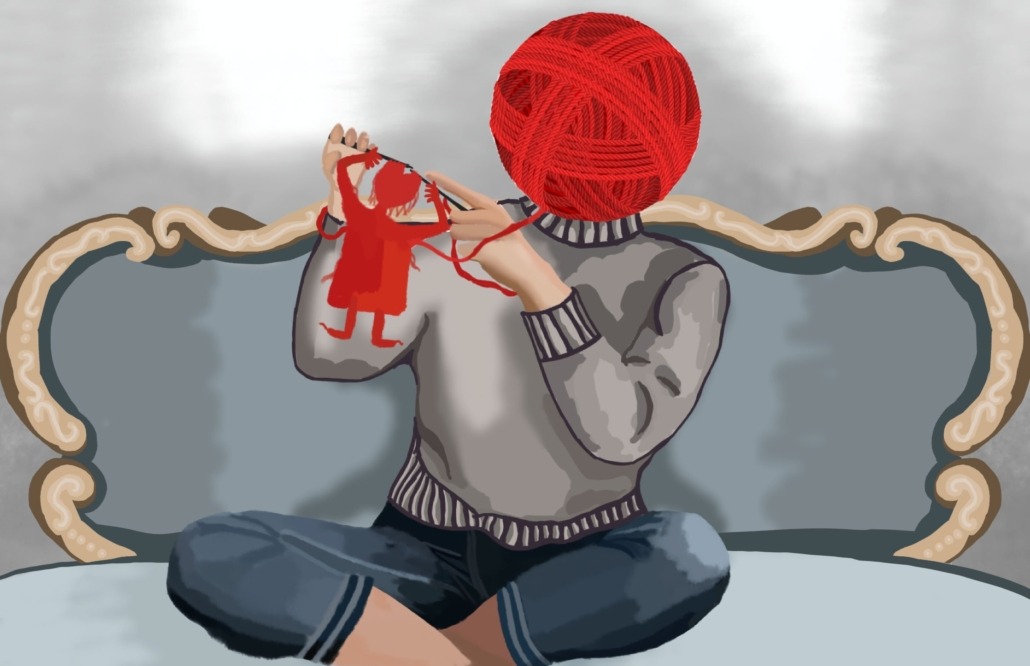

Balancing compassion for others with one’s personal needs can be complicated.
During one random hangout that should have been inconsequential, a past friend of mine “jokingly” called me a pushover, meaning a person who is easily influenced. At the time, I thought that was an unfair characterization of me because I consider myself a pretty independent person who is capable of standing up for myself.
Looking back, though, I can admit that maybe there was some truth to what they said.
For so long, my idea of care and compassion was synonymous with sacrifice. I thought that I had to give something up in order to prove my loyalty and dedication to important people in my life. And if I could not give them what they wanted, I felt as though I was betraying them or acting unkindly.
Contrary to what many people might think of when it comes to people-pleasing, my choices were less about a desire to please others or avoid conflict and more about a need to avoid wronging people I cared about.
Being the “therapist” or “mom” of the friend group was a badge I wore with pride. Every time I ruined my sleep schedule to talk someone out of a 1 a.m. mental breakdown, I thought that I was proving what a good friend I was, which made it all worth it — until it was not.
By focusing so much on preventing harm that I might cause to others, I ignored my own needs and well-being. Due to the insurmountable pressure I placed on myself to be there for others, both my physical and mental health declined. I lost myself, in a way, and I didn’t know how to get back the parts of myself I left behind.
It was only after I hit this rock bottom that I realized how important it was for me to turn around the way I was interacting with others by better prioritizing my own needs and values. From this, I began exploring what balancing empathy for others with compassion for myself really meant.
In colloquial terms, empathy is the ability to put oneself in another’s shoes and understand what someone might be thinking or feeling, even when their experiences are different from your own.
According to a 2024 study by researchers from Southeast University, empathy is a positive trait that is worth cultivating to support pro-social behavior among college students. Such pro-social interactions consist of actions meant to benefit others and support community-building.
Kevin Hoang, a junior majoring in economics, said he learned empathy through seeing his mom embody it, personally witnessing the connection between empathy and community-building.
“I have a single mom, and my mom is probably the most empathetic person you’ll ever meet. She always has a $20 bill on her,” Hoang said. “Because you don’t know … what the homeless people on the street are going through.”
Still, when empathy goes unchecked, there can be unfortunate consequences.
Patricia George, an assistant professor in psychology with a speciality in happiness and familial relationships, emphasized this point.
“I don’t know if I think empathy can go too far, but I think that empathy without boundaries can be abusive,” George said.
Even if the goal is to be empathetic, one can and should go about it in a way that protects one’s best interests. It doesn’t have to be a choice between showing up for others or showing up for yourself. You can be there for others and yourself.
“You can be empathetic about a situation that someone’s in. You can feel for them, and you can understand, and you can be supportive,” George said, “but there is a point where you can feel for them from a distance, or you can feel that for them at times that are convenient for you.”
Skyler Hirota, a junior majoring in architecture, personally experienced the consequences of being over-empathetic, much like I did myself.
“In the past, I used to struggle with being over-empathetic, and I think that’s why I would not establish my boundaries,” Hirota said. “While it is important to respect people’s emotions and their experiences, you also need to respect your own.”
The picture is more complicated than one may initially assume; it is great to be empathetic, but at the same time, people should still look out for themselves in relationships and not let empathy for others override their own needs and emotional capacities.
Throughout college, I have struggled to let go of friendships that I did not feel valued in.
As a highly empathetic person, I have often found myself making excuses for people who do not put in as much effort as I do into our friendship. Whether it is telling myself that they are bad texters — it’s not personal — or that they are at an especially busy time in their life, I’ve wound up justifying behavior that I know I am not okay with.
Consequently, I ended up staying “friends” with these people for much longer than I should; I felt underappreciated for weeks or sometimes months, and let resentment build up for them until it all blew over and I had to either confront them or quietly distance myself.
Hirota said she faced a similar phenomenon with resenting and distancing herself from friendships that did not uplift her. She said she, too, realized the downsides of ignoring one’s own feelings in platonic connections.
“Eventually [the friendship] does blow up in your face if you don’t say anything about it,” Hirota said. “You’ll find better friends … if you’re being your true self and upholding your own values. So if you neglect that, you might just continue to be unhappy because you’re not around the correct people.”
Max Parney, a junior majoring in architecture, said he found acceptance to be crucial for letting go of friendships that aren’t mutually beneficial, as he once had to do with a group of friends that he said the vibes shifted with.
“I just decided that if that’s truly how they feel about me, and I truly feel that strongly that I disagree with it, then the best thing I can do is remove myself from the situation,” Parney said.
Rather than being over-empathetic toward people who do not appreciate you enough, it is better to focus on one’s own feelings and needs.
As a 2008 study from Keele University found, equality and reciprocity are necessary to support a sense of friendship. To seek out such reciprocity, one can either express the issues at hand in hopes of improving the current friendship dynamic or shift their energy toward other friendships that are actually fulfilling.
Balancing empathy with prioritizing yourself can be even harder in romantic relationships, as one may feel more pressure to please the other person, as compared to friendships, where people may feel more comfortable bringing up something that is bothering them.
“It’s easier if you’re friends,” Hoang said. “There’s more structure. But then, with romantic relationships, especially now with hookup culture and situationships … there’s so much more gray area.”
In my own experience, I have often accidentally taken on a caretaker role in romantic connections, where I over-exert myself to support the other person if they are struggling. Conversely, when I am struggling, I have sometimes felt uncomfortable asking my romantic interests for support and, in turn, neglected my personal well-being.
The thought of bringing up issues with one’s partner can feel daunting due to a fear of losing the relationship. Nonetheless, if someone cares about maintaining their relationship, it is important to address potential issues as they arise.
As Parney explained, communicating with his past partner helped him navigate interpersonal conflicts in their relationship, allowing them to overcome these challenges together while treating one another with due respect.
“If there’s something going on, you have to do checkups. You can’t let things build up,” Parney said. “Within a week, if something happened, [we’d talk about it].”
Even though boundaries get a bad reputation, they can still be majorly beneficial for navigating romantic relationships. For example, setting healthy boundaries can help prevent worse outcomes that occur as a result of people over-exerting themself in a relationship.
“People get burned out, and what do they do? They distance themselves from the relationship, and that’s not protective of [it],” George said. “What is protective of the relationship is saying, ‘Hey, I really care about you, and also I can’t keep doing this because it’s hurting me.’”
Not only can boundaries help improve a current relationship, but they are also a good litmus test for figuring out if the relationship is worth maintaining.
“It’s important to set boundaries and make space for yourself and uphold your own values because you want to make sure that the person you are with respects that,” Hirota said. “If they react negatively to you setting boundaries … then they are probably not the person for you.”
If setting boundaries and standing up for your own needs is hard with romantic partners, it can be even more difficult with family members due to the unique bonds these relationships involve.
“You don’t necessarily have to hold on to them, but it’s a lot different to let go of family,” Parney said. “You want to try and avoid that.”
Views on familial relationships and expectations for how to go about them also differ largely depending on personal experiences and cultural background.
“In more collectivist countries, it’s not an option to not talk to your mom anymore or something like that. … You’re a family unit, and you have to figure out how to navigate that,” George said. “In present times, especially in individualist cultures, people are more likely to say, ‘Just because you’re my family member … doesn’t mean I still need to talk to you.’”
Hoang, who grew up in an Asian immigrant household with a more collectivist culture, said he feels pressure to contribute to and keep in touch with family, even when disagreements occur.
“It’s my obligation and my responsibility to still reach out to my family members and still try to [maintain] a personal relationship with them,” Hoang said.
For Hoang, this means that he feels less inclined to set up strict boundaries with family members or distance himself, as he feels that even when there is tension, it is important to still put effort into maintaining meaningful connections with his family.
Coming from a more individualist culture, I am perhaps more comfortable than others with exercising my need to distance myself from certain family members — including immediate family members if necessary — who I feel aren’t positively contributing to my life and mental health. Still, like with the other types of relationships, it’s difficult to break out of the pattern of overcompensating for others and dismissing oneself, especially with the people you love most.
At the end of the day, it is a lot of trial and error.
When it comes to interactions with other students in class, there are also unique challenges. At a prestigious university like USC, many students are eager to perform well in discussions and group projects. At the same time, tension can arise as students come into class with diverse perspectives, and not everyone’s methodologies agree with one another.
Dealing with group members who are unwilling to complete their fair share of the workload or are too set in their ways is frustrating, even if I am empathetic about why that might be the case.
Ginger Clark, executive director for the USC Center for Excellence in Teaching, described a few recommendations so that class discussions and group projects run smoothly in an interview.
She said one important element was establishing classroom community agreements.
“When students are having a disagreement, whether it’s in class or whether [professors are] talking to them during office hours, [professors] can always refer back to those agreements and talk about where we think things went sideways,” Clark said about how faculty can help facilitate conflict resolution among students.
According to Clark, another useful tool that students can utilize is acknowledging an issue — such as a student dismissing what another student says — by pressing pause on the conversation and redirecting it. She said this can help facilitate empathic and compassionate connections within the classroom context and get everyone back on track.
Ultimately, empathy is both a necessary characteristic for going about relationships in college and something that one should exercise responsibly. No one knows the perfect way to balance empathy for others and stand up for one’s personal needs.
However, if you’re noticing a pattern of feeling drained or undervalued in your relationships, it might be a sign that you’ve swung the pendulum too far toward others and need to stick up for yourself a bit more.