Black exclusivity does not equal Black success
Historically Black Greek Life has an obligation to unity and uplift the community.
By LEILANI POWELL

Historically Black Greek Life has an obligation to unity and uplift the community.
Born from Jim Crow-era racial exclusion in 1906, Black Greek-letter organizations have built spaces of excellence and resistance, fostering a determined community for Black university students. But more than a century later, colorism, exclusivity and internal division challenge whether the Divine Nine still fully embody those founding ideals of unity.
Black Greek-letter organizations were founded on the ideals first created by Alpha Phi Alpha. Their pillars focused on kinship, personal excellence, community service efforts, philanthropy and civic engagement. Two years later, Alpha Kappa Alpha Sorority, Inc. was founded at Howard University.
Together, they laid the foundation for what would become the Divine Nine, nine historically Black fraternities and sororities committed to those ideals, which were created in 1930.
Yet, their presence has been criticized by the scholarly Black community; while the Divine Nine was created to counter racial exclusion, internal hierarchies tend to mirror the very systems they were meant to resist.
Historically, some chapters employed the “paper bag test” — a discriminatory practice in which prospective members were judged based on whether their skin tone was lighter than a brown paper bag. This colorist method of evaluation only pitted the Black community against each other. It allowed Black individuals to be left out for the same reasons they didn’t feel like they could be a part of the existing Greek Life organizations.
In early 2025, President Donald Trump issued executive orders to dismantle diversity, equity and inclusion policies for public and private sectors across the United States. With this, Divine Nine chapters received reduced institutional support and added pressures for their organizations to comply.
Despite the organization’s movements away from these unofficial racialized practices, echoes of this exclusionary behavior linger today. Each chapter has built its own reputation for what kinds of people it accepts, allowing for the same techniques to be repeated across the country.
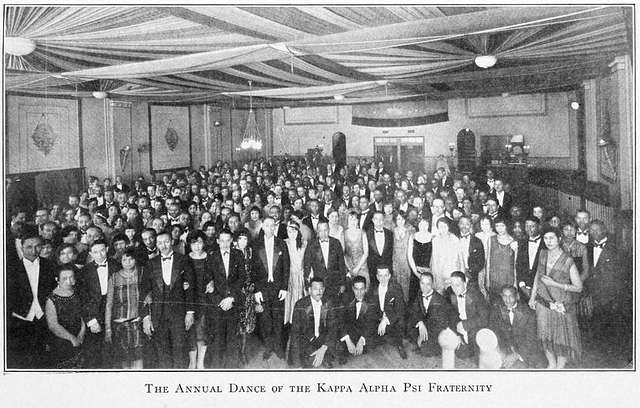
These stereotypes aren’t just talked about in gossip groups online, but have actually been explored in studies from Nova Southeastern University. A 2013 Nova study found that individuals from Kappa Alpha Psi Fraternity, Inc. and Alpha Kappa Alpha, for example, were often stereotyped as having lighter-skin, more model-like complexions and for being more prideful. Meanwhile, Zeta Phi Beta Sorority, Inc. and Delta Sigma Theta Sorority, Inc. are often subjected to stereotypes of having darker skin tones and bolder personalities.
While these perceptions may not reflect reality across all campuses, the reputation follows regardless. For organizations that claim to be accepting, someone shouldn’t be able to tell which chapter they are from based on their skin tone and the archetype they fit into. Nor should it be normalized to stereotype individuals in such a manner. USC has eight of the nine Black Greek Life organizations on campus, with the exception of Iota Phi Theta Fraternity, Inc. I have personally attended some of the Divine Nine events on campus and I experienced the reality of some of these archetypes in person with different prospective members telling me which sorority I would fit into best based on my first impression.
Community is wonderful, and finding community with people of your same race can be extremely healing. Yet, the way these old ideals of what each chapter unchangeably is is thrust upon members needs to be changed.
The power to make your kind of people successful while simultaneously removing yourself from other Black individuals outside of your chapters isn’t progressive; it’s exclusionary. The lack of general oneness between the different chapters is evident.
Over the past century, these organizations have produced some of the nation’s most influential Black leaders and cultural icons: Former Vice President Kamala Harris, Actress Angela Bassett, singer Aretha Franklin and American Civil Rights Activist Martin Luther King Jr.
The Divine Nine’s collective alumni network reflects extraordinary achievement across politics, arts, business and civil rights advocacy. Their accomplishments have inspired members of the Black community and will continue to instill confidence in what Black people are truly capable of.
Nevertheless, these famous alumni are spoken of as if they are a win for their specific chapter before they are a win for the Black community as a whole. In turn, creating the basis of disunion and competition between chapters. These successful alumni shouldn’t feel isolated to certain Greek letters but should actually be celebrated as a win for the entire Black community.
These organizations can’t just reinforce the same struggles of the past but must look inward to self-improvement. There should be no “us against them” between different chapters; every one of them is a part of the Divine Nine and should be treated with respect. In the midst of this dismissive political rhetoric, the organizations must hold strong, together.