Social media users’ thoughts are controlled by algorithms
The ongoing trial of Meta shines a light on the limits of self-directed thinking.
By KIYOMI MIURA
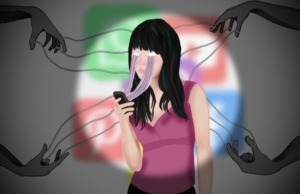

The ongoing trial of Meta shines a light on the limits of self-directed thinking.
There’s nothing more addictive than a stream of endless content that nails your humor and piques your curiosity. After watching your love life be explained in eerily accurate terms, you might swipe to spend a minute or two watching an artificially-generated video of a dog dancing to balance the humiliation felt just prior.
On Feb. 18, Mark Zuckerberg returned to the courtroom. But this time, the focus has extended beyond user data privacy. Large tech companies, including Meta Platforms and Google’s YouTube, are defending themselves against allegations of addictive design, where hundreds of parents allege this design causes detrimental impacts to their children’s mental health.
While the addictive design of social media is under the most scrutiny in this trial, the focus should pivot to the content pushed by the algorithm that keeps us attached.
Curated on likes, messages and retention, social media exploits personal vulnerabilities to understand what will keep the user’s attention. This creates a deceptive representation of reality, and the more we feed off of it, the more our lives distort beyond the screen.
The wide-ranging topics, from news to comedy to reality TV, all on one platform, give the impression that social media has brought the world to our fingertips. The consequence of this is a tendency to falsely believe that our social media feeds are an accurate representation of reality. Especially for younger children who are increasingly using social media to seek information and advice, they mistakenly believe the world their algorithm curates.
When I saw girls so young that their skin was incapable of producing acne and still rapidly regenerating against blemishes, walking through their multi-step skincare routine, I knew the algorithm was broken. The popularity of skincare routines, intended for older audiences with actual skin problems, had trickled down to kids running their parents’ credit cards at Sephora.
The algorithm creates a mismatch between age groups and trends, enabling kids on social media apps to skip the glory days of a carefree, spontaneous childhood, replacing it with one articulated by the online trends of generations much older. Kids have allowed what they consider “fun” to be determined by trends rather than by their true interests.
When popularity online is achieved through beauty, wealth and privilege, it’s inevitable that one’s standards are skewed in light of unrealistic landscapes. This is exactly how we’ve ended up with thousands of cases in which kids have claimed they’ve developed body dysmorphia and mental health issues as a result of social media.
In another universe, like the world during my pre-teen era, kids’ form of entertainment isn’t derived from the trends of the generations above them. They aren’t burdened by the dread of beauty standards.
Even for users of my age group, I see countless videos of girls explaining life hacks, beauty tips and psychological theories in five-second increments to retain the audience’s attention. The content is altered minimally while the presentation remains monotonous, with countless users speaking into wired earbud microphones while touching up a full face of makeup.
The monotony of these videos is one that’s normalized yet alarming. Creators have fallen into the habit of mimicking all those around them because they know that by following the rules of the trends, they’re guaranteed to gain popularity. Especially for girls, the consistency of get-ready-with-me videos subtly feeds into the perpetuation of beauty standards and expectations for girls to be constantly conscious of their appearance.
Not to mention, social media is the epitome of pretty privilege, where beauty standards are heightened by filtering feeds down to those whose face cards do half the work. Now that it’s so normalized, the endless cycle of popularizing the repetitive trends with the prettiest faces feels impossible to break.
Social media companies have capitalized on the toxic tendencies behind these trends, using the ramifications of our own psychology against us. The addictive design of their apps is just the cherry on top. The numerous metrics associated with trends — likes, saves, shares — are what tip the problem over the edge.
This trial calls upon us to question the detriment of such habits instead of accepting social media’s infiltration of our lives. We can’t be afraid to step outside the boundaries of the algorithm’s trends — create content and follow standards that are authentic to our tastes.
It’s time to end big tech companies’ capitalization on trend culture and rediscover a desire to be creative without adherence to online rules.