Texting has destroyed our ability to be present
Constant digital communication is replacing patience and genuine connection.
By CHELSEA LATTA
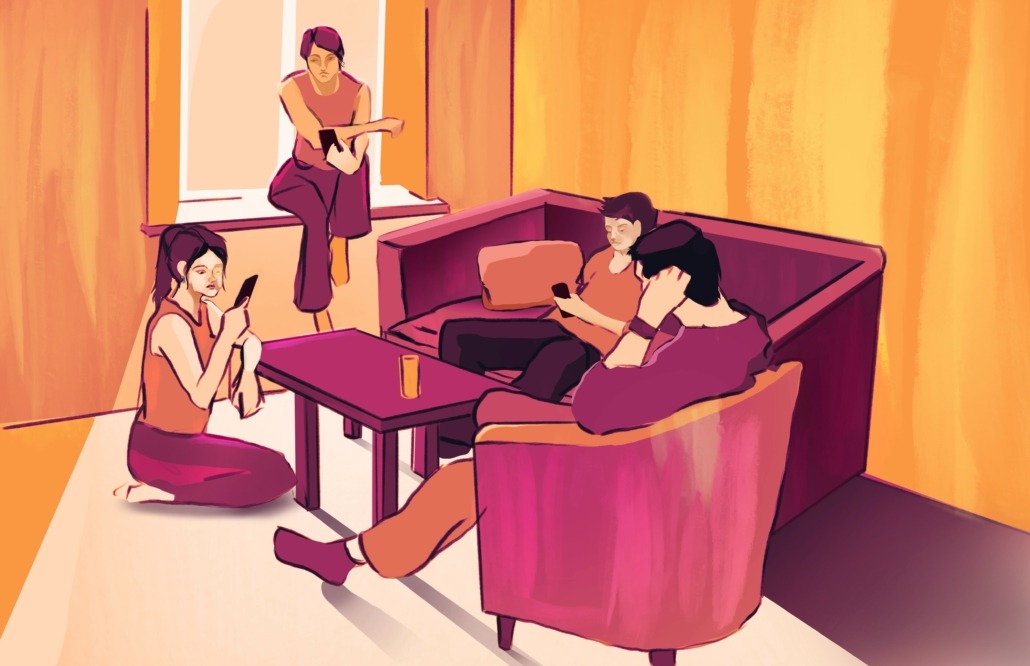

Constant digital communication is replacing patience and genuine connection.
Taking a look around Trousdale Parkway, there are so many people staring at their phones instead of taking in the atmosphere of the school we all worked so hard to get into. Granted, I have absolutely been guilty of taking for granted how privileged I am to be here — looking down at my phone to text my friends and forgetting to live in the moment. It’s easy to realize that the texts I so often prioritize responding to are in no way urgent and can wait.
With the rising reliance on phones in our society, texting has become a source of neverending false intimacy. Before the advent of mobile devices, humans possessed the ability to be comfortable in their own silence and company, yet texting on the regular has eroded that skill. The habitual need to be engaged in a digital conversation at all times is something no generation before us has faced so drastically.
The pressure to respond immediately and maintain a certain texting etiquette that is so normalized within Generation Z is not realistic whatsoever. So many relationships these days seem to need daily communication just to reaffirm your care for someone.
Just months ago, I had a conversation that still makes me laugh at how ridiculous my peer’s statement was. They insisted my texts had a “certain tone” which didn’t make them feel validated – which prompted me to consider how insufficient texting can be as a form of communication.
Still, I cannot find the answer to how on earth texts can accurately convey tones. Was it the way I capitalized a word? Or maybe how many minutes it took me to reply? Whatever the reason was, through this conversation it became clear to me that conversations over text cannot be interpreted the same as in-person conversations. Without facial expression, voice inflection or context, texts are unable to adequately express intentions.
Texting should not overpower our daily lives and it should certainly not be the main source of friendships or relationships. Actions like what emoji you use to react to a text shouldn’t be a tell-tale sign of how someone feels about you. We should not be so fixated on the technicalities of texting that we sacrifice our time and forgo fostering real-life relationships.
Many psychology based studies have found associations between low ability to regulate one’s emotions and habitual texting. Having to text people every time there’s a decision to make can significantly impact an individual’s ability to make choices and be independent. After all, free will exists for a reason. While it’s understandable to get feedback over text on serious situations like where you are planning to apply to graduate school, it’s not truly necessary for simple choices, like what to order at Panda Express.
Nurturing our ability to be confident in our own opinions and choices is so vital to our growth as young adults. We need to know what we stand for without the influence of others. We all have personal moral compasses that are unique to ourselves.
On top of the endless interaction that texting provides, it can stifle any experience of being simply and truly alone. While humans by nature are social beings, we also need solitude to recharge and rest.
Furthermore, maintaining the ability to be comfortable alone is such a valuable quality to have. Being alone in silence to think or meditate can be incredibly freeing. Whether it’s making the choice to take a walk surrounded by nature, reading in your room, or lying out on the beach, the ability to be happy in your own company instills a sense of composure and peace.
For myself, I find happiness exists in both being alone and being with my friends. There is a balance to be found. The biggest challenge I’ve faced in finding that balance is texting. The “Do Not Disturb” feature is my best friend, but once it’s turned off and my phone has 108 texts waiting for me, it’s hard to continue the calm that I find without it.
I have found that my best relationships are with people who don’t require daily texts. Being able to set up times for debriefs instead of spilling it all out over text allows for in-person communication to remain important and intact. It reminds me of when you’re a little kid, and you’re at elementary school waiting to be picked up by your parents, and you tell them absolutely everything about your day. Not everything needs to be immediate; not everything is vital to be told in that moment.
Reminiscing on the days of my childhood makes it so much easier to realize how differently we live now. Back then, did any relationship get destroyed over not sending a “good morning” text? To live in simplicity by limiting texting, we can allow ourselves to live life more fully and value memories we make as we make them. Being present in the moment is a choice, and it’s time that we make it.