Institute of Theatre & Social Change prompts progress
The School of Dramatic Arts institution creates impact that goes beyond the stage
By ASH DUNLAP
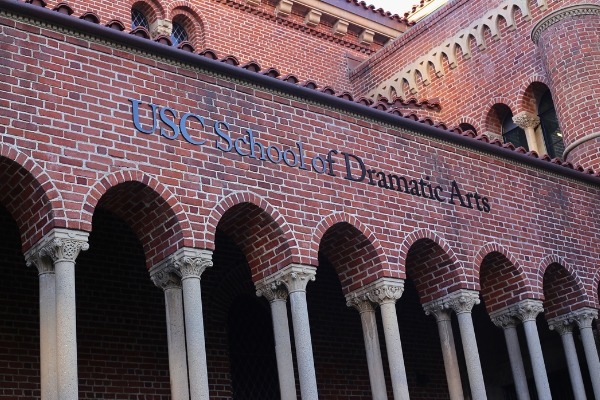

The School of Dramatic Arts institution creates impact that goes beyond the stage
Aiming to disrupt oppression, the Institute for Theatre & Social Change works to spread awareness and draw support for social issues via representation and awareness.
Located within the School of Dramatic Arts, the research institute uses performing arts and applied theater to pursue social change and impact.
Founded in 2018 by Brent Blair, a professor of theatre practice in voice and movement at the School of Dramatic Arts, ITSC is structured around research and collaboration. In establishing ITSC, Blair and the board decided on structural implementations to allow diversity of input and direction.
“We all try to rotate leadership to keep [ITSC] democratic and keep it lively,” Blair said.
An impactful current initiative supported by ITSC is Comic+Care, a project dedicated to the improvement of morale in hospital populations through medical clowning. The National Library of Medicine defines medical clowning as a practice that uses comedy to ease the stress of patients undergoing hospital treatment.
Comic+Care has collaborated with the Norris Comprehensive Cancer Center, Children’s Hospital Los Angeles and All For Kids.
“Being admitted into a hospital, especially if you’re in an inpatient situation where you have to spend the night or multiple nights as a child, is very alienating and traumatizing,” said Zachary Steel, the director of Comic+Care and an associate professor of theatre practice. “A clown can be very supportive, in terms of coming in and forming a bond with the patients and creating a kind of sense of comfort and playfulness.”
Current ITSC director and associate professor of theatre practice in acting, Laura Flanagan, said she collaborates with board members, advisory members and partners to strategize conferences, dialogues, events and more.
“[ITSC] strives to create those ties between USC and the community, between our students and the arts in general and the arts as an avatar for social and political and economic justice,” Flanagan said.
ITSC hosts events on and off campus, including “Your Vote, Your Voice” in Oct. 2024. In collaboration with the Center for Inclusive Democracy to promote civic engagement among students, the panel included voices such as Phillipa Soo from the original Broadway cast of “Hamilton” and Jerry Minor from “Abbott Elementary” to discuss the importance of voting.
“We strive to do campus-wide theatrical, activist and community awareness events yearly, whether that’s in environmental justice, social justice, or restorative justice,” Flanagan said.
Students can voice their creative contributions and research concepts to the institute’s board members to make their projects for social change a reality, Blair said. From these pitches, ITSC can contribute funds for students to enact research projects that work to create social action.
Another current research project initiated by ITSC is in collaboration with the Brain and Creativity Institute, in which students participate in studying wellness and brain health in association with acting and breathing exercises, linking psychological activity to theatrical practices.
Furthermore, ITSC encourages and implements opportunities for students within the SDA’s’ curriculum, such as offering the minor in performing social change. The institute advocated for this minor, which allows students to explore theater in community action, public speaking and diversity within theatrical settings.
On campus, Blair said ITSC serves as both a reflection of and a force against current topics impeding social progress.
“We are tackling issues that come up and wondering how we might enter into that conversation. What can we do about the lack of democratic representation in the climate in which we currently live? How can we foreground healing in this climate in which we currently live?” Blair said.
ITSC will also participate in upcoming USC Open Dialogue Project discussions through student- and faculty-led skits on the dangers and threats of generative artificial intelligence. They will present skit scenarios involving generative AI for academic dishonesty, generative AI against artistry and legal ownership of works, and generative AI’s potential harm towards mental health.
At the beginning of the Spring 2026 semester, ITSC announced its partnership with many schools at the University, including the Thornton School of Music and Annenberg School for Communication and Journalism. The institute has just begun to develop ideas for events and research projects in collaboration with these schools.
“The sky is the limit on how we can work together as art schools to insist that the arts [have] to be an essential part of the transformational nature of our society,” Blair said.
Correction: A previous version of this article stated that the Institute for Theatre & Social Change participated in a USC Open Dialogue Project discussion regarding AI. The article was updated Mar. 4 at 7 p.m. to reflect that ITSC’s participation in the discussion will occur in the future. The Daily Trojan regrets this error.