University looks ahead to 2028 Olympics
LA28 provides a chance for lasting transformation, an Los Angeles city official said.
By APRIL MAO
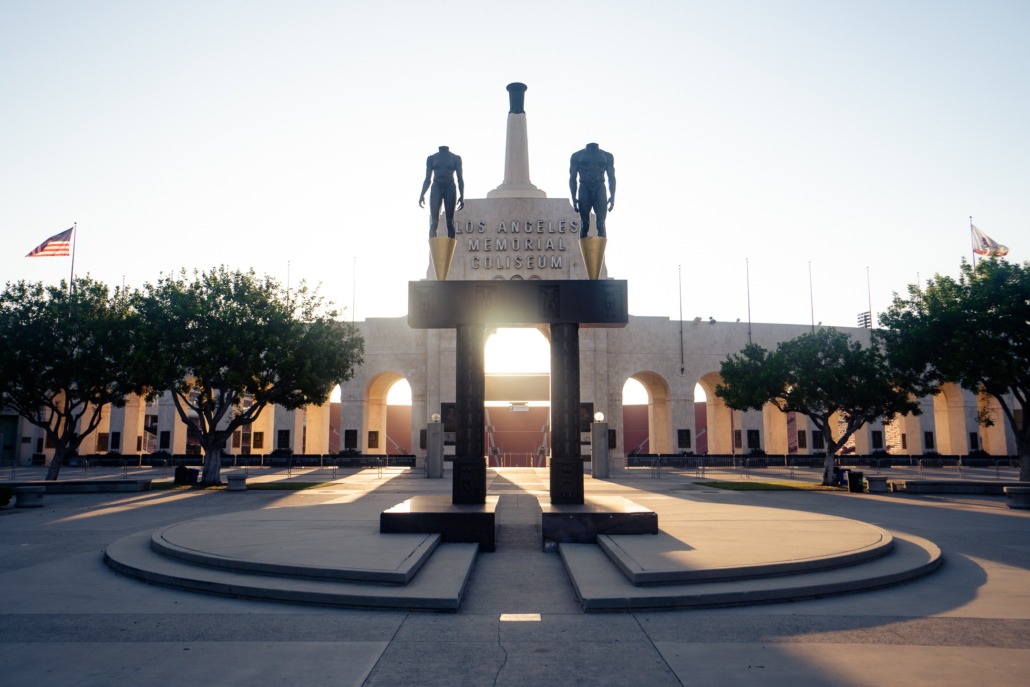

LA28 provides a chance for lasting transformation, an Los Angeles city official said.
Over 10 million tickets. Three million visitors from outside of Los Angeles. Thirty-six sports. More than 800 medal events, and 15,000 athletes. Over 60 days of operations. These numbers are going to come to life in the heart of Los Angeles in two years’ time.
“It’s like putting on seven Super Bowls a day for 16 days,” said John Harper, the LA28 chief operating officer. “Then taking a 10-day break and putting probably three Super Bowls a day on for 12 days straight for the Paralympics.”
Harper was one of the speakers for the first event of USC’s weeklong event: “What the Games mean to LA,” hosted by the Viterbi School of Engineering’s Innovate x LA.
“The magic is really in the journey that we’re on right now and then what will happen after the game,” Harper said. “The games are a spectacle like nothing else in the world. It will be the biggest gathering in a sports entertainment capacity ever.”
For L.A., the spectacle of the Olympics carries decades of history. The city previously hosted the Games in 1932 and 1984, and will host the Paralympic Games for the first time this year. Paul Krekorian, a panelist and the executive director of the L.A. Office of Major Events, said the 2028 Games offer an opportunity for long-term transformation just like the 1984 Games, which he called one of the “most financially profitable games ever.”
“There’s going to be about $18 billion in economic activity that [comes] from the ’28 games, much of which will be right here in Los Angeles, creating jobs, creating opportunities, boosting local businesses.” Krekorian said. “But in addition to that, already, LA28 has committed $160 million for youth sports programming in our parks.”
L.A. will not construct permanent Olympic venues, said moderator Alan Abrahamson, an associate professor of journalism at the Annenberg School for Communication and Journalism and veteran Olympic journalist. Instead, existing sites such as the Los Angeles Memorial Coliseum will be used.
“The University is literally across the street from the park and the Coliseum,” Abrahamson said. “There will be untold numbers of great moments there, especially the first week, because track and field is going to happen the first week in the Coliseum.”
Harper said the preparation process is anything but simple, and described the scale as unprecedented.
“The amount of people we’re bringing in and out of these venues, the operations will be unparalleled [in] scale,” he said. “So far, we [have] over 215,000 people that have registered for our volunteer base, we’ll probably need 60,000 [more].”
While city officials have highlighted the economic benefits of LA28, it may also put pressure on local housing markets, Harper said. In response, LA28 had partnered with Airbnb to help house tourists, and ensuring people weren’t evicted from their long-term housing to create short-term housing for the games was “top of mind” for Mayor Bass.
For Mai Baily, a sophomore majoring in civil engineering, the issue is not theoretical. She said her own housing situation has already been affected by the approaching Games.
“I’m being threatened [to move out] by my landlord because she wants to raise the rent for the games,” Baily said. “That’s a direct impact it has on people living here.”
For Innovate x LA organizers, the event was meant to link the Olympic conversation with student innovation on campus. Mitchell Kirby, the executive chair of Innovative x LA and a senior majoring in civil engineering and mechanical engineering, said that the panel encourages students to adopt the problem-solving mindset of hackathons and apply it to challenges L.A. may face during the Games.
“The goal of this is to produce companies from USC that do innovate Los Angeles,” Kirby said. “The long-term goal is that one day, for some reason, something in L.A. is being bettered because of a company that came out of this program.”
As the panel concluded, Krekorian said LA28 expands far beyond being just a sports event, but also represents endless opportunities for the city and the people in it.
“Dream bigger, because this is more than a once in a lifetime opportunity. It’s an unprecedented opportunity,” Krekorian said.“The biggest civilian event in the history of the world, coming to our city.”