We must all live as if we will be reincarnated
Hinduism’s values reflect the importance of empathy in one’s journey to the afterlife.
By ANAHITA SAXENA
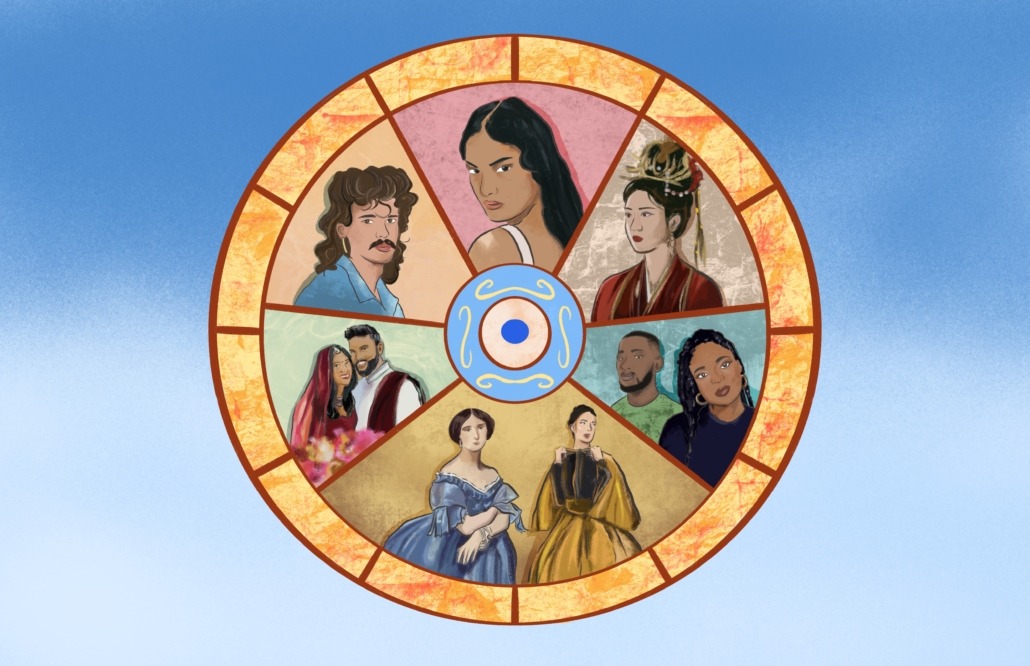

Hinduism’s values reflect the importance of empathy in one’s journey to the afterlife.
Say you get run over at the Trousdale and Jefferson crosswalk and die. Before you know it, you are reborn, but into the Ottoman Empire in 1820. This is what Hinduism asks its followers to believe: After death, while your physical body may perish, your soul remains to exist in the body of another being.
Once you have accumulated enough good karma to scale the castes, living many lives in the process, you attain nirvana, or enlightenment. Essentially, extreme empathy is enlightenment. You become godly once you have walked in everybody’s shoes.
Hinduism is the world’s oldest religion, with the oral root of the entire spiritual texts of the canon dating back to 850 B.C.E., and one of the most vast. In addition, it is a poly-monotheistic religion that has around 330 million gods, with varying texts that disagree on who is the most powerful one, or the creator. In my experience, the main texts are the Vedas, the Ramayan, the Mahabharat and the Bhagavad Gita, which is one chapter of the Mahabharat that emphasizes the importance of reincarnation.
The Gita tells its readers that their karma, or their actions, impact their future life. If one lives a life where they do good, they will certainly be born into a good life. However, there is more to take from reincarnation: It means every time you treat another badly, you are doing it to yourself, either yourself in one of your past lives or yourself in your future life. According to Hinduism, it is clear: You must treat people exactly the way you want to be treated.
Yet, many of us do the opposite. A jarring 80% of Americans believe that the nation is polarized on “the most important values,” according to a 2024 Gallup poll. There are many possible reasons for this, from politicians who draw us apart by emphasizing an us-versus-them mentality to the sheer size of the country. Many New Yorkers or Angelenos couldn’t imagine the daily life of a person from a rural town in the Bible Belt. But in my opinion, our polarization is rooted in the fact that we decide someone else’s intentions before we meet them.
In my liberal echo chambers, I too often hear people refer to Trump voters as idiotic or uneducated. In that same vein, I hear that those who voted for a third party in the 2024 election because of Kamala Harris’ support of Israel are insensitive and wasted their vote.
But those who make these comments don’t think of the working-class Americans who couldn’t afford to make their kids breakfast and turned to President Donald Trump when his campaign promised to reduce the cost of eggs. They don’t think of the Muslim Americans who refused to support the Biden administration’s bombing of their brothers and sisters in Palestine.
Would you, with their upbringing and identities, feel the same?
Hinduism teaches us that so long as we believe in ourselves, we can be as strong and capable as we wish to be, in spite of difference and change. In the Ramayan, Hanuman, a monkey god whose true power was hidden from him as a curse as a child when he pranked an old sage, was faced with an impossible task: He had to jump from the bottom of India to Sri Lanka, a journey totaling around 30 miles. Hanuman knew he wasn’t capable of jumping so far, just as many of us cannot imagine extending our empathy to those incredibly far from ourselves.
But Jambavan, the king of the bears, had known Hanuman when he was younger and his age and honesty assured Jambavan that Hanuman could be reminded of his powers. Suddenly, Hanuman began to grow until he was as tall as a mountain, and he flew with ease.
While this fantastical story may or may not have happened, the message is clear — once you truly believe in yourself, you can do anything and everything you put your mind to.
We can grow bigger than our bitterness toward the political party that we are told is beneath us, that wants to take away our rights, that wants to suppress us. We must look at them with love, as if we are them.
From gun rights to abortion laws to immigration policy, individuals across the spectrum fear for their rights equally, whether it be their Second Amendment rights or their bodily autonomy.
It is time for our young minds, who will soon be our leaders, to love this country and its people as if we share a soul — because I believe we do. So the next time you catch yourself frustrated by someone else’s ideology, don’t rush to assume they are beneath you or know less than you. Think of them as yourself, for they love the same, hurt the same and laugh the same. The only thing more powerful than hate is love.