FEMININOMENON
Brandi Carlile saves Americana
The Grammy winner’s music confronts bigotry while testing artistic boundaries.

By FIONA FEINGOLD
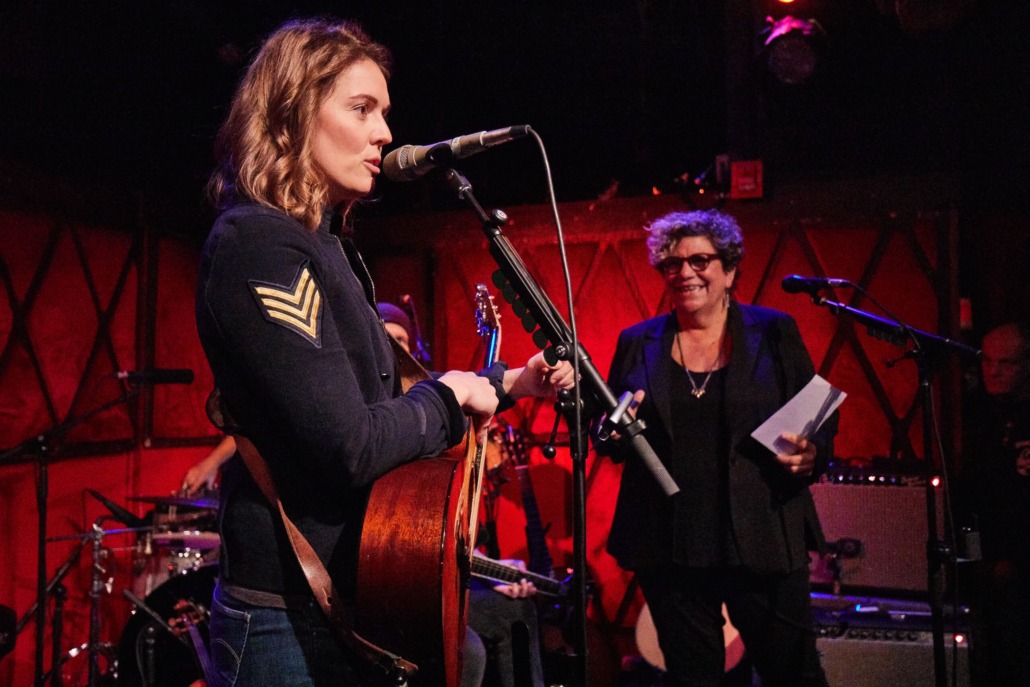

The Grammy winner’s music confronts bigotry while testing artistic boundaries.
Brandi Carlile is redefining what Americana, country and rock can be — and who they’re for.
As a lesbian artist occupying genres long dominated by men, Carlile’s work shows that folk is deeper than men crooning pitifully shallow lyrics over plucky fingerpicking, and country isn’t just guys in trucks singing about babes and beer. Rockstars don’t have to degrade women to make good music. Her versions of these genres are for everyone.
Last Friday marked my second time seeing the 11-time Grammy winner in concert. For her Los Angeles stop of The Human Tour, Carlile performed at the Kia Forum with opening act The Head And The Heart. The ongoing tour promotes her new album, “Returning to Myself,” which was released last October.
Carlile is perhaps best known for her breakout rock ballad, “The Story.” She first gained traction following the song’s emotional rendition on medical drama “Grey’s Anatomy” in 2011 sung by the show’s cast, and went on to take the Americana scene by storm.
In the decade following “The Story,” Carlile continued to release music but remained just outside of the limelight until 2018, when she released her sixth studio album, “By the Way, I Forgive You,” catapulting her to greater critical acclaim. In the eight years since its release, “By the Way” remains just as relevant as ever, commenting on perennial issues of heartache and injustice.
The album’s lead single, “The Joke,” has since become one of Carlile’s most popular songs. The acoustic track takes a stand against intolerance without coming across as preachy, even while Carlile belts over a grand string arrangement. The song’s hook gracefully reclaims historically belittled individuals’ power: “I have been to the movies, I’ve seen how it ends / And the joke’s on them.” Carlile can barely take her offenders seriously.
Part of the song’s beauty is that it focuses on those impacted by bigotry rather than its proponents. Carlile told NPR in 2017 that “The song is just for people that feel under-represented, unloved or illegal.” The verses address individuals struggling to conform to traditional gender norms, and the chorus conveys a message of hope, not anger. The bullies don’t deserve the energy garnered by her frustration — she’s fine to “let them laugh.”
The rest of “By the Way” tackles a mosaic of social issues, including violence, motherhood and addiction. Carlile sticks it to the man in the rock anthem “Hold out Your Hand,” celebrates her eldest daughter in “The Mother,” a heartwarming guitar lullaby, and reflects on an old friend struggling with mental health issues in the upbeat, country-rock “Sugartooth.”
There’s nothing wrong with singing about heartbreak, as Carlile does in country-pop tunes “Every Time I Hear That Song” and “Harder to Forgive,” but the album’s breadth of topics is a breath of fresh air.
The throughline of “By the Way,” along with Carlile’s recent work, is her willingness to play with the boundaries of genre, while breaking boundaries as an outspoken LGBTQIA+ artist. Tracks oscillate between folk, country and rock in a way that feels authentic, not sonically incohesive or forcedly experimental. This playfulness makes Carlile a joy to listen to and makes the listener even more inclined to want to hear what she has to say.
Carlile’s songwriting is intimately personal, but she’s also a vocal powerhouse, showcasing her strength as an artist and the empowerment behind her work. Her agility and commanding vibrato contrast the raw humility of her lyricism.
It’s this balancing act that made an arena seating thousands of fans feel almost as personal as Carlile’s Tiny Desk Concert — save for the occasional thunder of an electric guitar riff. While there, I was struck by Carlile’s raw sincerity. She seemed so happy to just be on stage, donning an “I Heart LA” tank top for the show’s encore.
Carlile’s latest album, “Returning to Myself,” expands on many of the themes in “By the Way.” “Church & State” was written in response to the 2024 election, while “A War With Time” and “You Without Me” reflect on her children growing up. The album, with several tracks co-created alongside folk superproducer Aaron Dessner, features Carlile at her most self-assured.
That unassuming confidence translates to her music. Carlile’s Americana is unafraid to confront the deeply American injustices that underlie our country. When singing about issues like discrimination and substance abuse, it would be easy for her to focus on their inherent negativity. But Carlile’s hope for a better world is a protest symbol. She knows that wallowing in hurt is exactly what the other side wants. “The best revenge would be a life well lived.”
If someone doesn’t like that, who cares? The joke’s on them.
Fiona Feingold is a junior writing about women in the entertainment industry in her column, “Femininomenon,” which runs every other Friday.