Authenticity in the age of digital memories
Reframing spam accounts can serve as acts of self-care improve our collective life.
By MAGGIE SOENNICHSEN
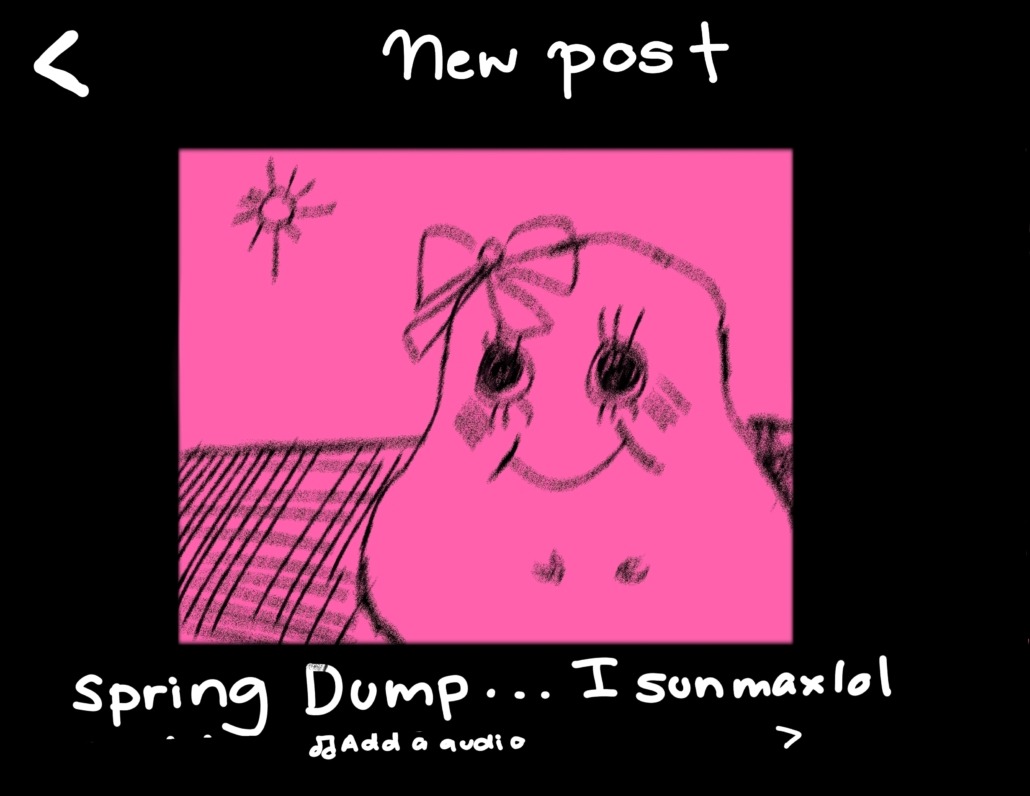

Reframing spam accounts can serve as acts of self-care improve our collective life.
Social media has increasingly become a forward-looking space. Users curate a polished public-facing image in the hope that it appeals to future followers, employers and friends. In the process, many lose touch with their nuanced personalities and tangible reality. What if there is a mindful way to engage with these platforms, not as numbing vices but as tools for self-care?
I have maintained an Instagram spam account since I was a sophomore in high school. Like many, I felt compelled to create the page when I noticed that integral aspects of my identity had left my consciousness after I became obsessed with curating a pristine image of myself.
In recent years, there has been much talk about how social media users compile “highlight reels” of their lives. Individuals strategically post images that portray only the sunniest and most jealousy-inducing happenings in their lives.
As Instagram quickly becomes a platform for professional and social self-promotion, an earnest spam account is the perfect means to nurture your beautiful human messiness and thoughtfully engage with your digital memories.
When 57% of Generation Z want to become influencers, according to a 2023 Morning Consult report surveying 1,000 members of Gen Z in the United States, Los Angeles would benefit from adopting a “social media as self-care” mentality.
If every influencer and average person on the internet abandons their “unaesthetic” qualities in pursuit of a flawless or branded online persona, innovation and individuality will be hindered for a large population. Young people’s fear of judgment, cultivated by this social media-focused approach, could devastate their engagement within their artistic, political and local communities. Users align with artists and opinions that are trendy, rather than what they deeply believe.
My main profile’s meticulously collaged wall of images reflected a person who only exists on this very specific digital plane. That girl is someone I admired once and subconsciously emulated, but she is not me — at least, not all of me. I crafted an idealized image by patchworking together my best characteristics, but I craved an outlet for the qualities I censored.
The solution I calibrated was a spam account. After creating the page, I began tentatively posting images that I would not share with a larger audience but were still collectively flattering. However, soon I stopped thinking so much about how my posts would be consumed and became more concerned with what they did for me.
A second shift in mindset occurred after I learned about the damaging effects that photographing daily life can have on memory. This phenomenon is referred to as the “photo-taking-impairment effect” — when memories are offloaded in the form of digital photographs instead of being cognitively processed.
Before, I felt self-induced pressure to document every moment that strayed from the ordinary. Any time I encountered something new or exhilarating, I experienced it through my camera’s lens. When I reflect, the alterations this preoccupation made to my memories are apparent — I remember, in high-definition, the photos I took, but not any subtle human interaction, the smell of the air or the way my clothes felt on my body.
Another study conducted by Liz Brewster and Andrew Cox analyzed how “digital daily practice,” specifically through “a photo-a-day,” could be a form of self-care. As the title suggests, participants captured something of significance from their lives in a daily photograph that they shared on their platform of choice. Participants reported that the task was the incentive they needed to be more present, seek out a gratifying activity or cultivate a lasting curiosity for the world around them.
I similarly treat my spam account like I would a photo journal — photographing only figures and shapes that catch my eye: leaves growing from sidewalk cracks, a tree’s human-looking shadow, a discarded necktie or a cat that sidled up to me and became my friend. This practice integrates a necessary pause into my fast-paced life. Photographing an observation grants me the permission that I don’t offer myself to take a deep breath and step outside my mind.
A spam account should strike a balance between the photographic documentation of life and an undistracted existence in the present moment. A spam account is a space where performance and pressure are outlawed. Analog participation and memory retention is prioritized because fewer photos are required to be taken when the goal is not perfection.
Within a spam account, sadness, malaise and frustrations are shared in tandem with life’s joys and successes. As I scroll through my archived phases, I am reminded of where I come from and where I have yet to go. It’s simply a bonus that I get to share the world through my eyes with my friends.
In an age when the digital world often feels all consuming, a spam account is a form of self-care — an occupation that encourages its user to reflect on their past, anticipate their future, wonder at the physical world around them and reside comfortably in their individuality.