‘Sean the Baby’ is alum’s musical love letter to his son
Jee Suk Kim’s debut short film explores the triumphs and pitfalls of parenting.
By KIRA MANELSKI
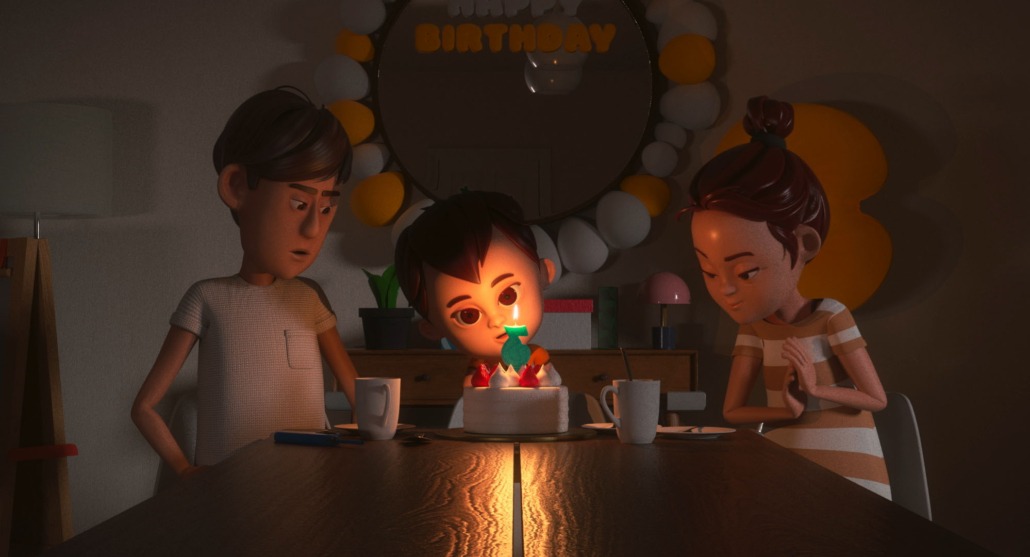

Jee Suk Kim’s debut short film explores the triumphs and pitfalls of parenting.
Most fathers hope that their sons describe them as their hero. When director Jee Suk Kim was potty-training his toddler, Sean, he realized that his moments of frustration might be making him the villain.
Suk Kim was given a diary to record his son’s development by the hospital when Sean was born. He slowly realized that his entries about navigating parenthood might make for innovative story material.
“Sean the Baby” (2025), Suk Kim’s master’s thesis project at the School of Cinematic Arts, explores a lesson he learned as a new parent: the necessity of allowing one’s child to develop at their own pace.
The animated film follows a father-son duo as they navigate a fantasy dreamscape, reflecting the child’s anxieties about potty-training. The pair face off against Evil Dad, the alter ego of Suk Kim. Evil Dad is the personified manifestation of Suk Kim’s anger and impatience regarding his son’s delay in achieving this milestone.
For Suk Kim, a graduate of SCA’s animation and digital arts master’s program, he said inspiration for his debut short, “Sean the Baby,” and indeed his whole film career, began when his son, Sean, was born.
“I was not a filmmaker … I was a designer, and I had my career,” Suk Kim said. “I realized that I know how to make image[s], and it [would] be great if I could make something for my son.”
Motivated by the kids’ content he and Sean watched on YouTube, Suk Kim decided to take the leap and embark on a more personal journey: the creation of a short film series, each one dedicated to a specific stage in Sean’s life.
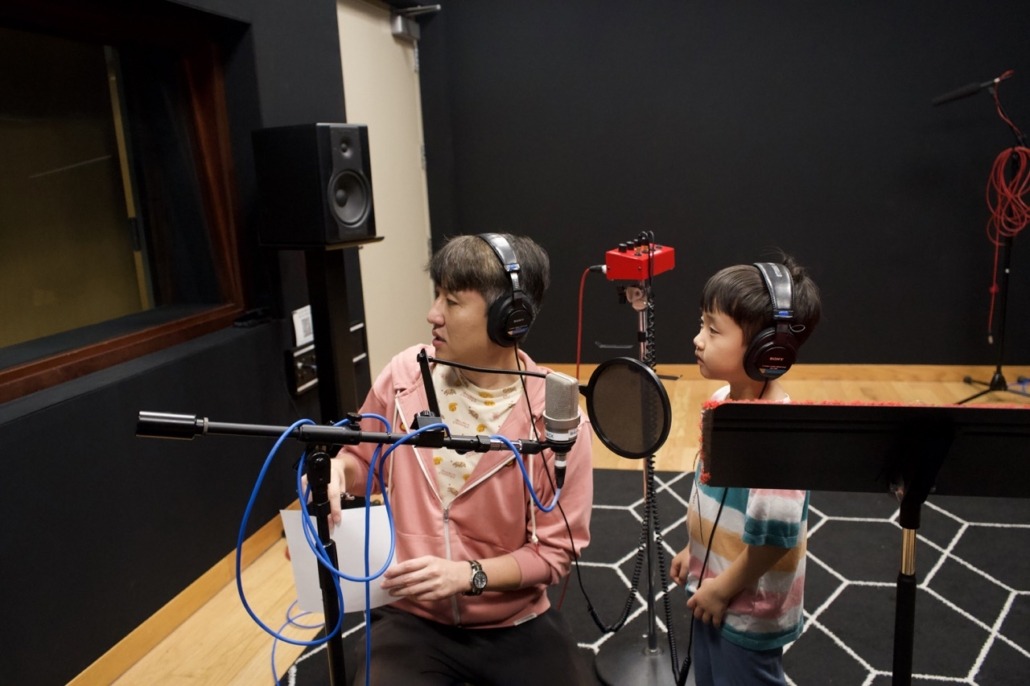
There was one catch: To connect with Sean, a music lover, Suk Kim wanted to make his short film, “Sean the Baby,” a musical. To achieve his vision, he knew he needed collaborators.
Amélia Rolland, known professionally as AMÉLIA., a composer and graduate of theThornton School of Music’s screen scoring master’s program, said she was immediately drawn to Suk Kim’s story. When Suk Kim pitched his story to students in the SCA and Thornton master’s programs, she was thrilled to hear it would be a musical.
“As a songwriter, I was like, ‘Wait a second. Are you telling me I get to tell a beautiful story and write songs for it?’” Rolland said.
Knowing that an original musical would be too large-scale a project for a single composer to handle, Rolland approached Cameron Adams, a fellow student in his final semester with the screen scoring program, and introduced him to the film. Adams said he was instantly committed to the idea of composing for the short.
“The world of ‘Sean the Baby’ that Jee had devised was so artistically vibrant and creative. The way that it was animated spoke to a very intuitive musical idea,” Adams said.
The two friends, Adams and Rolland, were easily able to strike a creative chord with one another, fueled by Suk Kim’s story.
“Jee truly gave Amélia and I full creative freedom over the music, but that allowed us to find his vision as well,” Adams said. “We would all come with a bunch of ideas, and instead of having to choose the best ones, it was, ‘Let’s find a way to do all of them.’”
“Sean is Three,” the song Adams and Rolland composed together, was nominated for the 2025 Hollywood Music in Media Awards’ “Songs in Short Film” category. The pair also received the Bronze Medal at the Global Music Awards for Original Score/Soundtrack for Short Film for their work.
“For ‘Sean Is Three,’ Cameron just sent me that instrumental. And he’s like ‘Hey, I can’t write the song. Can you write the song on top of that?’ In 15 minutes, the song was written … We didn’t overthink anything in this process,” Rolland said.
Suk Kim listed his composers as “creative thought partners,” a term from his career as a designer, to underscore the importance of the collaborative fabric of artistry that he said brought “Sean the Baby” to life.
“I want to communicate with my composers, and I want them to join my storyline,” Suk Kim said. “No matter if we have progress or not, every other week we regularly have a meeting and keep exchanging our thoughts. … Making that animation for Sean was my dream, but I couldn’t complete that film by myself.”
Reaching children and parents alike with empathy, compassion and respect for one another was one of the film’s main goals, according to Suk Kim’s director’s statement.
His director’s statement declares that “through surreal visuals and heartfelt songs, the film explores how caring for a child can transform a parent. Created with artists from diverse backgrounds, it reflects our shared belief that stories about family still matter — and can connect us across generations.”
The film’s ability to bridge generational divides and serve as a vehicle for communication between parents and children intrigued the creative team, all hailing from diverse backgrounds.
“It’s based on this kind of universal emotion, this heartwarming family story, mixed with creative and original ideas, like vacuum villains,” said producer Jiyoung Choi, who graduated from the producing for film, television and new media MFA program last May.
Shagun Kanwar, a graduate of the Peter Stark producing program, said that the emphasis on love and family connection is what differentiates the film from others, paving the way for its positive reception. The team won awards at CTNX, Noho CineFest, the Bucheon International Animation Festival, the Catalina Film Festival and the Kids First! Film Festival last year.
“In today’s age, there is such a proliferation of content, and that doesn’t necessarily mean it’s great content,” Kanwar said. “It’s really important to bring forth meaningful, intentional stories into the world that are crafted with a lot of love.”