The University must foster civic dialogue
Canceling the gubernatorial debate further erodes trust in public discourse.
By SPRING 2026 DAILY TROJAN EDITORIAL BOARD
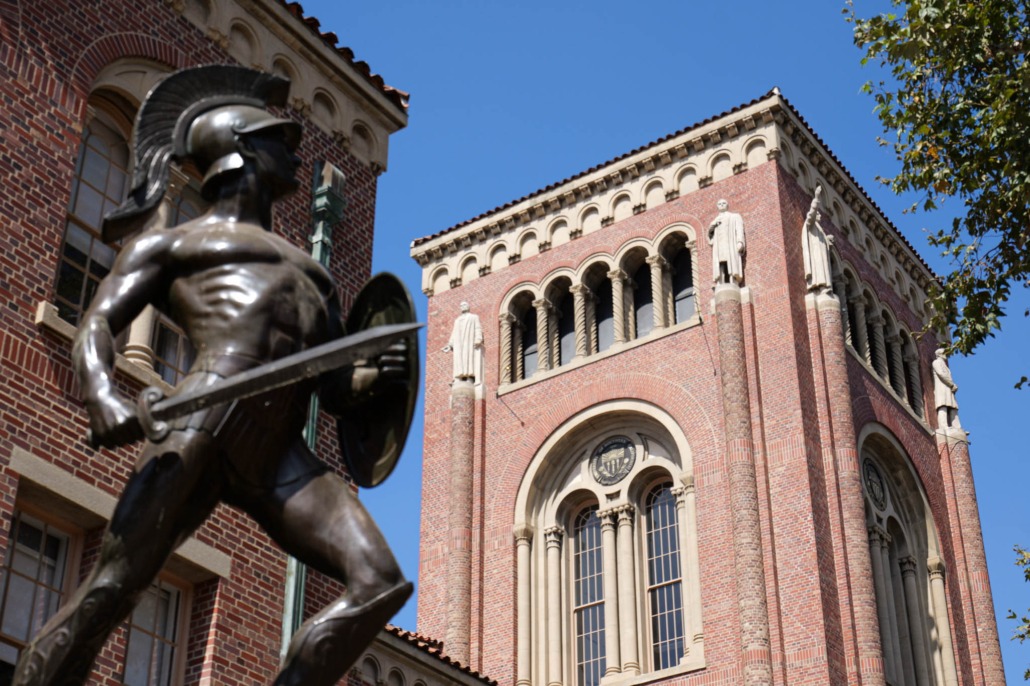

Canceling the gubernatorial debate further erodes trust in public discourse.
The Daily Trojan Editorial Board supports independent and vigorous civic dialogue. We believe that in elections as important and uncertain as the 2026 California gubernatorial race, the ability to explore all candidates is necessary to an informed electorate. For that reason, the Daily Trojan Editorial Board condemns USC’s reckless and undemocratic decision to cancel the gubernatorial debate planned to take place at University Park Campus on Tuesday, less than 24 hours before it was set to take place.
On March 14, the Center for the Political Future announced it would host the 2026 California gubernatorial debate, entitled “Your Voice, Your Vote: Race for Governor 2026.” The debate was scheduled to feature the top six candidates, as determined by a formula weighing polling and fundraising metrics to assess candidate viability.
Upon release of the debate slate, other candidates, including former Secretary of Health and Human Services Xavier Becerra, former state Controller Betty Yee and former Los Angeles Mayor Antonio Villaraigosa, criticized the University’s selection criteria and raised concerns about fairness and representation. Becerra, specifically, accused the formula of racial bias.
No candidates of color were invited to participate in the debates, as the top six candidates as determined by the formula in the scheduled debate were white. The formula, created by Christian Grose, a professor of political science and public policy at USC, weighted polling numbers and fundraising at 65% and 35%, respectively. Grose was not involved in the debate’s organization nor the selection of the candidates, according to a statement released on March 24 from CPF.
Thus, any criticism of the inclusion of candidates should not be levied at Grose but rather the CPF, which had the ultimate decision over which candidates appeared on stage. We affirm Grose’s position as a valued faculty member and scholar who has written extensively on voting rights and racial dynamics in American politics, and stand by his rigorous and comprehensive formula.
Grose simply developed the methodology. The Center made the final decision — and it should have considered representation alongside the formula’s results.
In a race with more than 60 declared candidates and 10 candidates vying for a spot in a two-hour debate, some form of threshold was inevitable. It would be unrealistic to expect every candidate to participate in a single debate; time constraints, audience attention and event logistics make limits unavoidable.
But acknowledging those constraints does not absolve USC of responsibility for how the final slate reflected the state’s diversity. The formula may have been methodologically sound — but diversity should have been considered at the forefront of the final decision, especially when excluded candidates included experienced public officials and former Cabinet secretaries.
Grose’s formula was not designed to exclude any candidate. Instead, it reveals a larger systemic issue within political exposure: White candidates are often more visible, and thus seen as more electable. In a political climate where Diversity, Equity and Inclusion initiatives are being rolled back nationwide, candidates of color are frequently framed as riskier electoral choices. But this does not excuse CPF’s oversight.
Historically, campaigns have centered on white candidates, who faced markedly different structural barriers than many candidates of color navigating modern electoral systems.
In this context, the debate stage becomes more than a neutral forum. It is a site where decisions about inclusion carry symbolic and material consequences. Who is seen, who is heard and who is deemed viable are not simply reflections of public opinion but are shaped by institutional choices. At USC specifically, those institutional choices resulted in a debate stage that did not reflect the diversity of the candidates running for governor.
Seasoned candidates, even if they aren’t highly polled, deserve a chance. Exposure itself is a form of political capital — and debates remain one of the few mechanisms that can rapidly shift a candidate’s trajectory.
The cyclical nature of low-polling candidates being excised from debates continues to lower their exposure. However, by canceling the debate, the University prevented voters from engaging with candidates altogether. Canceling the debate did not solve the representation problem — it removed the public’s opportunity to evaluate candidates altogether.
Plainly, these candidates of color should have been included on the debate stage. The University should have dealt with the criticism when it was levied two weeks ago, not hastily cancel the debate 24 hours prior.
With the primary in June and general election in November, hearing directly from our potential next governor is crucial. Voters deserve the opportunity to evaluate candidates’ priorities, temperament and vision for the state.
If it is truly “Your Voice, Your Vote,” the University must allow the conversation to happen — and ensure that its decisions reflect the diversity of the state and student body it serves.
The Daily Trojan Editorial Board is a group of diverse editors and staffers from the print Opinion section. The views of the Editorial Board do not reflect the Daily Trojan staff as a whole.