Federal judge blocks latest ACIP appointees
Chief Campus Health Officer Dr. Sarah Van Orman said she will advocate for students’ vaccines to be fully covered.
By QUINTEN SEGHERS

Chief Campus Health Officer Dr. Sarah Van Orman said she will advocate for students’ vaccines to be fully covered.
A federal judge ruling on March 16 blocked the latest appointees to the Advisory Committee on Immunization Practices, which develops nationwide vaccine recommendations. Chief Campus Health Officer Dr. Sarah Van Orman said she is concerned that states breaking off from the ACIP’s recommendations, like California already has, would result in a “patchwork” of insurance coverage levels.
California, Oregon, Washington and Hawai‘i created their own West Coast Health Alliance last year in direct response to the ACIP’s changing recommendations. The move, done in tandem with the passage of Assembly Bill 144, successfully cleaved California off of the ACIP’s vaccine guidance.
The Trump administration’s vaccine policy, which has upended decades of immunization standards by rescinding numerous long-established recommendations, is in legal limbo after a federal judge temporarily blocked all 13 of Health and Human Services Secretary Robert F. Kennedy Jr.’s appointees to the ACIP from acting in their official capacities. New appointees have been added on three separate occasions since last June, when Kennedy fired all 17 previous experts.
The court’s decision is not only preventing the ACIP from meeting, since most of its members can no longer vote, but also halting implementation of any recommendations approved by the 13 Kennedy appointees.
Over the past year, the panel voted not to recommend certain flu vaccines, to limit who should receive annual COVID-19 booster shots and to advise that young children not receive the combined measles, mumps, rubella and varicella vaccine. At the time, Van Orman said the MMRV decision was “strange,” “unfortunate” and not based on “a good understanding of the science.” She repeatedly recommends abiding by the old vaccine guidance.
The ACIP wields significant influence over insurance coverage for vaccines, with many insurers’ coverage documents directly referencing the panel, Van Orman said in a briefing with campus media Monday.
Both California and federal law require certain health insurance policies to cover specific Essential Health Benefits, including preventive vaccines. USC’s Student Health Insurance Plan, administered by Aetna, is regulated at the state level by the California Department of Insurance, and Van Orman said Student Health would “certainly continue to advocate” for preventive vaccines being fully covered by Student Health’s plan.
All USC students must have health insurance. According to Aetna, the health insurer that provides SHIP, 100% of “preventive care immunizations” are covered — but only when administered at in-network providers.
Van Orman said Student Health is now relying on vaccine recommendations from the State of California and various non-governmental health organizations, including the American Academy of Pediatrics, which originally filed the lawsuit against Kennedy that blocked his ACIP nominees. According to its website, the AAP advocates for the elimination of religious exemptions to vaccine requirements, but USC permits them.
“There are really good guidelines from most professional organizations that can help shape policy here at USC,” Van Orman said. “We’ve [previously] been in a situation where we’ve been able to have national guidance … [we don’t have] strong federal policy-making on vaccines [anymore].”
USC, however, allows for medical or religious exemptions, while requiring all other students to be vaccinated against measles, mumps and rubella; varicella; and meningococcal disease. By contrast, the University of California system, California State Universities and California K-12 public schools also require the tetanus, diphtheria and pertussis vaccine — USC only “strongly recommends” it.
Most individuals receive a Tdap shot at age 11 or 12, followed by a booster shot every decade to combat naturally waning immunity, according to the Centers for Disease Control and Prevention. Last spring, USC experienced a surge of whooping cough cases, which Van Orman said at the time was “unprecedented.” That outbreak led Student Health to consider mandating Tdap vaccinations, but it ultimately chose not to, Van Orman said.
“Most of our students who are actually getting pertussis … are current with their Tdap,” Van Orman said. “It’s more a case of waning immunity than it is not being vaccinated, so implementing a more strict vaccine policy wouldn’t necessarily [change] the immediate communicable disease risk.”
Young, healthy adults who contract whooping cough are typically not hospitalized, but it is still “miserable,” Van Orman said. The coughing fits can last one to 10 weeks and may cause vomiting, difficulty breathing and fractured ribs. According to the CDC, “those who get these coughing fits say it’s the worst cough of their lives.”
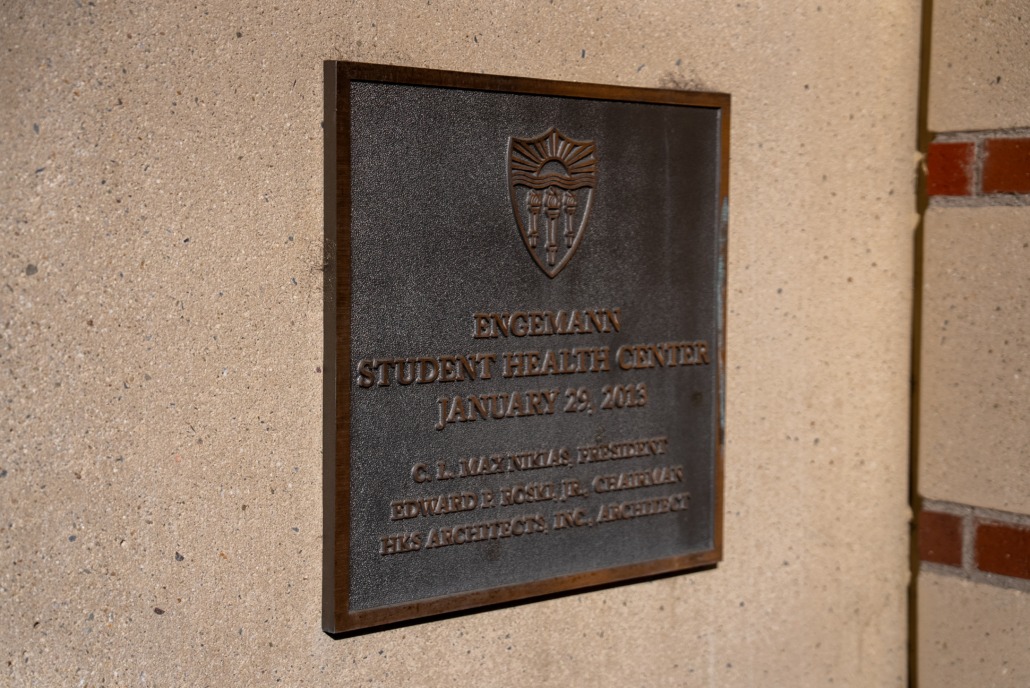
Student Health administers vaccinations at the Engemann and Eric Cohen Student Health Centers, at USC’s University Park and Health Sciences Campuses, respectively. Appointments can be made through MySHR or by calling 213-740-9355.