CHRONICALLY ONLINE
Grass is greener when you touch it
Being chronically online has its merits, but escaping the internet is vital.

By ANNA JORDAN

Being chronically online has its merits, but escaping the internet is vital.
If my column’s name is any indication, for better or for worse, I consider myself a chronically online person. I’ve always treated keeping myself informed on the happenings of the internet, ranging from the mundane to the globally consequential, like it’s my job, whether I’m writing an installment of this column that week or not.
Though I originally scoured the internet on behalf of my emotional attachments to fandoms or cultural phenomena as young as 10, I’ve built a thick enough exterior to largely avoid any irrational emotional response to most internet discourse. For example, if someone creates a ridiculous argument about Dr. Langdon in “The Pitt,” I won’t have a breakdown and dox them, a response I have seen multiple times on X over the years.
But the more detached I’ve been from the information I’ve been peddling, the easier it’s become for me to scroll longer and disconnect more from the validity of any emotional responses to online discourse. I write everyone off as more chronically online than I am, but in reality, these are real people feeling deeply human emotions, just often in the wrong place.
Going into this past spring break, I was looking forward to having more time to scroll as a way of making up for any actual work or learning I did. Mama needed to rot. But I was terrified of how much time I might spend online, letting myself get sucked into the chronically online vortex and pitying those who were more online than I was, while simultaneously scoffing at people who weren’t as well-informed and hadn’t decided to use their precious time off to read ragebait.
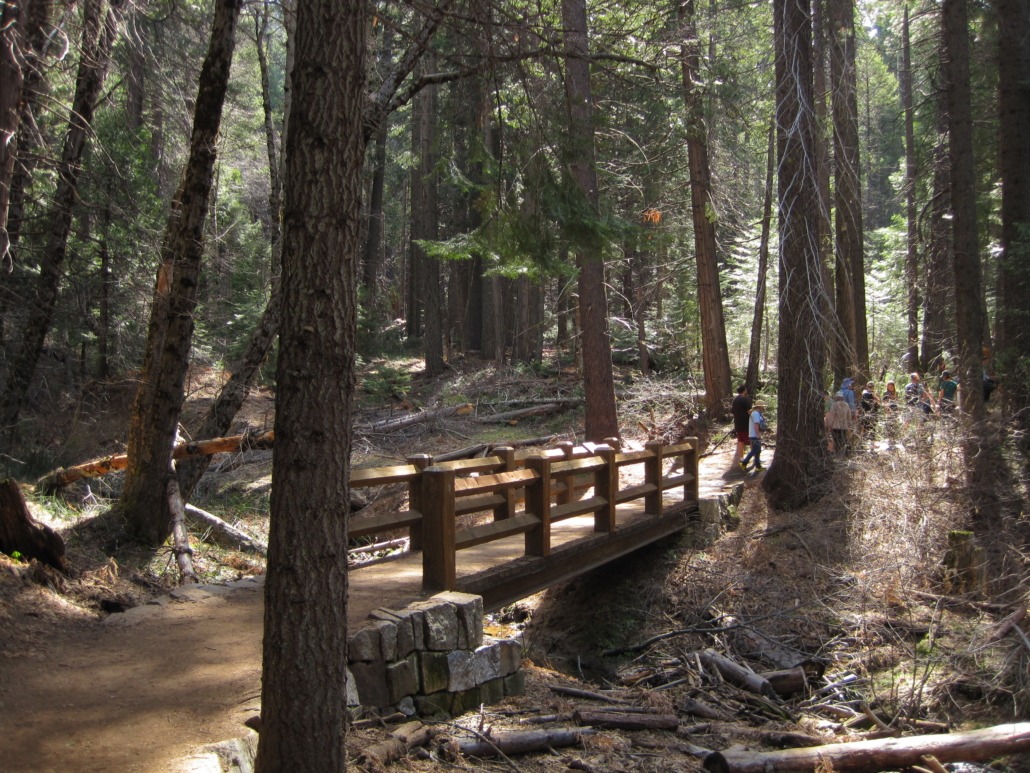
But I didn’t get as much time as I thought I would. Three friends and I started a Bay Area road trip with a multi-day stop at Yosemite National Park. They love hiking. I hate hiking. But I was willing to try, if only to come up with as many jokes as possible on the way to the top.
I had no service. I only had Wi-Fi at the cabin, and we were never there. And I was hiking. Good lord, I don’t know how I survived. That’s not facetious. By nature, I am a hermetic, pale husk of a human that craves knowledge, not a dusty, treacherous trail where children in neon Nike shorts are passing me with ease. And yet, the lack of constant cultural novelty smarted for less than a day.
When we were driving around Yosemite, listening to our 33-hour-long hodgepodge playlist and returning to our cabin each night to watch old episodes of “Nathan for You” and “Smiling Friends,” I purposefully neglected to tune in to Oscars discourse or view the new trailers for “Dune: Part Three” and “Spider-Man: Brand New Day”; I felt at peace.
I felt like I was catching up on emotional information I had sorely lacked. One of our friends even banned talk about the Daily Trojan, a favorite topic of three out of the four people present — myself, columnist Pablo Rodriguez and Managing Editor David Rendon — and it only chafed until it didn’t.
Without access to the digital and pop cultural world around me, there was still the immense world within me, the world between my friends and myself, to color my life. Pop culture was a mild supplement of a preexisting playground of interpersonal relationships, reluctant hikes and San Francisco day trips.
And yeah, I did slip a little by watching a sketch from Harry Styles’ “Saturday Night Live” episode and taking a peek at the “Dune” trailer — but as a Directioner for life and a fan of the “Dune” books, old habits died hard. I felt like receiving live Oscars updates on a WhatsApp call with Sports Editor Bennett Christofferson was better than refreshing CNN’s live updates.
Don’t get it twisted, there is inherent value in being well-informed, even on the mundane. There is social utility and humanistic duty fulfilled in being informed and letting that information guide you.
But how that information is delivered online is often formatted not just to draw people in, but to keep them there. Every post feels like an announcement, a vaguely hostile proposition or a ragebaiting discourse-starter. Touching grass, getting off the internet, is nonnegotiable.
There is a beautiful balance I found during this break: If you are offline enough to utilize and digest the information you gather, you aren’t lost to a theoretical and accusational approach to reality and morality often found on the internet — you avoid being chronically online.
At the end of the day, the heart of being chronically online is being empathetic and curious, and you can be neither if you don’t actually interact with people in real life. So get out there and touch some grass! Notice how I didn’t say “go hike.” I’m still not sold on that.
Anna Jordan is a junior writing about pop culture controversies in her column, “Chronically Online,” which runs every other Thursday. She is also a Chief Copy Editor at the Daily Trojan.