LA-based archives are proof of past
USC’s ONE Archives and the Los Angeles Public Library work to safeguard history.
By MIA AREVALO & EMILY LOLENG

USC’s ONE Archives and the Los Angeles Public Library work to safeguard history.
In today’s world, it seems that most information is just a Google search away. From breaking news to historical accounts, almost anything can be found given a few seconds and a wifi connection. But what contributes to this accessibility of information are carefully kept records, and behind these records, the dedicated people who maintain them.
According to Todd Lerew, director of special projects for the Library Foundation of Los Angeles, L.A. is “a metropolis that is comprised of people from many different places, communities and cultures from all over the world.”
This belief is the driving force behind local L.A. archives.
“Archives have a lot of information [and] context,” said Angi Brzycki, senior librarian for the special collections department at the L.A. Central Library. “It’s invaluable.”
From writers to building engineers to ordinary patrons, countless people have made use of the knowledge that these archives make available. They operate off a certain type of faith, said Bryzcki, one that believes stories of the past and present need to be remembered in the future.
This faith is reflected in the diverse collections that house thousands of photographs, newspapers, periodicals and, most recently, one copper box that spent a century hidden behind a men’s restroom wall.
This copper box, a time capsule placed in 1925, was unearthed earlier this year in light of the L.A. Central Library’s 100th anniversary.
The public’s reaction? Completely unexpected.
“The public reaction has been overwhelming,” said Lerew, a key orchestrator in the capsule’s removal. “The day that we unveiled it, we didn’t know what to expect. I would guess we had about 600 people, way more than we could fit in our auditorium and all of our meeting rooms that we’d set up [for] overflow.”
In the following weeks, Brzycki was met with numerous requests to view the capsule’s contents, which were initially housed in the Special Collections Reading Room, a demand that led to their current public display in the L.A. Central Library.
“There’s almost always somebody there looking at it,” Lerew said. “It is a rare opportunity to have such a direct physical connection to Angelenos of the past.”
To Lerew and Brzycki, this time capsule is a fulfillment of the mission that guides the L.A. Central Library: to collect, preserve and accurately represent the stories of L.A.’s past.
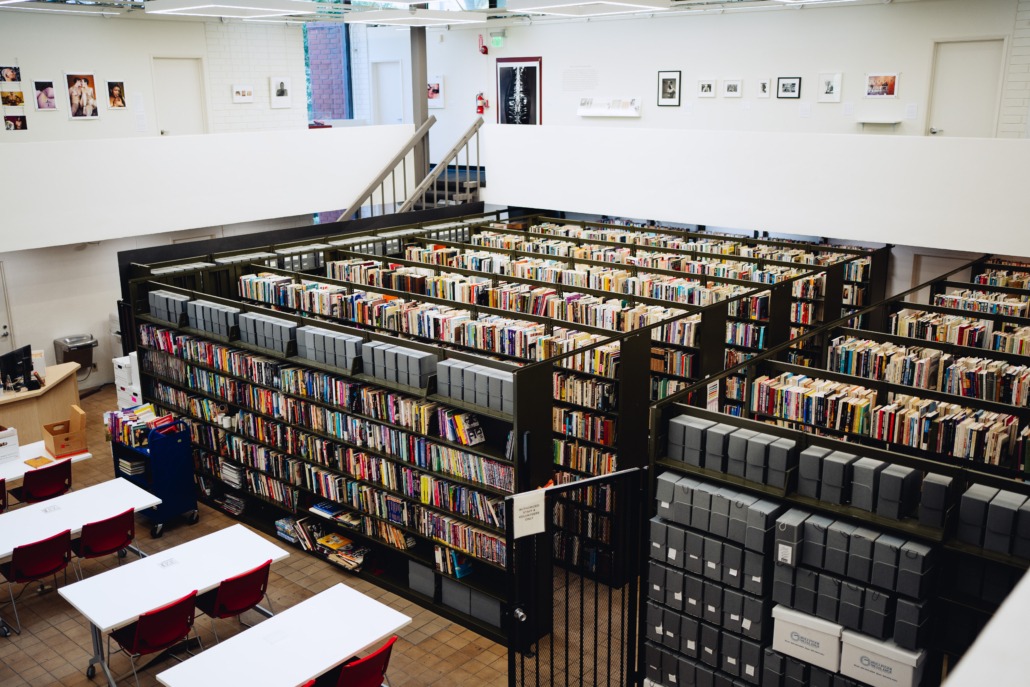
A mere 20-minute walk away from University Park Campus, ONE Archives at the USC Libraries has a strikingly similar mission: to protect and provide access to the stories of their community.
“Every time someone new steps into the archive and is amazed by what we have and feels seen,” said Alexis Bard Johnson, curator and interim director of the ONE Archives. “That reminds us why we do what we do.”
The archives, which started in the 1950s and boast the largest repository of LGBTQIA+ materials in the world, became part of USC in 2010. Its roots run deep in grassroots queer organizing and preservation, according to Johnson.
With memorabilia ranging from drag costumes to protest signs from some of the earliest marches on the White House, there are thousands of material pieces that illustrate LGBTQIA+ life before it was covered by mainstream media.
“We’ve been here for a while, and we’re not going anywhere,” Johnson said. “It’s super important … that we exist and people can come here and feel … that they’re not the first person to have felt XYZ type of way. There’s a community for them.”
For decades, print media was a lifeline for LGBTQIA+ people, being the only way they could communicate with one another, according to Johnson. Many of these publications — the smaller, local ones — can’t be found online, so these physical copies that the archives maintain, which document past struggles, she said are even more critical.
“We have the playbook,” Johnson said. “Going back to history and playing some of that again at this current moment is very important, and we have an archive that helps us do that.”
The work of keeping this history safe is not glamorous. Johnson said challenges like staffing, cataloging, metadata and digital storage cost more than people expect. Yet, even with these difficulties, bringing physical media into the digital age is significant enough to continue on.
“Not only do you want to keep the materials, but you want to make them accessible,” Johnson said.
Lerew said that with physical media, there’s a certain sensory, “embodied relationship” that doesn’t translate to the visual. History, it seems, is intrinsically woven into the physical.
This growing gap between physical and digital media has led archivists to turn toward digitization. But as society continues to move away from the analog, archivists face a new challenge and a particular uncertainty.
“I think about how today’s history and culture is going to get preserved for the future,” Lerew said. “So much of human life and experience and culture is born digital now, and there aren’t clear operations or methods for preserving that.”
Now, documentation of LGBTQIA+ life, Johnson said, happens mostly on social platforms in the form of posts, comments and stories. There is no straightforward method for saving that yet.
“There’s so much that has not and never will be digitized,” Lerew said. “[It’s] a problem that not just libraries, but archives and culture more broadly [are] going to have to think about.”
Historical archives have and will continue to be vital records of where communities have been and what they’ve been through. But preserving these stories for future generations is a constantly changing, “never-ending project” — one that must continue.