The US wouldn’t survive another draft
Compulsorily enlisting a politically aware generation is a formula for revolution.
By ALEX GROSS
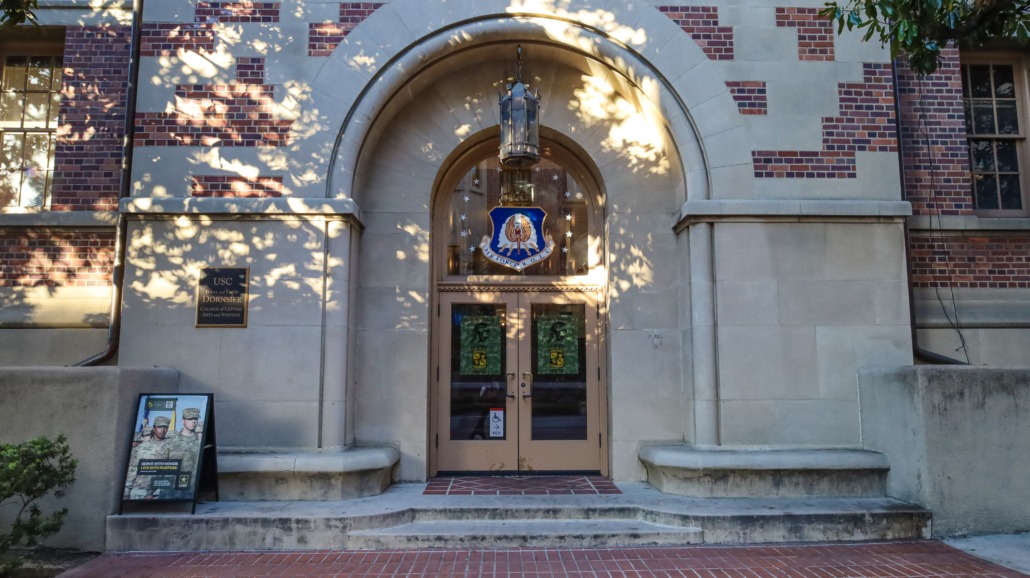

Compulsorily enlisting a politically aware generation is a formula for revolution.
If you were assigned male at birth, live in the United States and are between the ages of 18 and 25, you might want to start paying attention to what’s happening in Iran. It’s voluntary to choose however much or little you’re educated on U.S. involvement in the Middle East, but what might soon be involuntary is if you’re putting your life on the line for it.
Those eligible for the selective service almost entirely make up the demographic of college men. We all got that letter from the Department of Defense shortly after our 18th birthdays; a reminder that, along with the freedom granted by adulthood, there’s also the conscription to serve under the current president, who, with a 36% approval rating according to Reuters, you might not agree with.
A reinstatement of the selective service is hopefully still far from becoming reality, given that there haven’t been any boots on the ground in Iran yet and the U.S. already has an active-duty military of over 1.3 million members. But White House Press Secretary Karoline Leavitt said earlier this month that President Donald Trump wants to “keep his options on the table.”
Among these options is the non-zero chance of another military draft. Another option left on the table seems to be using U.S. soldiers, including 2,000 paratroopers deployed to the Middle East on Tuesday, even after the president said last week that he was “not putting troops anywhere.”
Ryan Leighty, a 19-year-old seaman in the Coast Guard, said in an interview with the Daily Trojan on Wednesday that he “wasn’t too concerned” before being told by a station leader that there was a “‘pretty good chance’” he would be deployed to the region.
Being apolitical is a privilege allotted only to a select part of society: those financially stable enough not to be affected by inflation or tariffs, those white enough not to be targeted by U.S. Immigration and Customs Enforcement, and those healthy enough not to need government assistance.
The horrifying beauty of the draft is that during a time of military conscription, none of these factors matter. As soon as you’re drafted, your simple existence as an American becomes political.
A large reason why the Vietnam War sparked such a widespread countercultural movement was that the draft brought together different corners of American society who previously had no use for solidarity. This effect would be exponentially greater today in a society that’s even more polarized and has even less reason to form a polypartisan coalition.
“At least in recent years, [this is] probably the most bipartisan issue,” said Joshua Marucci, a sophomore majoring in philosophy, politics and law, about the conflict in Iran. “Obviously there’s still people that are enthusiastic about it, [but] I think that’s definitely to a lesser degree than a lot of other conflicts.”
Foreign conflicts are no longer mythological escapades that take place thousands of miles away and occupy a small space in the back of our heads. Vietnam was the first war broadcast into the homes of Americans on a nightly basis, just as wars in the Middle East are the first to flood short-form algorithms.
If a military draft were to happen today, it would not only birth a cultural revolution, but also a political one.
“You’d probably see very similar sentiments [to Vietnam] among especially the younger generation,” Marucci said. “This is an unnecessary war primarily being fought for the ideals of American imperialism.
A poll by The Economist showed Trump’s approval rating among Generation Z to be only 25%. An NPR survey showed that only 36% of 18 to 29-year-olds supported how President Trump is handling U.S. military action in Iran.
These sentiments are heightened in federal employees working without paychecks in the midst of a partial government shutdown.
“Our government has enough money to start wars in foreign countries, but not to pay [us],” Leighty said.
A deployment to Iran wouldn’t even mean protecting American freedoms; U.S. involvement has been baselessly justified so far as an attempt to neutralize the age-old supposed threat of nuclear weapons.
Being forced to risk their lives on foreign soil for a government that has repeatedly failed to ensure its citizens’ First Amendment rights at home would be — and should be — Gen Z’s last straw. A war fought by dissident soldiers would trigger a fight not against American enemies, but against the American government itself.