No powerful women remain unmarked
Women have never and will never be simply seen — they are consistently interpreted.
By ARIA HAJALI
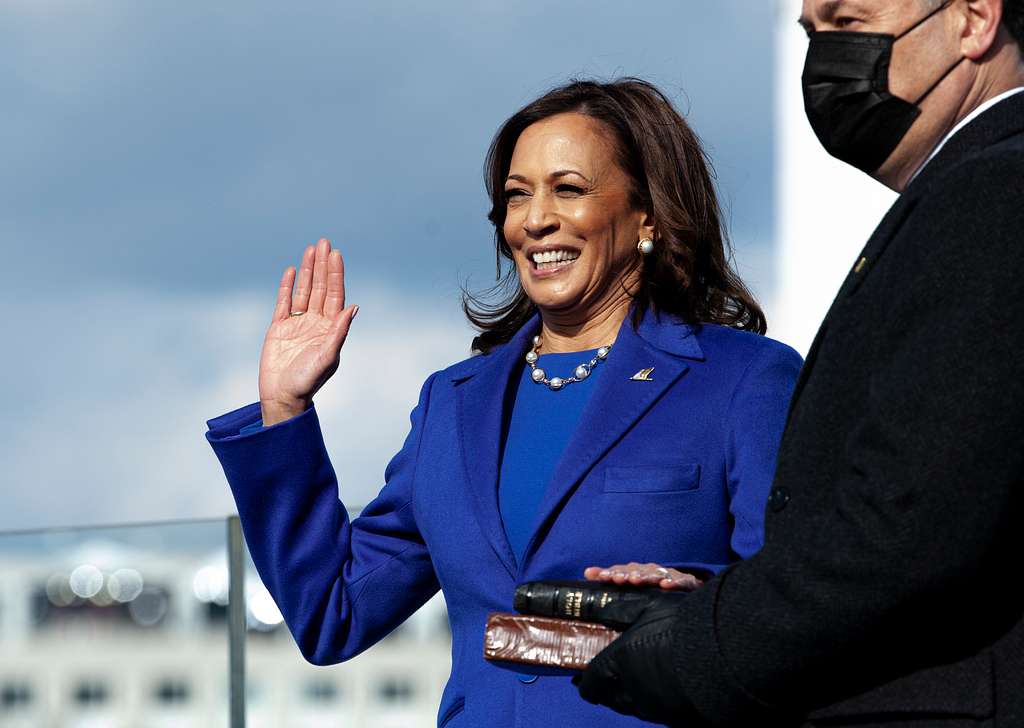

Women have never and will never be simply seen — they are consistently interpreted.
As I stand in front of my closet, what should be a simple decision becomes something else entirely. The red blouse feels too severe, the boxy button-up too masculine. Neither is just a piece of clothing; each carries a set of assumptions I will have to wear along with it.
Getting dressed is not just self-expression. It is calibration.
For many women, picking clothes at The Grove, styling our hair or trying the newest TikTok trending makeup is rarely a thoughtless decision, but one fueled by our internal fashion police to send the right message in order to be taken seriously, or however else we want to come across at any given time.
It is a silent, intrinsic negotiation between how you see yourself and how you are seen by others. Yet, these decisions are constantly scrutinized and put on a stage to be judged, intentionally or not. There is no neutral setting.
To exist in public as a woman — especially one in a place of leadership — is to be marked.
To be marked is not necessarily to be judged negatively, but to be interpreted — to leave impressions on others based on appearance and presentation, whether intended or not.
Diane Kim, Undergraduate Student Government vice president-elect, said fashion played a strategic role in her recent campaign. Throughout the campaign season, Kim and her running mate, Syrabi Nur Rahman, branded themselves with a highly recognizable color: yellow.
“During campaign season, we got a lot of comments about yellow [being] so bright,” said Kim, a sophomore majoring in philosophy, politics and law. “The marketing really worked. It’s just that it was a topic, and I don’t know if men would have that.”
Kim felt as if their attire became an excessive topic of conversation, deterring attention from the basis and values of their platform — drawing attention that men may not have experienced.
The choice worked — it made them recognizable. But it also made them legible in ways beyond their platform. For the USG debate and election result announcement, she said they intentionally shifted to brown.
“We purposely didn’t wear yellow and wore brown instead, because yellow is more light-hearted, and women are not taken as seriously as men,” Kim said. “Men can just wear suits and be fine with it. Everything we wore was honestly a decision and intentional choice.”
In professional settings, men have a “uniform look,” as Kim calls it. Men can make choices about appearance, but they are not required to. Their presentation can recede into the background, allowing their ideas to take precedence. Women are rarely afforded the same invisibility.
Even deviations prove the rule. During the “tan suit controversy,” former President Barack Obama faced outsized criticism for wearing a khaki suit — a moment that became memorable precisely because it was so unusual. This excess scrutiny could be attributed to Obama’s position as a person of color, in power, a position that places him, like women, on a stage subject to increased attention and judgment.
Though men can experience scattered moments of scrutiny. For women, this judgment isn’t triggered by deviation; it is constant.
Markedness extends beyond the closet. The concept of differentiation through markedness originates in linguistic theory, coined by the Prague School in the late 1920s, where certain derivations of words carry additional meaning, while others function as the default.
Deborah Tannen, a linguistics professor at Georgetown University, in an article titled “There is no unmarked woman,” described this foundational concept connecting phonics to social injustice and patriarchy.
When one group is treated as the baseline, everyone else becomes something to interpret, read or question. Tannen noted how all women’s surnames are marked — taking on their partner’s last name is too traditional, while hyphenating the two can draw unwanted attention.
Markedness shapes language, titles and identity itself. Terms like “actress” or suffixes like “-ette” signal difference, often carrying connotations of diminishment. Even the choice between “Miss,” “Mrs.” and “Ms.” communicates personal information in ways that have no equivalent for men, who just pick “Mr.” on demographic intake forms.
As a band kid myself, I noticed how a “majorette” labels a female member of the band that often has an ornamental role, dancing and twirling flags, while a “drum major” marks the powerful conductor of a band, mounted powerfully on a ladder above refined formations.
So next time you find yourself rifling through drawers, still disorganized from yesterday’s stressful calibrations, think about the choices made, and the stigmas that judgment is drawn from.
Notice what gets scrutinized and which decisions have the luxury to go unexamined. While we’re unable to fully remove expectations or judgment, we can start by challenging them — creating space for people, especially women, to exist without explanation.
This isn’t about linguistics or phonetics; it’s about who gets to inexplicably exist at the default.