Student-founded political action committee launches its USC chapter
Coalition aims to offer students tangible ways to be politically active.
By LIZZY LIAUTAUD
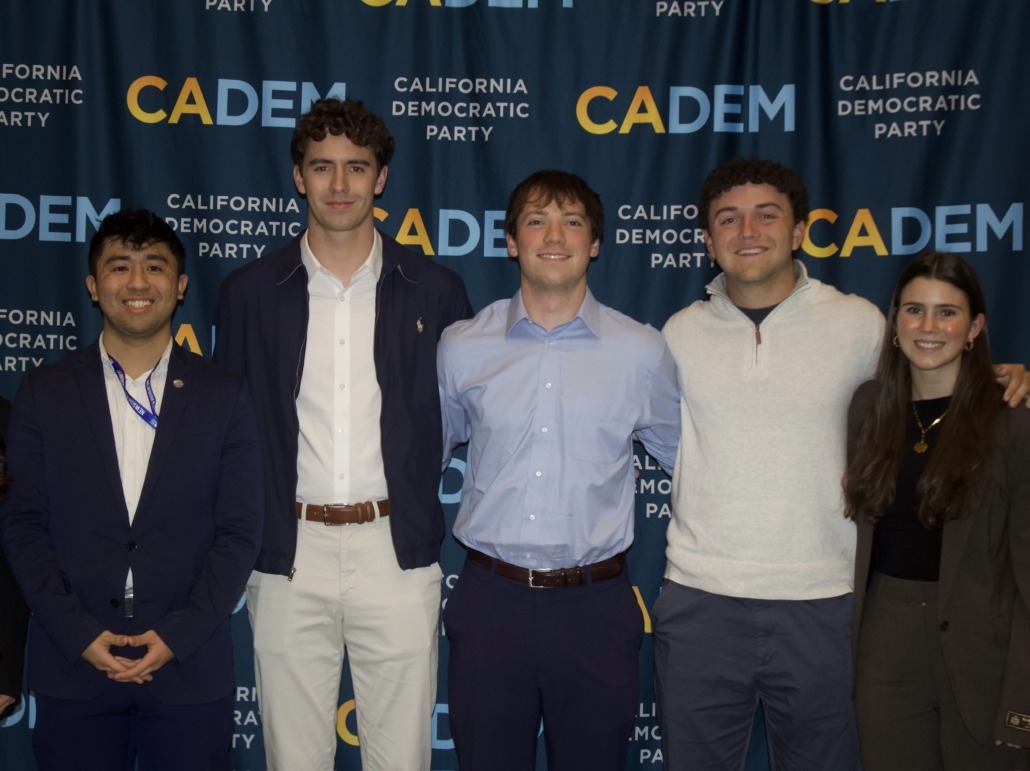

Coalition aims to offer students tangible ways to be politically active.
Three days after former Vice President Kamala Harris lost the 2024 Presidential Election, Nicolas Quach said he got to work to make the changes in the Democratic Party that he wanted to see. On the floor of Parkside International Residential College, his freshman dorm, he decided to start a student-led political action committee focused on engaging voters and promoting candidates to pass policies he wanted to see.
“We are building an organizing machine that this state, and frankly, this country, has never seen before,” said Quach, a sophomore majoring in political science. “It’s about getting up, doing action and letting folks know that if you want to fight back, if you want to get involved and if you want to be part of history, this is where it starts.”
Quach said that Coalition is now one of the largest student-led political action committees in California, with a presence at over 250 high schools and college campuses across the state.
The Coalition PAC uses phone banking, canvassing, policy writing, campaign communications for candidates, along with other efforts to promote candidates and assist with the election of Democratic leaders who are focused on addressing the concerns of working-class voters, including affordable housing, cost of living and healthcare, according to its website.
Coalition began as a California State University PAC, but last fall Quach decided to start rolling out chapters to grow and maintain the PAC’s organizing power. In November 2025, Quach said he went on a statewide tour to talk to students and get them involved with the PAC.
“Part one is identifying and engaging the students,” Quach said. “Part two is, let’s get our students out there, and so that means engaging with voters and working families and getting our candidates elected.”
The statewide Coalition PAC has already endorsed over 100 local candidates in California, Quach said, and is working on passing policy once those candidates are elected.
This semester, Quach officially started a USC chapter. He said the conversation at USC has been different as students aren’t as politically active as those at other campuses.
“At USC, we organize so differently because we have to understand that students come from very different backgrounds,” Quach said. ”We have a very unique demographic and status and wealth compared to other campuses.”
He said the main goal at USC will be helping students be more politically involved and doing that differently than other political clubs on campus.
“We have to fight back and to really change our culture around what public engagement looks like. It’s not just ‘Pizza and Politics.’ It’s not just Zoom meetings,” Quach said in reference to the Dornsife Center for the Political Future’s regular politics talks.
Quach and Jonah Goldberg, the Coalition USC vice president of communications, said that Coalition USC will be different from other campus groups like Turning Point USA and College Democrats, by talking to voters and helping candidates win rather than just hold meetings.
“They’re politically active, but this is more about just actually doing the work and actually taking action in the community, rather than just like sitting around and talking about things,” said Goldberg, a sophomore majoring in philosophy, politics and law.
Within the PAC, students will be given tasks based on their skills and interests. This could look like engaging voters through phone banking and canvassing, assisting with candidates’ campaigns or writing and introducing policy to the state legislature, Quach said.
In her role as vice president of programming, Julia Feeney works to recruit students, although she said there hasn’t been much luck yet. She said the USC Coalition chapter is planning a larger recruitment event at the beginning of April to hopefully bring more students in.
“A lot of people are interested in politics, they just don’t know where to start,,” said Feeney, a sophomore majoring in legal studies.
A lot of USC organizations are “secluded,” she said, but since Coalition is a statewide PAC, USC students will get the chance to expand their work outside of campus.
Quach said that the Coalition is already getting students at the USC chapter and statewide levels mobilized for the California Primary Election.
“Every single weekend now, until the June 2 primary, we will be out there knocking doors and talking to voters and making sure there are candidates who get over the finish line, because they understand and they’re committed to tackling this affordability crisis,” he said.
While the club doesn’t yet have access to university funding since it’s not a recognized student organization, it does have funding from the state Coalition PAC and from the PAC’s supporters.
Quach said that at USC, he wants to reach students no matter their major, including those who never thought they would be involved in politics.
“It’s important that every student, regardless of whether you are pre-med or engineering or STEM, [understands] that politics affects you.”