The last four weeks were full of cultural and political shifts that are worth remembering.
By DOR PERETZ

The last four weeks were full of cultural and political shifts that are worth remembering.
As I cover some notable events from the past weeks in relation to the theme of transformation, it feels serendipitous that our timeline starts in mid-February, right around the Lunar New Year.
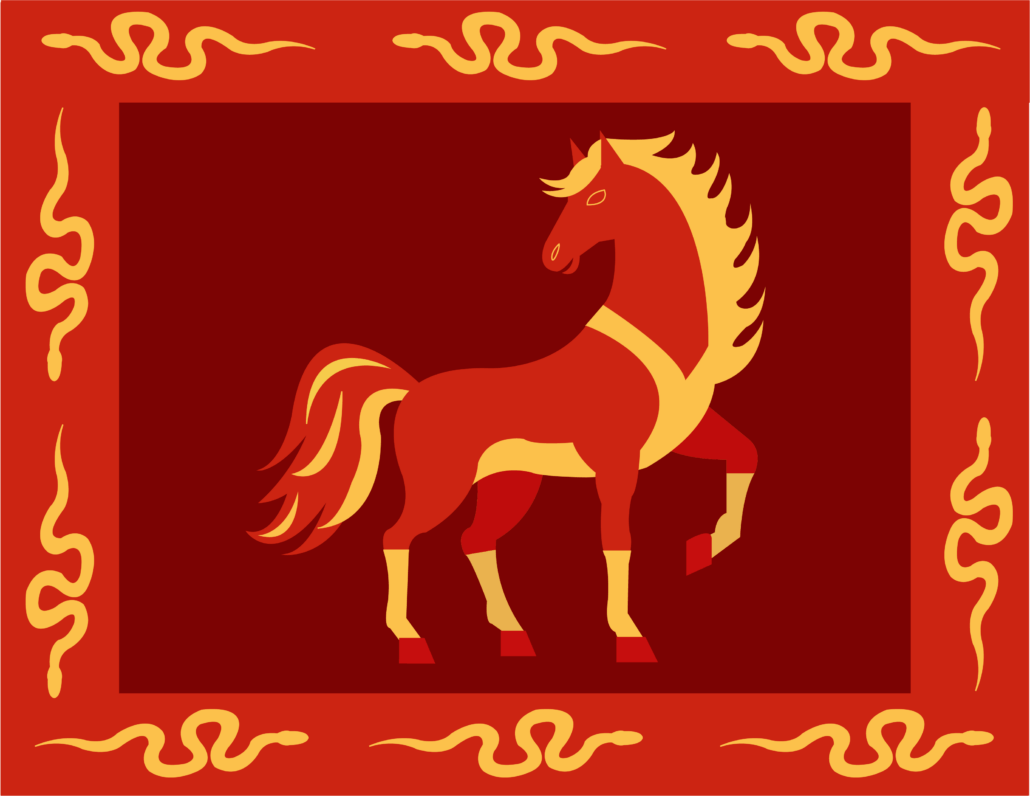
This year, in the Chinese Zodiac, we made the transition from the wood snake, known for wisdom, charm and elegance, to the fire horse, known to harbor an optimistic, energetic and dynamic essence.
I underwent a metamorphosis of my own around this time. Not long into the spring semester, I cut my hair into a curly bob. This may seem like a trivial matter of physical appearance, but personally, my hair has always been an important avenue for my self-expression. The shorter look symbolized freedom and a new beginning for me, aligning well with the positive energy the year of the fire horse is meant to bring.
Throughout my life, I have circulated through different hair styles: wavy and chemically straightened; down to only my collar-bone and down to my waist; and a whole plethora of colors — dirty blonde, red, purple, dark brown.
Yet, of all the different variations I have tried, my new style feels the most me, as I am finally embracing my natural color and curl pattern. It is not just a new look, it is a new version of myself. Or, perhaps, the old version of myself that was always within me is seeing the light of day again. Either way, I am happy with my choice to switch things up.
Like me, you may have felt a change in the air, whether due to the switch from gloomy weather to hotter spring days, the onramp in academic coursework officially marking the passage into midterm season or the onslaught of daily news with updates on a changing political landscape, such as unconstitutional actions by United States Immigration and Customs Enforcement and new wars. While it is easy to get lost in this chaos, there is a lot of hope to be found in the events that transpired between February and March.
The Milano Cortina 2026 Olympic Games set the standards high for Los Angeles in hosting the Olympic Games in 2028. Some of our very own Trojan athletes even competed this winter, including Cartsen Vissering from the class of 2020. During his years at USC, Vissering competed on USC’s men’s swimming and diving team, and has since taken up bobsledding, for which he appeared at the games.
At a time when the U.S. is being heavily criticized on the international stage for the Trump Administration’s foreign affairs tactics, Team USA athletes in the Olympics carried an additional burden; not only did they feel pressure to perform well in their sport but they also had to wear the country’s flag with pride, despite the nation’s historic declines in democratic and civil rights.
But many Team USA athletes made it clear who and what they were really representing.
“It brings up mixed emotions to represent the U.S. right now,” said Olympic skier Hunter Hess in a press conference on Feb. 6. “There’s obviously a lot going on that I am not the biggest fan of and I think a lot of people aren’t.”
For him, wearing the flag was about “representing [his] friends and family back home … not everything that’s going on in the U.S.”
Meanwhile, Amber Glenn, an award-winning figure skater and the first openly pansexual woman on the Team USA figure skating team, criticized the Trump administration while emphasizing her support for the LGBTQIA+ community and other unrepresented groups.
“Now especially, [the Trump administration’s actions are] not just affecting the queer community, but many other communities. I think that we are able to support each other in a way we didn’t have to before and, because of that, it has made us a lot stronger,” Glenn said. “I hope I can use my platform and my voice throughout these games to try and encourage people to stay strong in these hard times.”
While these athletes and others who joined in with similar sentiments seemed understandably troubled by our country’s latest political developments, the overall message they sent was for compassion and people coming together to support a better future. This positive messaging was especially impactful, as it emphasized unity rather than division in a period when we in the U.S. are more politically polarized than ever.
Another Team USA figure skater, Alysa Liu, a student at crosstown rival UCLA, also proved the power of positivity at these Olympic Games while bringing home two gold medals — one being the first individual gold medal for U.S. women’s free skate since 2002.
After emerging from multiple years of retirement to skate on her own terms — with control over her routines and practice regimens — Liu showed to the world that athletes don’t have to sacrifice their well-being and autonomy to succeed. Throughout her gold-medal-winning routines, she exuded joy and excitement and trailblazed a new way to perform athletically that prioritizes mental health and passion over pain.
On Mar. 2, USC hosted “An Afternoon with John Mayer” event, where the USC community got to hear from the Grammy-winning artist and one pop performance student even got to learn a riff from and perform with Mayer on stage. The crowd was highly engaged with the performance and talk, with students feeling grateful for the chance to engage with an artist who has made such waves in the pop industry.
Sriram Seshadri, vice president of the USC Musician’s’ Club, predicted that in 2026, more artists will follow in the footsteps of artists like Mayer who blend a variety of genres.
“With the rise in the number of new musicians, upcoming indie artists, it’s going to put a much larger pressure on people to be more creative,” said Seshadri. “So because of that, I think we’re going to have this sort of creativity phase where … we’re going to have a lot of fusion between genres like maybe rock and classical or funk and EDM, or disco funk, things like that. So the potential for fusion is high, and it [could] manifest in 2026.”
Seshadri, a junior majoring in applied and computational math as well as pursuing a master’s degree in biomedical engineering, said he is particularly excited about the potential for artists to creatively fuse different genres together.
“Laufey does a good job of her take on the fusion of jazz and pop [which] is particularly appealing, like the way that she has the drums and all the instruments coming together and it’s a more catchy feeling,” Seshadri said. “Laufey is one artist that I find myself excited [about].”
After what seemed like a months-long dry spell, many major artists have come back from their hiatuses to release new music.
Noah Kahan, who took the folk world by storm with his previous album, “Stick Season,” has officially sewn the seeds for a new album. Kahan released a music video for his latest single, “The Great Divide,” at the end of January, and he has continued to tease new songs for his upcoming project. Given his collaborations with musicians such as Hozier and Sam Fender, Kahan’s new album is sure to be an exciting addition to the folk music scene.
In late February, Megan Moroney released her latest album, “Cloud 9,” which debuted at No. 1 on the Billboard 200 charts. This made her the first female artist to do so with a country album in the past two years, something previously done by Beyoncé and Taylor Swift.
Perhaps most notably, Harry Styles released his long-awaited fourth studio album, “Kiss All the Time. Disco, Occasionally,” on Mar. 6 after a four-year break from music. Styles will also be going on tour later this year with residencies in New York’s Madison Square Garden and London’s Wembley Stadium and shorter runs at a few other venues.
Besides the music that’s already been put out, there are other new releases to look forward to, including upcoming albums from BTS and Maisie Peters, as well as rumored albums from Olivia Rodrigo, Gracie Abrams and Clairo.
Overall, the abundance of new and creative tracks in recent and coming months sets the stage for a great summer of car jam sessions, concerts and festivals.
Despite — or perhaps in direct response to — the current administration’s continued efforts to end Diversity, Equity and Inclusion in the U.S., celebrations for Black History Month and Women’s History Month erupted all over the countryU.S.
Here on campus, the University held a series of events commemorating February as Black History Month. This included a Cultural Compass event hosted by the Price School of Public Policy dedicated to uplifting Black voices and narratives, a workshop about photography and race in the western U.S. and a book talk with author Patrice Douglass about engendering Blackness.
The USC Black Student Assembly also held a Black History Month celebration that, in collaboration with the Sustainability Hub and Center for Black Cultural and Student Affairs, organized a Threads of Black Tradition event for creating a collective quilt rooted in Black heritage.
USC’s Black History Month SC Family Reunion Celebration was also a cherished opportunity to celebrate Black history and culture on campus. Anita Dashiell-Sparks, associate dean of community and culture at the School of Dramatic Arts, spoke about the importance of USC hosting an event of this kind.
“I very much believe that history is active and alive and in constant conversation in the present moment that we are in and also impacting our future,” Dashiell-Sparks said in an interview with the Daily Trojan.
For March’s Women’s History Month, various L.A. libraries have hosted women-focused events, such as Hawthorne Library’s “What Freedom Means to Me” event and the East L.A. Women’s Day Fest. The Debbie Allen Dance Academy also presented “HERstory,” a performing arts event focused on women’s history and contributions to society.
Celebrating the unique culture and history of various underrepresented groups is more important than ever in the current political climate, as it ensures that these unique cultures stand the test of time despite attempts to invalidate their importance or erase them altogether. These events show just how much community can help us to uplift each other, even in hard times.
In early March, the U.S. and Israel initiated strikes on Iran, killing its supreme leader, Ayatollah Ali Khamenei. Following months of protests from Iranian civilians advocating for a better economy and expansion of civil liberties within the country, the Iranian government responded with internet blackouts and mass killings.
Following Khamenei’s assassination, some Iranian individuals and non-Iranian allies mourned the leader’s loss and paid respects for his leadership, while many others celebrated the Ayatollah’s death as a sign of the current Iranian government’s downfall and a chance for a positive regime change.
Ariel Moheban, vice president of the USC Persian Community at Hillel, said that many in the Persian community in L.A. and outside of Iran in general felt positively about Khamenei’s death.
“L.A. Persians [are] definitely happy. Especially when Khamenei got assassinated, it was a sort of celebration because it felt like it was finally a win after years of [Persian people] being under attack,” said Moheban, a sophomore majoring in psychology.
As it remains unclear how the war will progress, mixed emotions circulate around the prospect of regime change and the U.S.’s often unsuccessful involvement in the Middle East in the past. These concerns are perhaps why, on Mar. 2, a group of individuals gathered to protest the strikes at Los Angeles City Hall.
For students with families affected by the conflict, this is an especially stressful time, as it can be difficult to ascertain the locations of one’s family and assess the safety risks involved. Thus, the community once again plays a crucial role. Supporting one another amid ongoing geopolitical events is necessary for maintaining a positive environment on campus.
Although we may not have control over what happens internationally, we can help one another have brighter days than we would have otherwise and continue wishing for the best.
Moheban said that in his eyes, the best-case scenario is that Iran will transition from the current religious regime to a non-religious democratic form of government.
“[The ideal is] to kind of make it a country like some of the other ones in the Middle East, like Turkey or Morocco … where it’s a democratic government. There’s still people [who are] religious, but they’re not enforcing any laws,” Moheban said. “Then my parents and me and my family can also visit whenever we want, and be able to see our family [that] lives there, rather than just reminiscing on living there.”
Ultimately, while the past few months have not been without hardships, they have served as a unique opportunity for us to consider the progress that positivity and hope can bring. Heading into the latter half of the semester, we should carry these lessons with us to continue transforming our campus, country and world into a better place.