Keck researchers discover laser-based brain cancer treatment
The new therapy could help improve lifespan for patients suffering from brain cancer.
By RUBY MATENKO
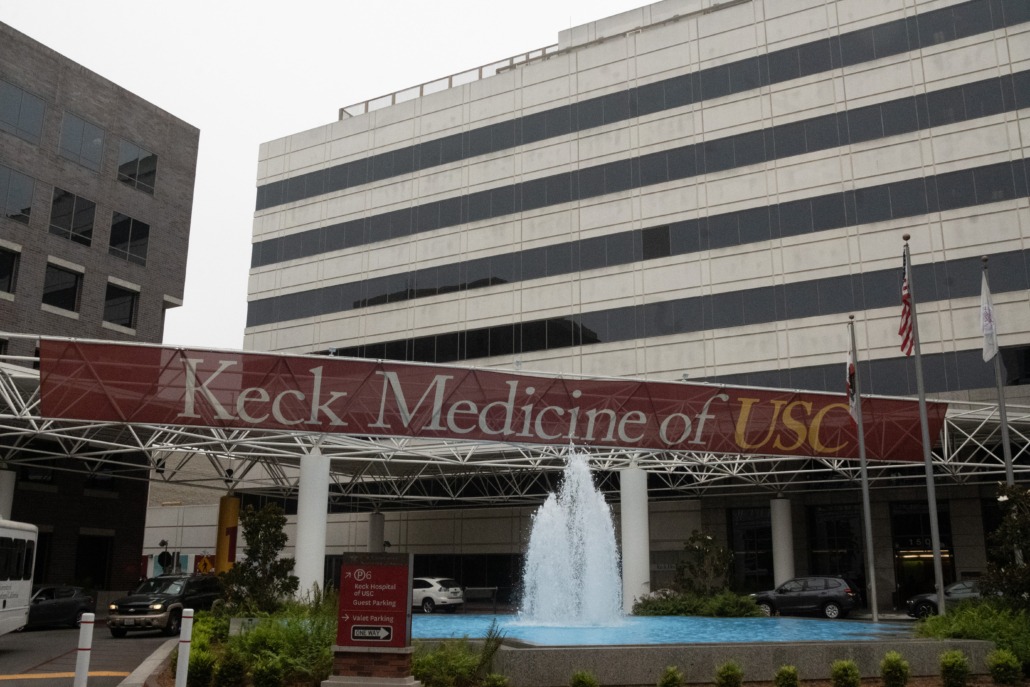

The new therapy could help improve lifespan for patients suffering from brain cancer.
Keck Medicine of USC researchers may have discovered a laser-based treatment that could improve longevity rates for those diagnosed with aggressive brain cancer from five months to up to five years, according to a study published Feb. 26.
Patients with astrocytoma typically survive only a handful of months, according to a Keck Medicine news release about the study. After the use of laser interstitial thermal therapy, the study found that about half of their patients were still alive at the 18-month mark — and more than 20% of the patients who received the study’s laser therapy lived more than five years.
The initial control group received treatment to try to combat tumors without the laser-based therapy, and none survived longer than nine months. Researchers saw such promising results that they elected to abandon having a control group — a group of patients who do not receive the treatment — in order to help as many patients as possible, even at the risk of having their study questioned.
The initial control group received treatment to try to combat tumors without the laser-based therapy, and none survived longer than nine months. Researchers saw such promising results that they elected to abandon having a control group — a group of patients who do not receive the treatment — in order to help as many patients as possible, even at the risk of having their study questioned.
Dr. David Tran, lead author of the study, chief of neuro-oncology at Keck and co-director of the USC Brain Tumor Center, said continuing the study with a control group raised ethical concerns since the laser therapy appeared to be highly effective and purposefully denying it to some patients felt unethical.
“We are dealing with a very deadly type of cancer,” Tran said. “Any type of survival benefit we can provide a patient, we should. So we had to abandon the randomizations.”
Dr. Dongjiang Chen, assistant professor of research in neurological surgery and computational analyst of this study, said that because researchers decided to stop using a control group, there was a large disparity between the control and experimental groups, leading to concerns about the sample size.
“Our role is to convince people that even though the sample size is small, we try to … help people understand why this is beneficial, and eventually to convince both patients and physicians to adapt to this type of treatment,” Chen said.
The control group of the study received a drug-based treatment designed to stimulate the immune system, but Tran said the therapy proved ineffective. Tran said the drugs were inefficient because they were designed to boost the body’s immune reaction: For many patients, their immune system did not recognize the tumor as a threat, meaning there was no reaction for the drugs to boost.
Tran said the laser-based therapy worked by burning and killing the tumor, leaving it behind to cause an inflammatory reaction and alert the immune system to the area.
“It’s like a very, very high fever for five, 10, 20 minutes, and then, the blood-brain barrier within that region is disrupted,” Tran said. “That [allows] the new antigens within the tumor to leak out into the circulation, basically making the immune system now see the tumor.”
Harshit Manektalia, an M.S. Research Programmer, was part of the analysis of the entire “end-to-end pipeline” that the researchers carried out during the clinical trial. Manektalia said that the lab integrated artificial intelligence into the development of the treatment, using machine learning models built from scratch that helped analyze data for the trial.
“With every advancement that we are able to make with the therapy that can increase [survival], it’s a major breakthrough,” Manektalia said. “[Especially] with the advent of AI.”
Tran said that the treatment is considered “minimally invasive” and that most patients can go home the next day, with some being able to recover the day of the surgery. The treatment has the potential to be a groundbreaking new way of treating aggressive brain cancer.
“We are quite confident that the benefit that we see reflects a true biological benefit, rather than just a statistical fluke,” Tran said.