‘The Drama’ marries love and morals
The film reconsiders “right” and “wrong” as the on-screen couple says “I do.”
For fans of:
“If I Had Legs I’d Kick You,” “Shiva Baby,” and ”Parasite”
4
By SOPHIA KANG
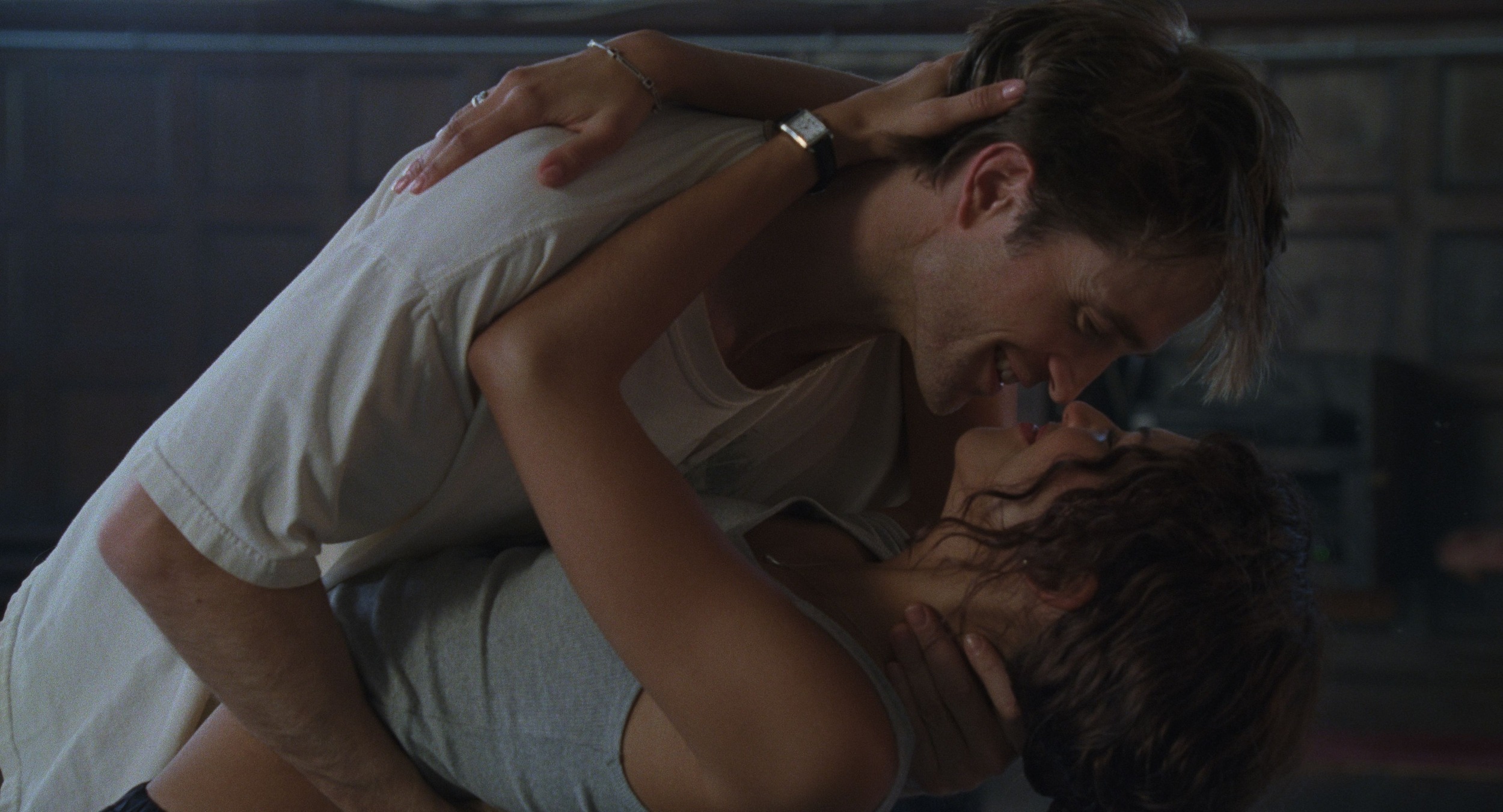

The film reconsiders “right” and “wrong” as the on-screen couple says “I do.”
“If I Had Legs I’d Kick You,” “Shiva Baby,” and ”Parasite”
4
Content warning: This article contains mentions of gun violence and ableism.
“What’s the worst thing you’ve ever done?”
A24’s latest romantic-comedy-drama release, “The Drama,” shows the repercussions of answering that question.
In the film, soon-to-be newlyweds Emma (Zendaya) and Charlie (Robert Pattinson) have a seemingly perfect relationship: great chemistry, great sex and great love. But their relationship is put to the test when the couple, alongside another pair of their married friends, are asked to confess the worst thing they’ve ever done before their wedding.
The movie is a unique examination of the morals Americans must uphold for society to deem them “good.” Although there are several laugh-out-loud lines and bits evenly distributed throughout, the film’s exploration of gun violence and personal change forces audiences to consider their stance on the issue as multiple perspectives and questionable behaviors are introduced.
When the film begins, the audience gets to know Emma and Charlie as a pair rather than individual characters. The movie weaves in snippets of their relationship with the couple attempting to write their wedding vows: the awkward meet-cute, the bad first date where she calls him a “weird little British freak,” Emma’s running gag of pantsing Charlie, their similarities and differences, and other small moments of intimacy.
Zendaya and Pattinson’s chemistry is undeniable, and watching these scenes felt like watching a real couple, both at their best and worst. Pattinson’s seasoned acting was a highlight simply because of how convincingly he can play a bumbling idiot; his ability to make any interaction as horribly cringeworthy as possible is unironically very impressive.
At no point does the acting or script take viewers out of the movie, even when the tone shifts abruptly, which it does constantly.
While Emma and Charlie are trying out food options for their wedding with their married friends Mike (Mamoudou Athie) and Rachel (Alana Haim), who are the best man and maid -of -honor, respectively, explain that, before their own wedding, they shared the worst thing they had ever done with each other. After several glasses of wine and reluctant coercion from all parties, the four friends share their stories.
On a vacation with his ex-girlfriend in college, Mike had used her as a human shield to protect himself from getting bitten by a stray dog on her birthday. Rachel had locked her “slow” neighbor in a shed in the woods overnight and did not tell anyone where he was, worried that she would get in trouble, leading to a neighborhood-wide search. As a child, Charlie had allegedly cyberbullied a peer so badly that he moved away, although it might’ve been a coincidence.
When it’s Emma’s turn, she is extremely reluctant to speak. Eventually, after they firmly tell her she has to share, Emma reveals that, as a teenager, she planned a mass school shooting. She had even brought a gun to school, but eventually decided against it and never went through with it.
From this point forward, the movie takes a turn and never looks back. The film becomes an almost unbearable watch because of the sheer anxiety and constant overwhelming tension. Every element pressures viewers to both sit on the edge of their seats and want to sink back into it with the hopes that it’ll swallow them up.
The movie’s editing and directing are a masterclass in showing, not telling. By filtering the story through Charlie — a British outsider — Norwegian director Kristoffer Borgli examines American culture around gun violence from a distance, almost parodying stereotypes provided by mass media. Charlie is clearly questioning Emma’s character but the audience is not told this verbally; instead, the film zeroes in on gun imagery and Charlie’s fantasies of a more violent Emma.
As Emma tells him about her motivations and feelings of isolation as a teenager, scenes of a younger Emma, who is seen posing and experimentally shooting her father’s rifle, are mixed in with his current perception of her. It effectively illustrates Charlie’s inability to separate her past mistakes from her present self, and the heartbreaking reality of a young girl so lost that she feels the need to turn to violence.
The original score also adds to the anxiety-inducing environment. Composer Daniel Pemberton primarily utilizes the flute to create a haunting melody that is repeated throughout the film’s entirety and emphasizes its underlying horror.
With all these intentional choices, the greatest thing that “The Drama” does is place trust in the audience. They are expected to decide for themselves whether or not these characters are deserving of their sympathy based on little to no understanding of who they truly are or were, but solely on what they are currently doing.
Whether mass audiences agree or not, the movie proposes a very difficult question to members of a society that is increasingly desensitized to gun violence. On the surface, its usage of humor and undertaking of a different perspective may seem insensitive. But at its core, the film is pointing out very genuine hypocrisies about self-appointing the moral high-ground, choosing who deserves empathy and who does not.
“The Drama” does not offer any answers or comfort for audiences about how to take on such a difficult topic because, in reality, there are none. It is up to the audience to reconsider what they know and ultimately decide what they value.