Don’t let land acknowledgements be uselessly performative
Institutions should not be able to use land acknowledgements to shirk responsibilities of making actual reparations to Indigenous communities.
By JACKSON SNEERINGER
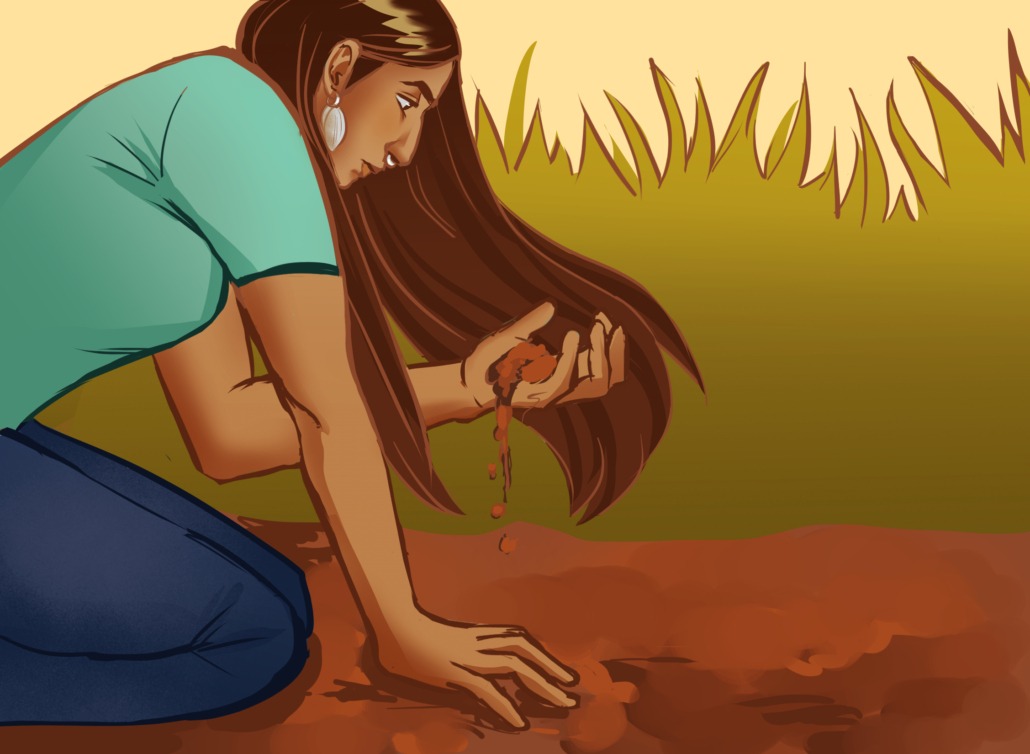

Institutions should not be able to use land acknowledgements to shirk responsibilities of making actual reparations to Indigenous communities.
In the modern day, where many institutions’ motivation for their diversity, equity and inclusion initiatives stems from white guilt and a “follow the herd” mentality, USC is no different when it comes to Native land acknowledgment.
Currently, the University has no formal land acknowledgment; however, the USC Equity Research Institute, Dornsife College of Letters, Arts and Sciences Van Hunnick History Department, Dworak-Peck School of Social Work and the USC Libraries have publicized their own, and their shortcomings are very apparent.
Modern land acknowledgments were popularized in Canada starting in 2015 as an act of reconciliation following the exposure of the atrocities committed at residential schools — government-funded institutions that systematically separated and forcibly assimilated Indigenous children.
These statements were designed to recognize and educate the general public on the forcible displacement of Native peoples from their lands and to establish a relationship between an institution and the Indigenous communities that inhabited the area before.
In the United States, land acknowledgments started to take place around 2020, though they quickly strayed from their original purpose as an attempt at reconciling with Native peoples. What started as educating the public on the harsh treatment of Indigenous peoples at the hands of settlers morphed to something closer to a smug declaration that the land was stolen and won’t be returned.
“If I hear a land acknowledgment, part of what I’m hearing is, ‘There used to be Indians here. But now they’re gone. Isn’t that a shame?’ And I don’t wish to be made to feel that way,” said Kevin Gover, a citizen of the Pawnee Nation of Oklahoma, in a 2023 interview with NPR.
Gover’s statement reflects a prevalent theme in the various national and University department land acknowledgments. Both neglect to contain a necessary call to action, evidence of action taken or a promise of future changes.
These statements function simply as a notice that the departments are trying to be politically correct in the absence of the University’s efforts — claiming social awareness and respect while doing nothing more than declaring it.
This way, institutions like USC don’t face accountability as they recite the acknowledgment — an act of simply stating history and avoid shouldering responsibility for making concrete reparations to the Indigenous communities which they serve.
We must hold institutions accountable for rendering what should be a positive first step toward respectful relations and combating the erasure of Indigenous history. Doing so goes beyond empty words that fulfill a perceived social obligation.
“[There is] verbiage that is used to acknowledge it, but there’s no implementation or tactics that are actually being utilized to support and uplift these different communities,” said Dineh Barragan, a junior majoring in environmental studies as well as the first and only Gabrielino student to attend USC. “It’s like, ‘We’ll acknowledge it, but we’re not actually gonna do anything to support what we’re saying in the acknowledgment.’”
Land acknowledgments can’t be a first step toward greater social progress if no more steps are taken — the unfortunate truth is that they are used not as a stepping stone. Rather, they are used as the final act of “social justice” toward Indigenous groups to clear white Americans’ guilty conscience.
Comparatively, the United States’ upstairs neighbor makes clearer attempts at tangibly benefiting Indigenous communities and not publicizing land acknowledgments just for the sake of it. When I visited Montreal a few years ago, I saw a land acknowledgment outside of a bank with a QR code at the bottom to donate to a local Indigenous organization.
While the donation opportunity doesn’t address the complacent “we stole it, and we’re not giving it back” aspect of an acknowledgment, it at least prompts passersby to take beneficial action.
However, if the most valuable land acknowledgment from an institution is one that asks the public to donate, then the bar is set too low. Alternatively, governments and institutions should set a recurring donation to an Indigenous organization, create a voluntary land tax program or offer reduced college tuition.
Rather than assuming land acknowledgments will eventually promote a greater positive change in the U.S., we need to require institutions like USC to change the way they execute them to be in collaboration with the communities they are acknowledging. In doing so, we ensure the statements are born out of meaningful dialogue rather than just another initiative to stay in public favor and are carried out by how Indigenous people believe will be most impactful.
“[I suggest] educating themselves on the true history of California, because a lot of the information in context that is provided on the verbiage is falsifying true information,” said Barragan, also the co-executive director of the Native American Student Assembly. “[Also] being able to support the Native students that are here on campus, because we are here, and we are doing the same thing as everybody else … and just having the support of the institution is important.”
If USC wants to make reparations, it should engage in actions that uplift Indigenous communities to equal social, political and economic levels in the present day, such as monthly donations to Indigenous organizations or reduced tuition. We cannot settle for acknowledgments of “respect.”