USC students are the first to genetically map brain aging
The research studied the factors that lead to aging in various regions of the brain.
By RUBY MATENKO
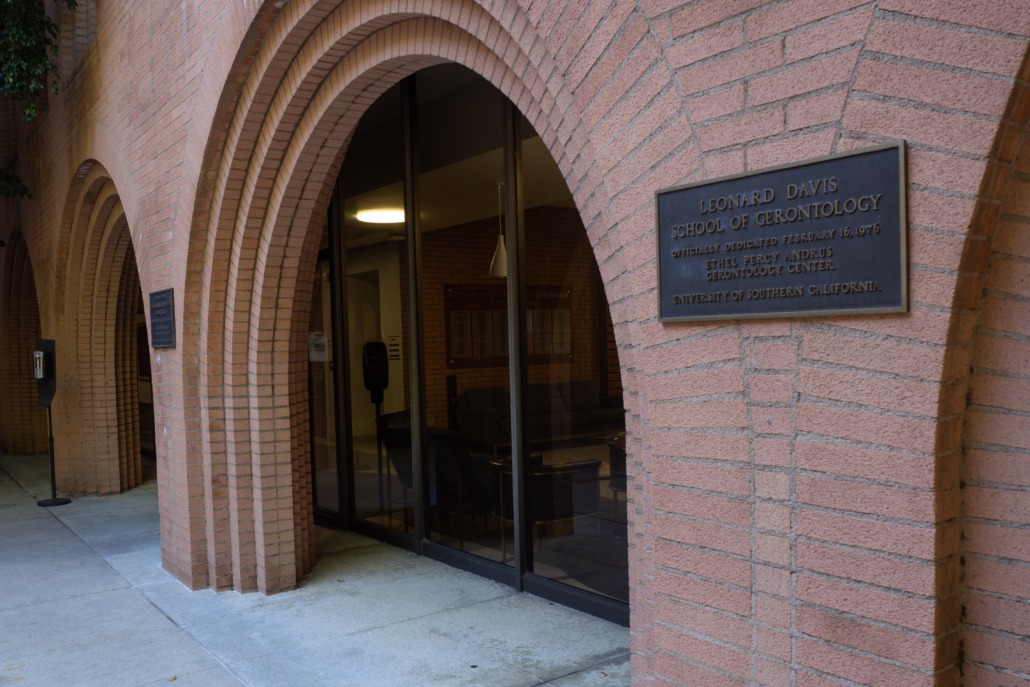

The research studied the factors that lead to aging in various regions of the brain.
When scientists are looking to model trajectories of healthy aging, they commonly use brain age, commonly predicted through imaging data that uses machine learning, according to Science Direct. Predicted brain age can be different from someone’s chronological age.
Now, in a study published in the journal GeroScience, Nicholas Kim, a senior majoring in biomedical engineering, Ayati Mishra, a sophomore majoring in neuroscience and others looked at 148 different brain regions and their different aging rates, mapping for the first time these regions with different genetic variants.
“There have been genetic studies looking at what causes the brain to age differently, or to age faster or slower, using one average value across the whole brain,” Mishra said. “But since the brain ages regionally, this was a really big gap, because no one had looked at the genetic basis of regional age.”
Some of the regions that are known to affect memory and associated with Alzheimer’s disease were also found to be linked to accelerated aging, Mishra said.
The genome-wide association study involved spanning the human genome and isolating individual genetic variants that could be impacting specific bodily traits.
“A lot of GWAS have been run on a lot of different brain traits, but one that hasn’t really been addressed is this thing called local brain aging,” Kim said. “That’s basically how this project started — no GWAS had been done on it. So to fill that gap, I started the GWAS.”
Kim said a lot of co-factors, such as lifestyle factors, gender or even a person’s chronological age itself, could be causing increased aging in certain areas of the brain. Kim said they are able to regress out the covariates and remove the lifestyle factors in the data to isolate the genetic effects.
“We can’t say [we’re] 100% sure that these genes are causing it,” Kim said. “What we can say is that they’re highly correlated.”
Kim, Mishra and others involved in this study were advised by Andrei Irimia, an associate professor of gerontology. Irimia said the research has the potential to help scientists understand how genetic factors can predispose people to Alzheimer’s.
The study used the UK Biobank, a large imaging repository based in London. Kim said that the issue with this data is that the scans come predominantly from white participants. He said it is hard to have results that apply to everyone when working with genetics.
Kim said the group is now looking at particular regions of the brain to see if their aging accelerates faster than others, and how that could be associated with neurodegeneration.
The research they conducted and published has a significant impact on the future of medicine related to brain age and the treatment of certain neurodegenerative disorders. Mishra said this comes from the fact that Alzheimer’s is an age-related disease, so knowing what is causing aging can inform how treatment and therapies for neurodegeneration are developed.
One direct impact this work will have, Irimia said, is a comprehensive framework to know how to eventually reverse the neurological damage these diseases inflict. Irimia also said that in the future, the development of more reliable and precise tools will be required to estimate local brain age, and this study, led by Kim, is among the first that has done that.
Irimia said that he is proud to have built a workflow and approach to engage undergraduate students in research and recruit some of the most talented students on campus.
“There’s a lot to be said about the ability of undergraduate students at USC to become engaged … [to] allow us to connect translational findings in engineering, in image analysis, in genomics to clinical deliverables that can improve the lives of patients,” Irimia said.