Why the fashion industry’s DEI conversation stops at class issues
Tangible progress requires facing the industry’s unfair ongoing classism problem.
By MIAOFU TIAN
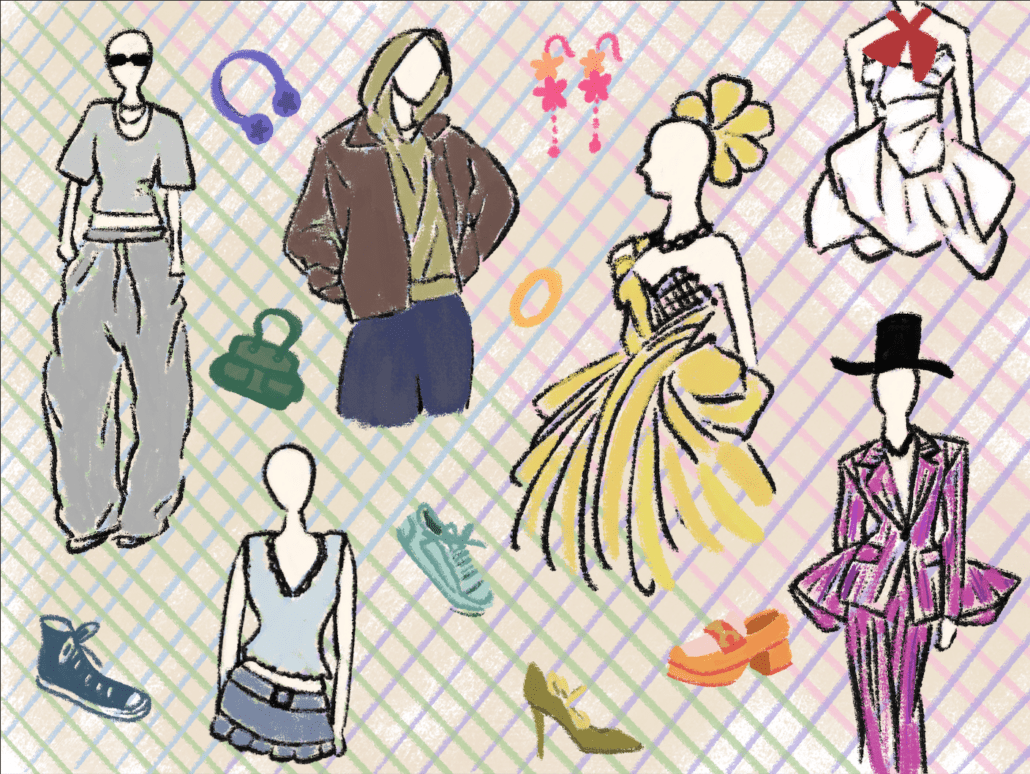

Tangible progress requires facing the industry’s unfair ongoing classism problem.
One of my birthday traditions is to buy myself the September issue of Vogue. For those unfamiliar, the September issue of a fashion magazine is more than just another issue: It sets the tone for trends, aesthetics and fashion narratives for the year ahead.
In a 2009 documentary “The September Issue,” which captured the behind-the-scenes story of Vogue’s September 2007 issue, Anna Wintour — the then-editor-in-chief of American Vogue and now global chief content officer at Condé Nast as well as Vogue’s global editorial director — said, “Fashion is not about looking back. It’s always about looking forward.”
Yet, what does it really mean for the fashion industry to “look forward”? And more importantly, who gets to be included in that vision?
There are, broadly speaking, two ways to understand fashion. The first is fashion as personal style, which is all about self-expression, experimentation and identity. From this perspective, fashion can indeed feel innovative, liberating and forward-looking.
However, the second understanding, fashion as an industry, tells a very different story. This angle takes into account the brands, corporate structures and media systems that sustain fashion as a global economic force. Here, fashion is often less about innovation and more about exclusivity: who belongs, who is visible and who is left out. And too often, the working class is excluded from that picture.
The fashion industry’s failure to meaningfully engage with people of all classes manifests in two key ways. First, there is a lack of acknowledgment of the working-class labor that sustains the industry. Second, there is an erasure of working-class style and lifestyle from what is deemed “fashionable” in both mainstream and luxury spaces.
The most tangible yet most neglected contribution of the working class lies in labor. From garment workers to factory employees, the production side of fashion relies heavily on invisible labor forces.
For example, according to the French newspaper Le Monde, the luxury brand Loro Piana was investigated in May 2025 for allegedly exploiting Chinese workers in its production process. The company responded by terminating ties with its supplier within 24 hours and cooperating with authorities.
The speed of this response raises critical concerns for me. When labor exploitation becomes a public relations crisis, workers are often treated as disposable liabilities rather than individuals deserving of protection and dignity. Instead of addressing systemic issues, brands may prioritize damage control; in this case, the brand removed the problem to preserve their image rather than advocating for long-term labor rights.
A 2018 report by the BBC further illustrates the disposability of laborers in the fashion industry. The report revealed that Burberry destroyed unsold goods worth £28.6 million in order to maintain its brand’s exclusivity. In this case, the labor put into these products was deemed less valuable than the preservation of an exclusive brand image.
At the same time, the working class contributes not only through labor, but style.
Many of fashion’s most iconic pieces originate from working-class contexts. Take denim jeans as an example. Originally designed as durable workwear for laborers, jeans were considered purely utilitarian throughout the early 20th century.
It was not until the 1970s that designers such as Calvin Klein and Gloria Vanderbilt brought denim onto the runway, transforming it into a high-fashion staple with elevated price tags.Today, jeans are in almost every ready-to-wear line of luxury brands.
Chi Chi Tung, a junior majoring in business administration and co-founder of Pare USC, a student-run fashion marketplace, said that although social media appears to make fashion content more accessible to everyone, influencer culture still promotes an aspirational lifestyle that feels out of touch, which eventually reinforces the idea that fashion is defined by exclusivity.
“A lot of brands, they make themselves seem so big, but if you really want to look at the clothing item themselves, [it] actually do[es]n’t cost a lot to make it. … The reason why they rack up these prices is because of the stories, of their branding, of the marketing that goes on behind it,” Tung said. “The reason why we built Pare in the first place is because we realized that fashion [should be] accessible. … We wanted to create this USC shared closet for everyone.”
The fashion industry must begin to take discourse on class issues seriously. Real change requires long-term structural commitment. It means advocating for the protection of garment workers’ rights on a global scale. It means representing working-class lives not as spectacle, but as integral to the story of fashion itself. And it means acknowledging that many of fashion’s most influential aesthetics originate from working-class communities.
If the fashion industry truly aspires to be “forward-looking,” it must expand its vision of diversity. To be genuinely pioneering, fashion must recognize, represent and stand with the working class, whose contributions have always shaped the industry, even when they have been left out of its narrative.