America identity should not be this inconsistent
The definition of who counts as an American is inherently paradoxical and restrictive.
By PIRIL ZADIL
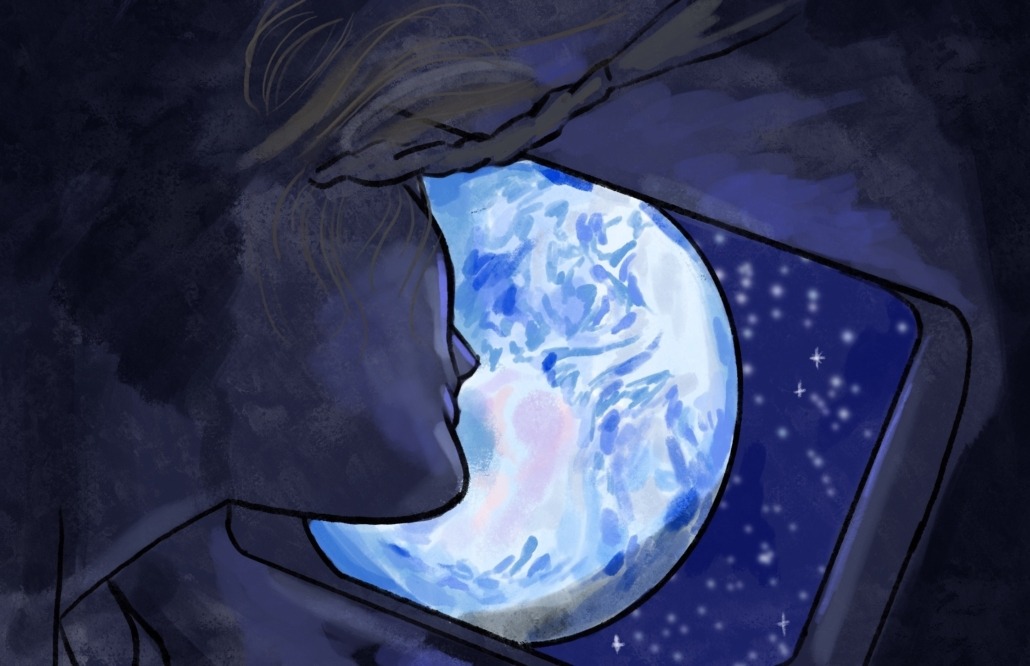

The definition of who counts as an American is inherently paradoxical and restrictive.
Back in January, I watched Jon Stewart mock President Donald Trump’s alleged claim on Greenland in an episode of “The Daily Show.” As the president of the United States — a nation founded by immigrants — Trump stated, “the fact that they had a boat land [in Greenland] 500 years ago doesn’t mean that they own the land.”
If I were to overlook the obvious display of hypocrisy, I could agree with Trump: Why do we employ a “finders keepers” mentality with territory? Yet, if not geographical presence, what determines where we belong?
Officially, the legal status of belonging to a nation is known as nationality. According to the U.S. Department of State, nationality is essentially synonymous with citizenship under the Immigration and Nationality Act of 1952.
However, U.S. law makes narrow distinctions between “nationals” and “citizens,” complicating what it means to belong. Unlike citizens who have obtained their status from birth, those who were naturalized are ineligible to run for president.
While this particular exclusion may not substantially affect most people, its existence refutes the claim that citizenship provides indisputable acceptance into the country. More than that, this crack invites those who despise diversity to widen it.
On Jan. 20, 2025, the White House issued a statement on “Protecting the Meaning and Value of American Citizenship.” The administration argued the Fourteenth Amendment was not intended “to extend citizenship universally to everyone born within the United States,” despite the Amendment explicitly stating, “All persons born or naturalized in the United States … are citizens of the United States.”
Ultimately, the White House declared that in cases where a person’s parents reside in the country illegally, hold a temporary visa or lack citizenship, the U.S. government shall not recognize citizenship. Funnily enough, if this law had been implemented centuries ago, the majority of current U.S. citizens would be considered undocumented immigrants.
A number of courts have challenged efforts to reinterpret birthright citizenship; still, many citizens share Trump’s beliefs. This new ideology muddies the waters even more; if birth, geography and official documents do not guarantee belonging to the United States, what does?
Some might argue that culture determines nationality. Yet, what is American culture if not a diverse amalgamation of various customs? Furthermore, what true cultural difference can Americans of generational ancestry have from those who were assimilated within decades? The more we question citizenship, the more questions arise.
Candidly, as citizens not of distinct countries but of this world, we’re too interconnected to force this rigid level of disconnection. The fact that people can easily contest every aspect of citizenship and nationality demonstrates the nonsensical nature of these parameters.
It appears odd that after centuries of modernization and cooperation, we still cling to primitive concepts of borders, countries and selective citizenship. Especially considering the nation could not have been built without the immigrants the U.S. government wishes to exclude.
The Transcontinental Railroad, which revolutionized transport and commerce in the States, was built largely by Chinese immigrants. Similarly, Irish immigrants built canals, railways and much of the early urban infrastructure in cities like New York City and Boston. Agriculture, war efforts, scientific research and so much more were facilitated by immigrants.
To this day, American advancement is made possible largely because of immigrants and marginalized groups — “non-Americans.” NASA’s Artemis II mission, a major step toward long-term human exploration of the moon and beyond, reflects this legacy.
This mission was only achievable because of people who have historically been excluded from American institutions. Without Katherine Johnson, Dorothy Vaughan and Mary Jackson — the three Black women who aided NASA with unparalleled computational mathematics in the ’60s — the U.S. wouldn’t have been able to determine how to successfully enter Earth’s orbit.
If the Fourteenth Amendment had never been enacted, these women would not have been able to set foot at NASA; prior to the decision, in 1857, the Supreme Court’s Dred Scott v. Sandford ruling held that no person of African descent, whether free or enslaved, could be a U.S. citizen.
Notwithstanding personal opinion, the United States is a nation of immigrants in every possible way. To pick and choose who gets to be a citizen runs counter to the country’s fundamental ethos. Thus, may the words of American Artemis II pilot Victor Glover guide us to better ideals: “From up here you also look like one thing … No matter where you’’re from or what you look like — we’re all one people.”