Sex education needs to continue after high school
USC must spearhead a new era of sexual education to inform the new generation.
By SAWYER SUGARMAN
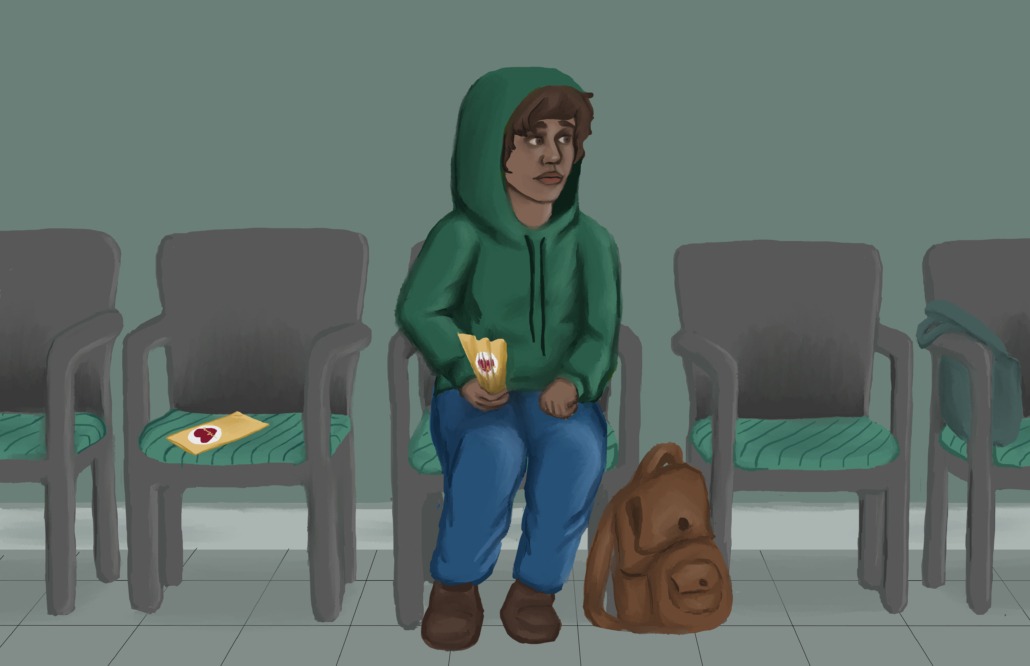

USC must spearhead a new era of sexual education to inform the new generation.
“Do you want the house tour?” Sabrina Carpenter cooed in the debut number of her Coachella headline show. Carpenter’s ascension has been the subject of worldwide online discourse, mostly concerning the pop phenom’s brazenly sexual branding.
Her innuendo-filled, meteoric rise among Generation Z audiences is especially interesting because, per a host of high-profile behavioral surveys reported on by the Institute for Family Studies, young people are having sex significantly less often than their predecessors.
In a 2025 NPR panel, reproductive health and justice reporter for The Guardian Carter Sherman cited fear and shifting social norms among the chief reasons for Gen Z’s sexual nosedive. Since young people are clearly undergoing a wide-scale sexual transition, one might presume that sexual education reform would develop alongside it, but curricula remain relatively lacking. Even at a research powerhouse like USC, sexual ignorance runs rampant.
Blame for this shorthanded education doesn’t lie among students, many of whom are routinely denied sufficient sexual education. The responsibility to make comprehensive, inclusive programs accessible to students rests on university administrators — whose responsibility lies in supporting student well-being.
There seems to be a prevailing assumption that, by the time we arrive at college, students have magically absorbed knowledge about sexual health. But that premise ignores an important truth: American sex education systems are middling at best. In fact, only three states, California, Washington and Oregon, mandate comprehensive sexual education in all schools.
In high school, one lackluster semester of general “health” studies was the extent of my formal sexual education. Carpenter lyric puns and flagrant conversations with my friends made up the rest.
USC offers a number of sexual health outlets, from sexually transmitted infection testing at Engemann Student Health Center to counseling for students who have experienced sexual violence, but these services can’t fill the chasm left by insufficient secondary education.
Sexual exploration is often treated as a pillar of the college experience. Increased personal autonomy alongside exposure to a new pool of same-age peers creates the perfect conditions for heightened sexual activity, but it also poses risks.
You might scoff at any suggestion that your sexual health is less than pristine, but when was the last time you got tested? Two studies published by the National Library of Medicine in 2024 and 2019 respectively reported that while over two-thirds of college students are sexually active, only 20.2% of women and 7.7% of men reported STI testing within the last year.
You probably didn’t even know that the Centers for Disease Control and Prevention encourages annual tests for anyone sexually active. This lack of knowledge makes sense, considering that sex education has zero federal regulation and, in over 15 states, isn’t even required.
This spotty education robs youth of the opportunity to build empathy for people with different sexual identities, which can lead to regressive attitudes about reproductive health and non-heteronormative sex. Learning about different types of autonomies and sexual behaviors is more likely to build understanding for people belonging to a diversity of sexual and gender identities.
In a perfect world, universities would offer forums and short-form courses administered by health professionals to tackle sexual health topics, including issues specifically pertinent to women and LGBTQ+ students, who are often excluded from traditional curricula.
I’ve identified as gay for as long as I can remember, but it wasn’t until this summer that I learned about pre-exposure prophylaxis, the HIV preventative medication. This serves as a testament to the fact that substantial education can literally be the difference between life and death, especially for people systemically ignored by standard sex education.
Unfortunately, today, many American sex ed programs still treat abstinence as the cornerstone of sexual safety: If you don’t engage in sex at all, then you supposedly sidestep any issues. But, this antiquated culture of sex prevention is a scant excuse for education.
Practicing abstinence doesn’t eliminate the risk of sexual violence and fails people who opt to engage in consensual sex. Besides, adults should have fundamental understandings of how their bodies work, as well as that of the opposite sex.
Even with proper teaching, a learning curve is standard for young people, but more robust, holistic sex education that extends beyond high school could ease this transition so that college students don’t feel thrust into the deep end.
What students need is a space for productive dialogue about sex and relationships — more robust than second-rate 10th-grade health courses and more thorough than USC’s shoddy consent modules. With the help of students, USC could pioneer a new -era of college-level sex education, one that bridges crucial information gaps and provides care and access for all Trojans — no pun intended.