Artistic creations should foster conversation, not competition
Established brands stifle creativity when they bring lawsuits against smaller companies.
By KIYOMI MIURA

Established brands stifle creativity when they bring lawsuits against smaller companies.
“Honkadori,” the Japanese term for allusive poetry that recalls works from previous authors, has recently sparked a renewed interest in Japanese traditional poetry. After a singular modern author, Maho Okamoto, published a poem that went viral on X in 2018, others quickly began to use the tail end of it to create their own versions with her template.
This may seem like just another trivial trend that’ll come and go like every other in the vast modern media landscape, but it really speaks volumes about the nature of inspiration and creative reinterpretation. This instance displays what could happen when we embrace recreation and reinterpretation in the artistic world, instead of immediately laying claim to all that we produce.
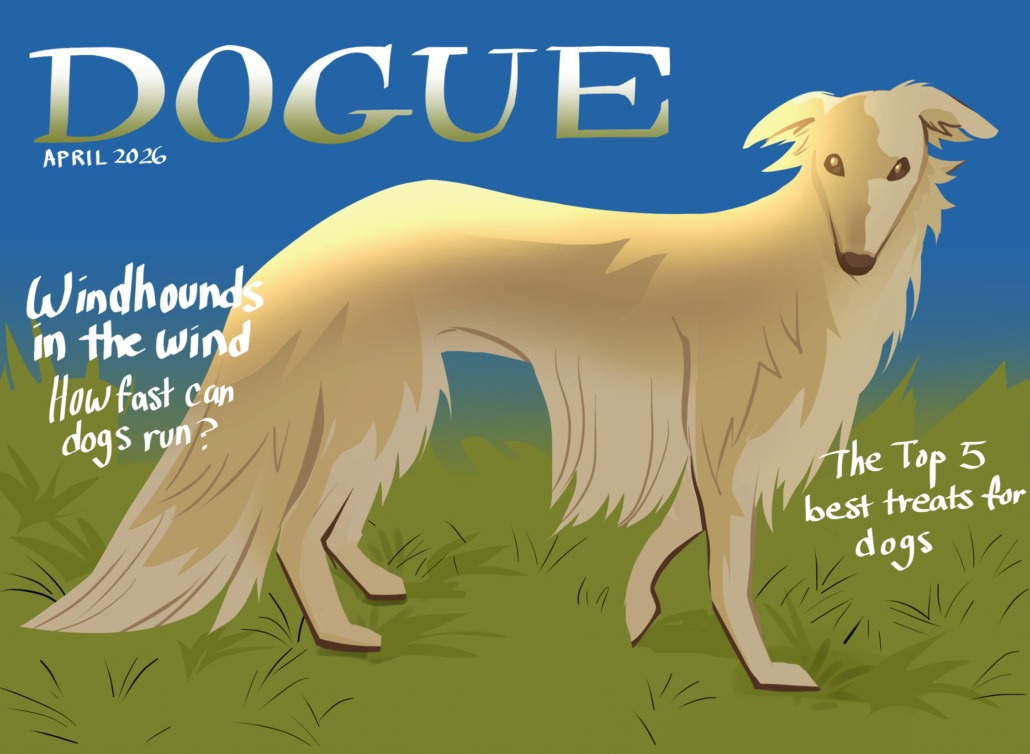
For all the dog owners who are obsessed with buying pet accessories to match their own — if you thought Dogue was a cute spinoff of Vogue, it turns out Vogue begs to differ. The fashion magazine brought the case to federal court in December 2025, arguing the name would cause customers to conflate the two separate magazines.
What’s worth noting is that at fewer than 100 copies sold per issue, Dogue had a small audience, yet an audience worth considering — the magazine still proved entertaining enough to retain a small community who enjoyed the playful product. With its limited profitability, it’s arguable that the magazine was driven mostly by the enjoyment it provided, rather than the revenue it brought in.
But for the wealthier and much larger company, Condé Nast, Dogue’s small sphere of influence was enough to take legal action to eliminate this competition.
So who really controls the breadth of the marketplace? Are brands that fall through eliminated by consumers themselves, filtering the market down to products we prefer, or by producers who attack comparable brands that are a little too close for comfort?
In a deteriorating capitalist economy, it makes sense to adopt a profit-driven mindset. No one wants to create something that doesn’t offer a return on their investment, and any idea is one that must be protected before others capitalize on it. But when we allow monopolies to drive out competition, we risk eliminating the inspiration that drives creativity.
The line between inspiration and intellectual property infringement has been tested countless times, and established brands continue to pursue market domination. We’ve seen Nintendo ban fan-made remakes of Nintendo games despite their non-profitability, only to release its own remake shortly after. The lawsuit against Dogue is also an ironic one, considering Vogue’s creation of its own installment of Dogue after the original had been published for several years.
While this isn’t to say that intellectual property should not be protected, the line between intellectual property protection and anticompetitive strategies is one to be watched carefully. If we eliminate the realm of artistic reinterpretation, we may eliminate the opportunity for creative products to be in conversation with one another as opposed to mere competition.
In 2013, for example, Pharrell Williams and Robin Thicke were found liable for copyright infringement when a jury decided the song “Blurred Lines” sounded too similar to Marvin Gaye’s “Got To Give It Up,” resulting in damages of $4.98 million. This introduced an unprecedented definition of copyright infringement in the music industry that narrowed musical boundaries.
If “honkadori” was practiced in this instance, appreciating rather than condemning the musical allusion, maybe it would have been a different story.
“Art and culture have always evolved through reinterpretation and dialogue,” Olga Portnaya, the creator and editor in chief of Dogue, told the New York Times in March.
Lawyers for Vogue brought the case on the claims that Dogue magazine was “obviously intended” to confuse Vogue’s audience by suggesting the two magazines were related, which would have caused “irreparable” damage to Condé Nast.
The question that arises is whether Portnaya truly intended to confuse the two audiences. Part of the selling point of the spinoff magazine is derived from the established brand, yet the humor lies in the fact that the two magazines have entirely different audiences and models, one being human and another being our beloved pets. If anything, Dogue derives its value from its distinction from the people-oriented company.
It’s inevitable that creativity will always be somewhat derivative. To be a creator, you have to consume. Existing art will naturally influence works to come, and this doesn’t always signify malicious theft. And when the creation does prove to gain popularity, why is the first course of action a cease and desist?
This raises the question of what creativity in this world seeks to achieve. Enforcing copyright protections serves crucial legal purposes, yet poses a risk when its boundaries stifle creativity more than they protect it.
Whether it’s capitalism or the law that restricts creative freedom at the hands of monopolistic brands, we as individuals still have the power to separate the art from its establishment, and we ought to do so.