Donika Kelly poses poetry as tool of attention
The American author and academic speaks on what it means to be a poet today.
By EFRAIN LANDIN
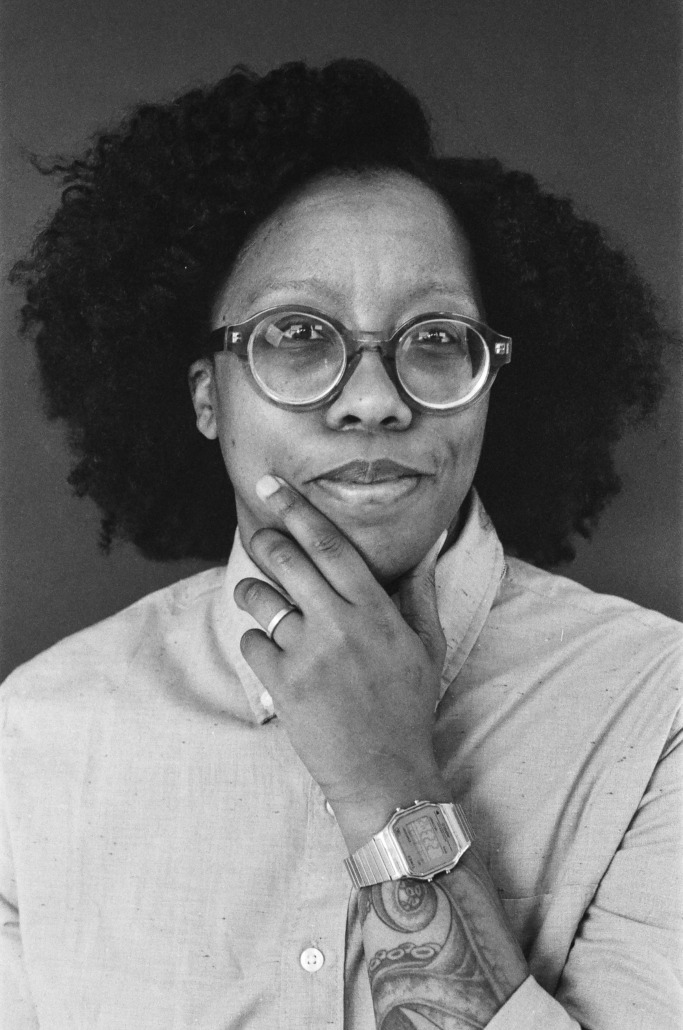

The American author and academic speaks on what it means to be a poet today.
Four years ago, after publishing her sophomore book, award-winning poet and professor of creative writing at the University of Iowa Donika Kelly laid 55 pages across her floor to create a collection of poems now known as “The Natural Order of Things.”
Much of Kelly’s prior work took a resilient and somber tone illustrated through Greek mythology and inordinate creatures, but she was ready to try something new. Kelly’s newest work centers around the natural world, a recurring theme across her poems, and brings a happier lens to her collection.
“My work should grow with me,” Kelly said. “My work is a place in which I figure out what I want, what I would like to do differently in my life and my relationships, and it becomes a place that reflects that.”
“The Natural Order of Things” does just that. Kelly’s new collection highlights how her connection to people, animals and nature is restorative.
“Her resilience as a person is reflected in her resilience as a writer,” said Jeff Shotts, executive editor and director of poetry at Graywolf Press, which has published all of Kelly’s collections. “The first two books made the experience of the newest one so surprising. It recognizes her survival [which is now] allowing for things like marriage, positive sexual experiences, sense of care, femininity and queerness in the world in such a joyous way.”
Kelly earned her MFA in writing from the Michener Center for Writers and a doctorate in English from Vanderbilt University. The Cave Canem Poetry Prize, Hurston/Wright Legacy Award and Kate Tufts Discovery Award winner will be reading from “The Natural Order of Things” on Saturday at noon at the Poetry Stage at the Los Angeles Times Festival of Books.
For Kelly, poetry is something that can be revisited time and time again when confronting emotionally intense material. The short waves in which Kelly writes allow her to focus on that intensity little by little.
“I’m interested in feeling. I’m interested in specificity. I’m interested in how what feels known to us is actually strange,” Kelly said. “Writing poetry is one of the places where I extend my attention, and then I have a record of it.”
Writing poetry offers Kelly a reflective space to learn about herself and about the world. In applying attention to her craft and the world around her, she fulfills what she believes is her duty as a poet.
“I think to call oneself a poet is to say that one is committed to attending to the world in some deep way and recording that attention,” Kelly said.
To Shotts, this attentiveness is Kelly’s greatest strength. What makes her writing so distinct for him is her ability to bridge the personal with the political in a way that engages the reader. Shotts said Kelly cares and pays attention to her readers in addition to herself, and that it is proof of who Kelly is deep down.
“Her resilience as a person is reflected in her resilience as a writer,” Shotts said. “Those first two books in particular, ‘Bestiary’ and ‘The Renunciations,’ are works of survival from the most unspeakable … trauma that she’s experienced and survived in her life.”
Kelly’s attention to readers makes her work accessible, according to Tisa Bryant, a colleague at Iowa and friend of Kelly. Bryant said Kelly has “an ease with language” that allows Kelly to create vivid images for readers.
“We need people like Donika. We need poetry. We need art. We need compassion and empathy and patience. We need risk-taking,” Bryant said. “Donika’s poetry actually invites us to do those things.”
Bryant said that Kelly’s attention to the way in which humans are similar to other animals, and how humans are animals themselves that exist and participate in hierarchies, allows Kelly to cut open institutions of power and lay them out on the floor for her readers to see. Often, her writing allows them to find humor in unexpected places, she said.
It is a duality that Shotts described as metamorphic: Kelly can transform her most intimate experiences and invert them into work that can resonate with a broader audience. This is evident in her poem “Metamorphose,” where she takes personal longing and amplifies it for her audience to delve into.
“The thing that is most clear about Donika’s work is that you know she’s following her own impulses and trusting in her curiosities and indulging them, and finding a way to express them in sonic and imagistic ways, but [is] always genuine,” Bryant said.

