The importance of preserving political posters and protest art
Meet the Los Angeles-based organization preserving the history of social movements.
By SUDHIR MATHEW

Meet the Los Angeles-based organization preserving the history of social movements.
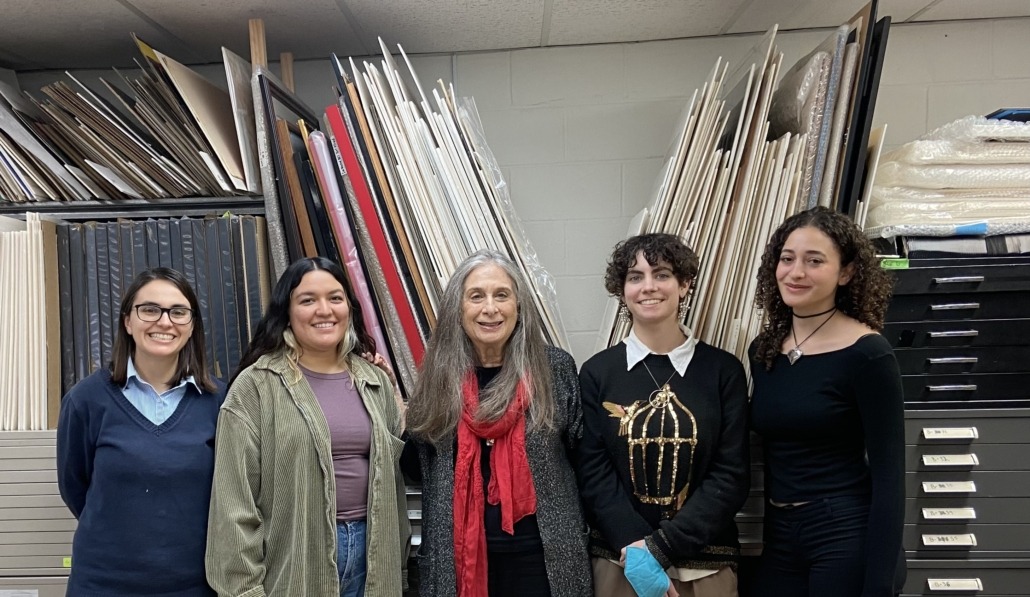
Hidden away in a two-room office in Culver City is the trove of art and history that is the Center for the Study of Political Graphics. Colorful framed posters hang above the gray industrial file cabinets housing political art that goes back seven decades. Often discarded by demonstrators and overlooked by institutions, political posters are preserved by CSPG as primary historical documents.
Emily Sulzer is the archives director at CSPG and has been involved in the organization for over 10 years. Before that, Sulzer sold gallery art and left that profession because she thought museum culture was too exclusive. She said she was drawn to CSPG’s work because its archives are accessible to the public, showcasing narratives that curated spaces don’t show out of fear that political art won’t sell.
“Protest posters show issues from the perspectives of the people that are being oppressed, the people that are standing up for their own rights,” Sulzer said. “So it actually has helped with diversity of backgrounds … to be represented in this artistic canon.”
Since its inception in 1989, CSPG has amassed a collection of over 90,000 posters, the largest collection of post-World War II posters in the country.
In an attempt to make its catalog as accessible as possible, the center started digitizing its collection in January 2022. According to Sulzer, 95% of the collection has been digitized thus far, and roughly 50% is available to see online.
Once an image has been captured in its in-house studio, it’s saved in CSPG’s internal collections systems and later added to its website for researchers. Reproductions of posters are also available to purchase online or in person at the Los Angeles Times Festival of Books.
“We’ve been able to do a lot with a little,” said Samantha Ceja, CSPG’s project archivist. “It’s unique for small orgs to have this setup.”
Summer Benton, CSPG’s office and social media manager, said preserving protest art is important so that underrepresented people can see the work that has been done by those with similar ideas and identities.
“Protest posters specifically are really important because they are the people’s voice,” Benton said. “They are made by everyday people, everyday activists who just felt really strongly about something.”
Sulzer said political posters also help to measure what is actually considered controversial based on the reactions they provoke. Sulzer recalled an interaction she had over the 1966 “War is Not Healthy for Children and Other Living Things” poster by Lorraine Schneider, which was created in protest of the Vietnam War.
“It’s a very simple message, and it shouldn’t be controversial,” Sulzer said. “But I have brought that poster to events, and one woman said, ‘That is disrespectful to the troops.’ I guess that’s controversial, to say war is not healthy for children and other living things.”
Benton said that although people find some of the ideas presented in the posters to be challenging, provocative art is important in sparking discussions about ethics and values.
“That’s the point of a protest poster. It’s supposed to ignite some kind of emotional reaction, and supposed to get you to think,” Benton said. “Even if people are mad at what they’re seeing, I think it’s an opening for a conversation.”
CSPG puts on annual exhibitions at the Mercado la Paloma, a historic food hall and community space in Downtown Los Angeles. Benton said exhibiting work on the walls of a space primarily used for something else allows for visitors to be exposed to something unexpected.
“The artwork becomes peripheral while you’re in the space,” Benton said. “It’s interesting to have these political statements on the walls, because they can really burst someone’s daily bubble.”
Sulzer said that lacking a personal exhibition space makes it difficult for CSPG to put on public programs and garner attention.
“I would love everyone to know that we’re a resource for them,” Benton said. “Anyone can make an appointment to come do research and take a look at what we have, whether that’s for inspiration, for making their own posters or for documenting movements.”
CSPG will be at booth #839 in the Green Zone of the Festival of Books.