What author bylines tell you — and what they don’t
Systematic barriers limiting fair representation persist in academic publications.
By ARMAND SJARIFFUDIN
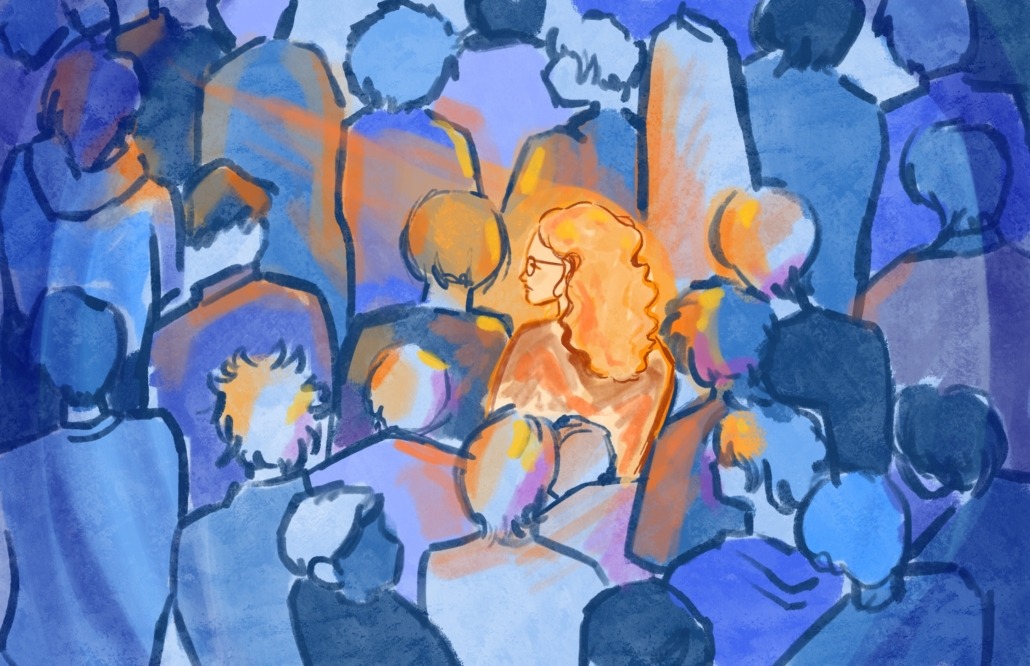

Systematic barriers limiting fair representation persist in academic publications.
If you asked me why I value being a student so much, I would easily point to my upbringing. My mother is a university professor, so academia has always been an ideal she protected in our household. In her eyes, education is sacred, a breeding ground for greater societal change and a hub where any person could find a way to succeed.
I’ve never had the privilege of being in her classroom, but I find a lot of comfort knowing that her values of idealism and curiosity are something countless other students get to learn from every day. Coming to USC, I protected my mother’s vision of college, especially because of USC’s diverse student body and core values that target community and institutional trust.
When I actually started learning at USC, however, I quickly realized that diversity in academia still had to be fought for. Most of the teachers I learned from were of the same demographic and perspective, which reflects a broader struggle for representation. In 2024, data from the National Center for Education Statistics showed that around 69% of tenured full-time instructional staff at USC were men, 68% of whom were white.
In 2022, Kristina Lerman, then a research professor at USC, published a piece that looked at gender based citation patterns in university publishing. Her findings echo previous research: papers published by women receive fewer citations than papers written by men. Female scientists also rely more heavily on tightly clustered professional networks, suggesting that identity shapes not just opportunity, but visibility.
It’s easy enough to say that we need more representation in the classroom, but to see this fact highlights how some voices are valued over others. Representation in academia doesn’t just dictate who gets published, but also who gets seen, cited and remembered.
These problems may feel isolated, but the reality is that lack of representation often reflects larger issues ingrained in academic culture. Researchers from Indiana University scrutinized the traditional academic publishing model in a 2025 study. They relied on theoretical analysis and exposed a system built on privilege, where there’s an overemphasis on maximizing metrics like producing as many papers as possible. Additionally, a large emphasis was placed on publishing in popular, high-profile journals.
The researchers attributed this culture to a “prestige economy,” where mass production in high-impact journals leads to lower-quality research for the sake of maximizing quantity.
This culture is pervasive, and often links to other concerns, which are directly related to diversity.
For one, trying to maximize both production and citation often leads to mass homogeneity, where risks are avoided and uniform perspectives are more accepted. We see this reflected in college classrooms as well, where the people we trust to teach our students represent dominant ideals that are often incredibly homogenous.
Embracing uniform beliefs like this directly alienates diverse voices, who may represent ways of thinking that challenge conventional norms. This is especially true due to the dominance of mass academic journals, like Springer Nature, who also happen to produce academic textbooks used across the nation.
These journals suffer from systemic barriers and the dominance of “WEIRD” perspectives, otherwise known as views from Western, educated, industrialized, rich and democratic societies.
The result of these systemic issues lead to a funneling of knowledge through hegemonic Western frameworks. This not only limits representation, but also leads to declined scrutiny and critical thinking that is needed in academia.
An extreme example of this can be seen in the global response to the COVID-19 pandemic. The pandemic was another reminder of global inequities in access to healthcare, as vaccines were often only concentrated in high-income countries.
As a response to this, South Africa leaned into research, becoming a pioneer in the development of mRNA vaccine manufacturing and more accessible vaccine production in the continent.
This example, like countless other medical and technological advancements that happened outside of the West, show that diversity in research and access to resources is a right that should be shared for everyone for the benefit of mankind.
Right now, things may look narrow-minded, but I am excited for the potential of academia for years to come. Diversity, equity and inclusion initiatives can be seen everywhere, and are the necessary first steps to foster change. These initiatives are clear avenues for change that have proven beneficial for a variety of underrepresented academics.
Academia will always be my way of honoring my mother. As a child, I never truly understood the scope of what she did for work. But attending college myself has shown me the barriers and social issues that she fights against every day. Efforts in increasing diversity in any institution take time, but I will always be hopeful for a future where voices like my mother’s can be heard by everyone.