Queer comedians are killing it
These creatives bring comedy into another dimension.
By NINA KREMER

These creatives bring comedy into another dimension.
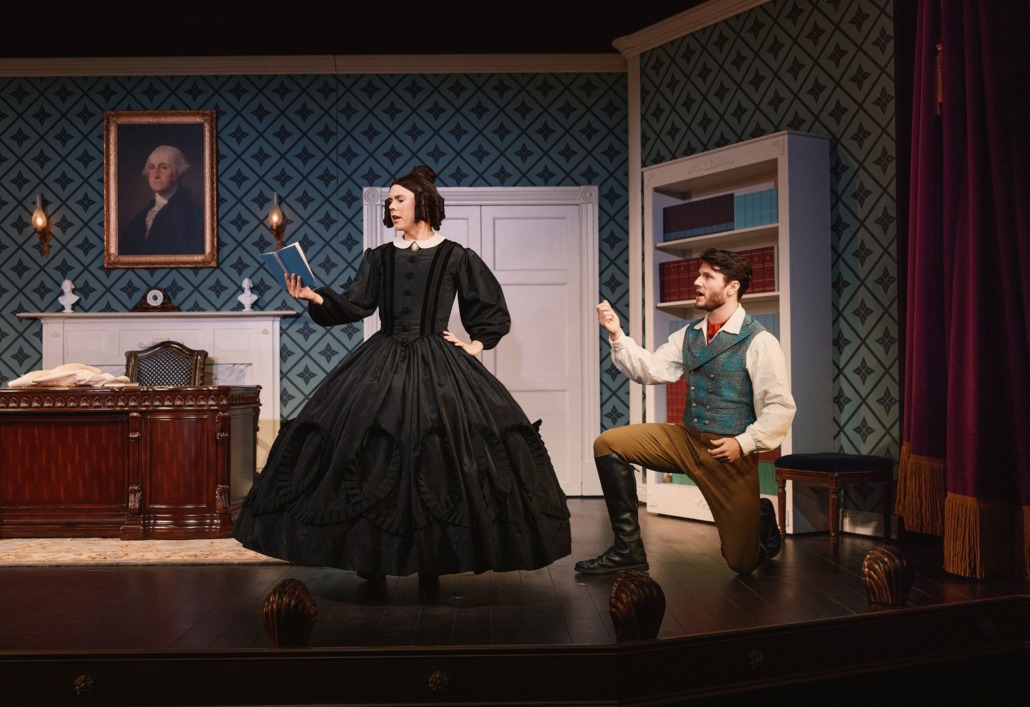
“Oh, Mary!” The touring company of the Broadway show will come to Los Angeles this fall, and thank God. I have been dying to see it.
For those who may reside underneath a hard place, Cole Escola’s “Oh, Mary!” parodies the life of former First Lady Mary Todd Lincoln, and does so in an absurdly hilarious, darkly comedic way. It’s a premise that could only be conceived of by an individual with an expansive imagination and appetite for the unusual.
Funny people like Escola and Julio Torres, the former Saturday Night Live writer, with their absurdist sense of humor, are revolutionizing the art form of comedy, teaching audiences that it can be more than just making fun of yourself or others. It can be a complete escape from reality.
Comedy is a mechanism that brings people together and joy to people’s lives in hard times. That’s why, in the big ’26, queer comedians like Escola and Torres are stealing the spotlight.
To be queer is to live outside of the realm of relative normality dictated by heteronormative society. As such, many queer funny people are not simply reciting stand-up routines that are essentially practiced monologues — though some still do, and do it well — they are crafting shows like no other, creating comedy that is itself outside of the norm and out of the box.
Tony Award-winner Escola — the first openly nonbinary artist to win the Tony for Best Performance by an Actor in a Leading Role — is not only the playwright, but was the first to play the role of Mrs. Lincoln on Broadway. In turn, Torres created Peabody Award winning television shows “Los Espookys” and “Fantasmas” as well as his surrealist special “Color Theories,” which explores identity through playful, colorful interpretations.
Navy blue, for example, is the color of airports, he says: “It’s the airport’s way of saying, ‘Whatever your deal is, not here.’” “Color Theories” is the follow-up to “My Favorite Shapes,” which follows a similar line of thought as Torres personifies shapes for his audience. There’s something so beautifully whimsical about the simplicity of his comedy.
These creatives are not just your typical, run-of-the-mill stand-ups; they are experimentalists playing with form and style in exciting new ways, and have captivated audiences with their unique senses of humor.
In essence, what makes something funny is if it’s unexpected or even taboo; surprising audiences who have heard everything is half the battle. Some straight comedians have attempted to push the boundaries by using their own existence within the heteronormative world to leverage an uncomfortable power imbalance and make jokes that toe the line between comedy and insensitivity.
Cisgender heterosexual men have been saying offensive things on stage since the birth of comedy, but these routines feel especially antiquated in the modern day. We, the forward-thinking, Generation Z audience of today, crave the surreal, the unexpected, not the tired, shock-value bully bit.
While straight comedians like Bill Burr and Matt Rife keep making jokes about cancel culture, and others like Shane Gillis tell jokes that seem intentionally offensive or, dare I say, cringeworthy, queer comedians are rising above the fray. They create comedy that is based not in division or othering, but in joy and play.
They push boundaries of form, blending comedy and performance art, exciting and surprising audiences with their sheer creativity without relying on shock value.
And though the queer comedians of today may be bringing a new perspective to the stage, queer comedy itself is, thankfully, nothing new. The history and impact of queer comedians can not be understated.
Trailblazers like Wanda Sykes, Suzy Eddie Izzard, Rosie O’Donnell and Margaret Cho were pioneers of queer comedy that was uncompromisingly authentic. Even famed “SNL” creator and one of the most powerful cisgender heterosexual men in comedy, Lorne Michaels, got his start working with queer icon Lily Tomlin on a few of her comedy specials.
While it’s unfortunate that queerness is still somewhat considered out of the ordinary many years since these comedians broke barriers by speaking publicly about their queerness, new-age queer comedians are not only carrying the torch, they are coming in hot — with flamethrowers.
We don’t need any more jokes about cancel culture or jokes that seem like a desperate attempt to get canceled, if only to get some much-needed media attention. My advice: ignore the noise, tune into some silliness, get hip to some foolishness, expand your horizons, and leave feeling lighter and gayer — as in happy, don’t cancel me.
Nina Kremer is a sophomore writing about comedy in her column, “Comic Relief,” which runs every other Wednesday. She is also an Arts & Entertainment editor at the Daily Trojan.