We can all use a little more love
Waiting to feel ready for love risks missing it altogether.
By LAYAN ALASSEEL
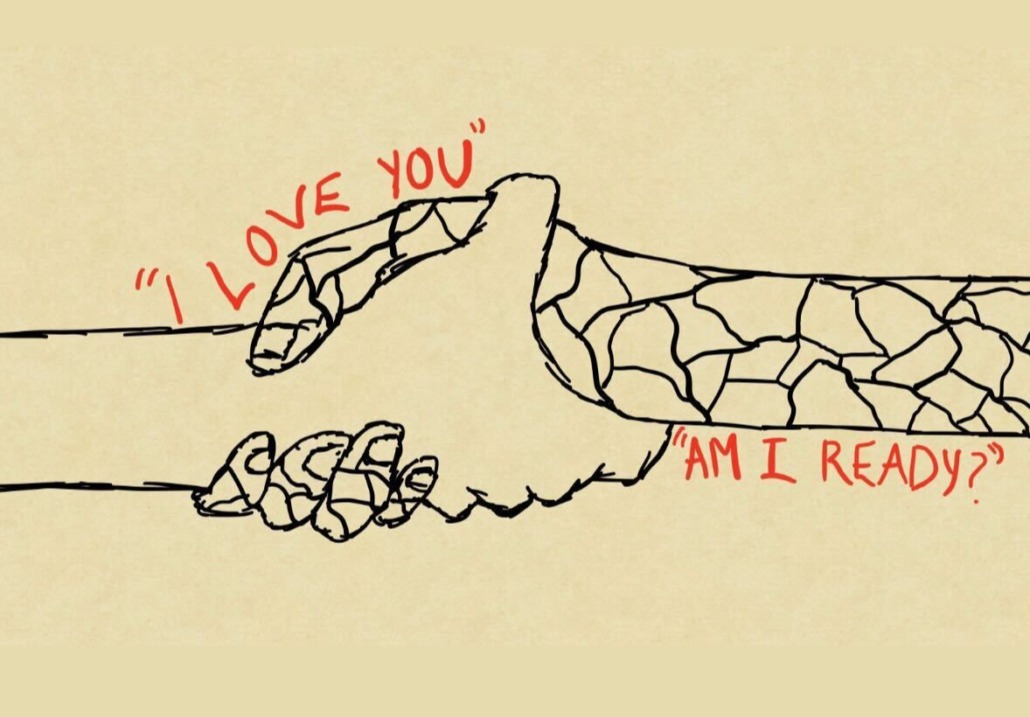

Waiting to feel ready for love risks missing it altogether.
Recently, I had a conversation with a couple of friends about having a crush.
Some of them mentioned that they missed the adrenaline of being giddy around someone you like, smiling when you’re thinking about what they’re up to, wondering what their favorite color is or what restaurants they like.
Unfortunately, I found myself having a hard time relating to that nostalgia, as having a crush feels like the end of the world to me. When I look back at times I’ve started to like a boy, I travel back to some of the most overwhelming emotional states I’ve experienced — which is precisely what makes it so hard for me to develop feelings for someone.
During those rare occurrences, I find myself falling for a person in the deepest of ways, to the extent that they quickly take over all of my thoughts. I used to think this intensity was a personal flaw, something I needed to fix before I could ever have a healthy relationship. Maybe I just hadn’t reached the right version of myself yet, a version that wasn’t so affected by the fear of rejection or the embarrassment of telling someone how deeply I feel for them.
But the more I sat with it, the more I started to wonder if the feeling that this intensity was something to fix wasn’t entirely mine. If, instead, it was shaped by a culture that teaches us to approach love cautiously, almost conditionally — as something we should only allow ourselves once we’ve become whole and content on our own. We may not reject love outright, but it becomes something to be kept at a distance until it can be experienced without risk.
The problem is that love rarely arrives in a form that respects those conditions, and as much as we wish it were, it is not an efficient and well-timed ordeal. Love interrupts, reshapes and demands attention in ways that don’t align with the idea of a perfectly optimized self. So instead of questioning this unrealistic societal expectation that the prerequisite to love is becoming our ideal selves, we begin to internalize it and question ourselves.
Someone like me, whose crushes really are that serious, may fear the overwhelming emotional state that comes with developing feelings and fall into the habit of avoiding love altogether. But I’ve also noticed a different response. I have friends who approach their crushes with a kind of casualness and as something to experience temporarily without letting it mean too much because they’re “not ready.”
And while those approaches seem different on the surface, they actually mirror each other. Both are, in their own ways, attempts to manage the risk of caring. One withdraws out of fear of being overwhelmed, the other dilutes the feeling before it has the chance to deepen.
But underneath both is the same assumption: love, if left unchecked, will destabilize you. That it is something to regulate, rather than something that you not only might be able to withstand, but could also become a catalyst to help you grow.
This isn’t to say that people shouldn’t take time to heal or that self-work is unnecessary. There are moments when distance is needed, when stepping back becomes the most honest and responsible thing you can do, both for yourself and for others. However, somewhere along the way, that idea has expanded into a belief that we must reach a final, fully resolved version of ourselves before we are allowed to risk participating in love at all.
What this way of thinking further obscures is that love is not just something we risk, but something we offer. At different points in life, people move through the world with varying capacities for care — sometimes able to give deeply, other times in need of that same presence. When we begin treating love as something to withhold until we are “ready,” we interrupt that exchange entirely.
There is something deeply human about being able to receive love in that state of uncertainty, and just as human to give it. To let someone care for you without feeling like you’ve earned it yet. To let your feelings exist without immediately trying to contain them or make them more manageable.
Because sometimes the intensity we’re so quick to question is not something to fix, but something to trust as a means for filling a void we didn’t even know existed prior.
We must stop treating love as the prize for a finished self. Instead, it is the grace that finds you in the middle of your becoming, unpolished and uncertain. You do not need to be “ready” to be worthy; you only need to be present.
Love doesn’t wait for the version of us we think it needs — it arrives for the one that is already here.