Be intentional with your energy
The global oil crisis is a reminder that environmental responsibility starts with each of us.
By KIYOMI MIURA
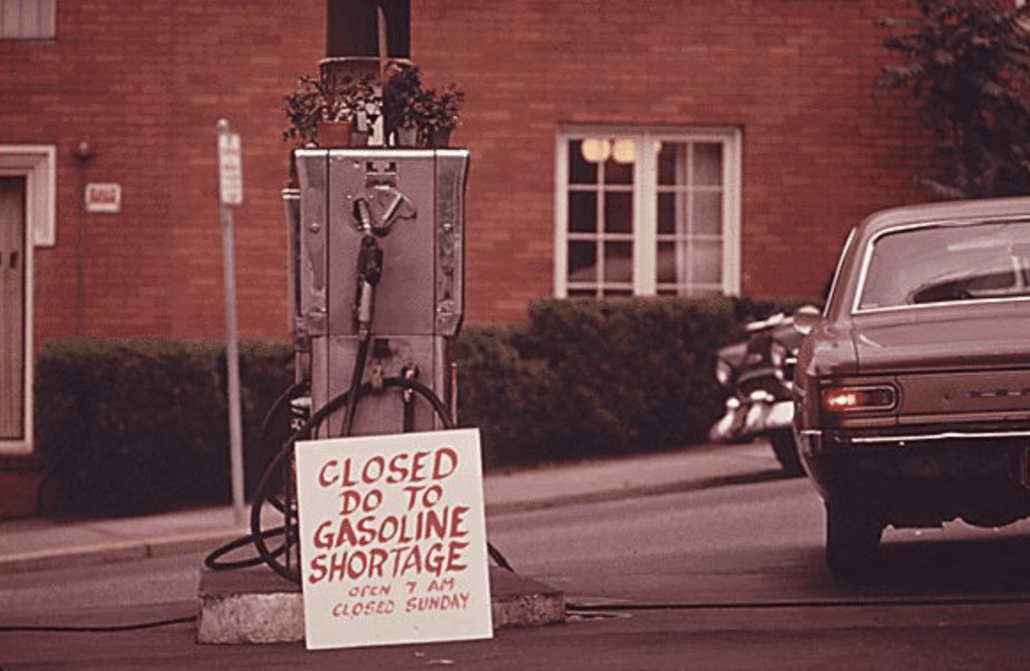

The global oil crisis is a reminder that environmental responsibility starts with each of us.
An image that has stuck with me since I was a child is that of “Mottainai Grandma”: a children’s book character with knowing eyes and rosy cheeks who scolds her grandson on every page for daring to be wasteful. She gets her name from her repeated use of the term “mottainai,” Japanese for “what a waste.”
Every grain of rice, every pencil nub and every orange peel was to be exhausted of every last drop of utility. To this day, the term evokes a deep sense of shame.
The wisdom imparted on me by this fear-mongering, fictional grandma was a constant awareness of resource efficiency and conservation. Growing up in Japan, where Shintoism promotes the idea of land and nature being children of the divine, I developed a deep appreciation for the harmony between people and the environment.
As I’ve carried these values with me into a new country and new contexts since being in college, I’ve realized that respect for our environment is largely absent, and disappointingly performative without tangible results. Oftentimes, it can seem futile to do things like compost food and take shorter showers when the bulk of the action needs to be done by those with political power.
The global oil crisis we’re currently experiencing while both Iran and the United States close off the Strait of Hormuz has revealed more than just the fragility of the global energy market amid geopolitical tensions. It has previewed the world’s reaction to a depletion of nonrenewable resources — an end we all know is coming, yet which has previously failed to kindle a sense of urgency toward developing renewable energy resources.
It turns out, it didn’t take a United Nations framework of Sustainable Development Goals with the looming 2030 deadline to ignite the urgent adoption of energy conservation, but rather another oil embargo that has significantly raised energy prices.
Some countries have already taken conservation initiatives. For example, Bangladesh has cut office hours and mandated shopping centers to close at 6 p.m. to save electricity; South Korean President Lee Jae Myung has urged citizens to “save every drop of fuel” and encouraged bike-riding and shorter showers; meanwhile, as of March, some offices of the government of the Philippines have implemented a four-day work week to conserve driving fuel.
This global awakening is one that mirrors what could have been the response to collective sustainability goals in an ideal world. Unfortunately, the policy responses and sentiments of government leaders are reflective of an effort to decrease costs as opposed to a long-term reconsideration of energy efficiency.
For now, federal governments are implementing short-term solutions to this costly crisis by suspending taxes and subsidizing fuel costs in an effort to mitigate the expenses. The economic consequences take center stage while questions of environmental volatility of oil as an energy source remain an unacknowledged elephant in the room.
The current crisis is a critical point in history, yet one that is all too familiar. The 1970s oil crisis in the United States urged the Carter administration to push for conservation, successfully fueling the development of renewable energy and establishing the Department of Energy.
However, it’s been almost half a century since then, and the susceptibility of the global energy market to the modern oil embargo exposes how much progress has yet to be made. Similar to the response of the 1970s oil crisis, the conversation now shouldn’t center around reducing the economic impacts, but rather the environmental initiatives that deserve greater regard.
USC has made notable progress, with collaboration between the Environmental Student Assembly and Undergraduate Student Government having led to direct communication between students and administration, including student-authored sustainability bills that increase the transparency of the institution. The University has also committed to a 50% reduction in scope one and two carbon emissions as a part of the Assignment: Earth sustainability initiative, but whether or not this is largely symbolic will be unknown until 2028 comes around.
The rollout of artificial intelligence tools for all students, though, might set the University back a few steps. Considering the immense environmental impact of AI data center development, including substantial electricity and water usage, the eager utilization of AI might have been naive.
The current situation offers momentum that we ought to put toward rethinking our dependence on politically and environmentally risky sources of energy. That being said, the power and responsibility to do so falls on all of us, not just those with political power.
As we choose to respond to this crisis and conserve energy in our daily lives, we might as well realize that this has been necessary since long before the current conflict with Iran.
Environmental responsibility falls on all of us. I was in middle school when I first calculated my carbon footprint on the Global Footprint Network website. It would take more than seven times the planet’s resources to accommodate my lifestyle had everyone on the planet lived like me. What I had considered to be an average lifestyle — minimal waste, no private planes and I don’t even know how to drive — turned out to be a luxurious one the planet can’t afford.
Beyond the practical considerations, it’s also about developing a connection to our environment. The Shinto doctrines of harmony between people and the planet are worth adopting for the sake of developing a deeper appreciation for the resources we use.
Environmentalism doesn’t mean promoting a lifestyle of meager resources and minimal luxury, but rather finding luxury in the resources we have. With that, I encourage you to be intentional with your energy; rethink your priorities for the sake of our planet.