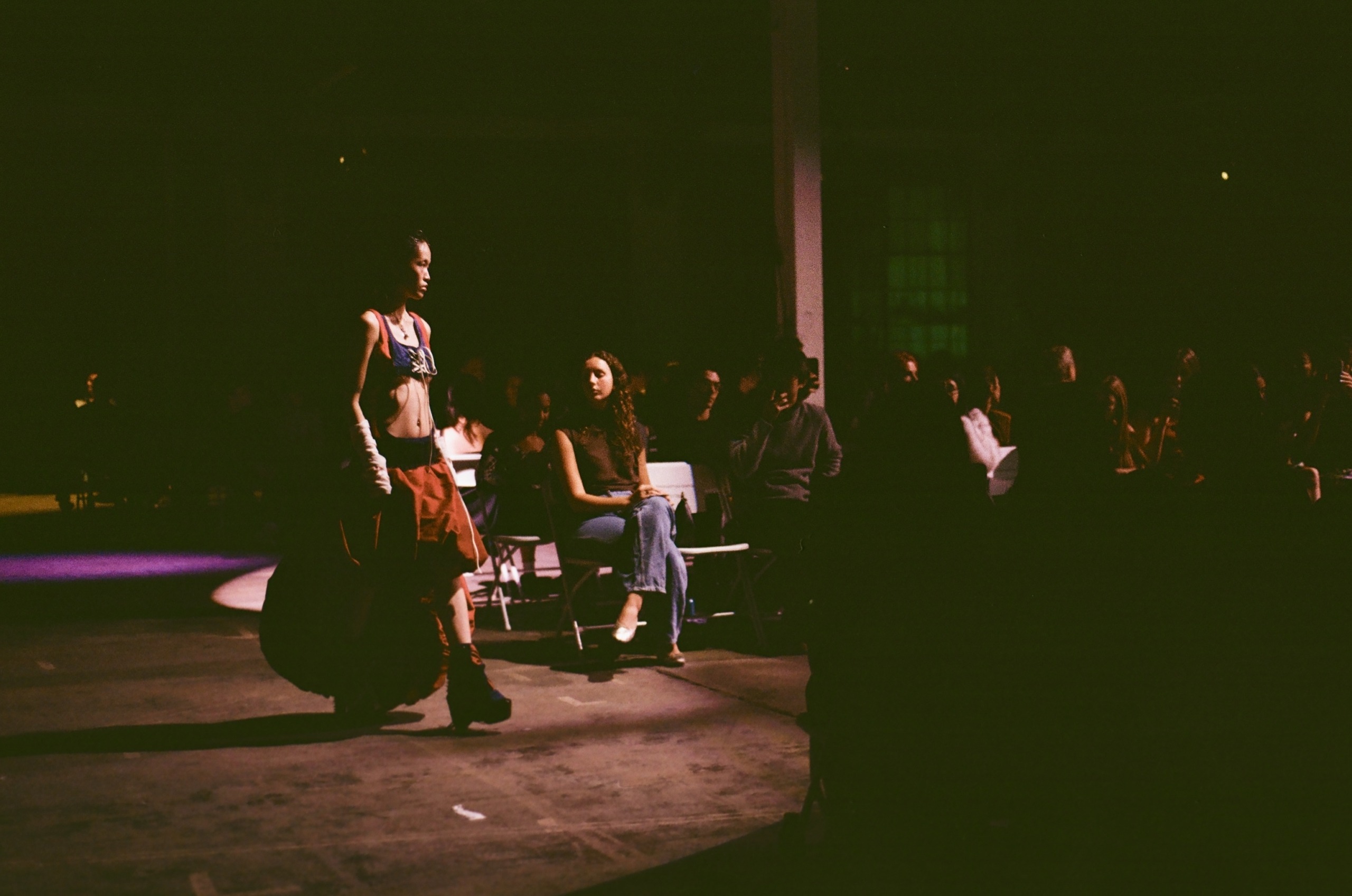
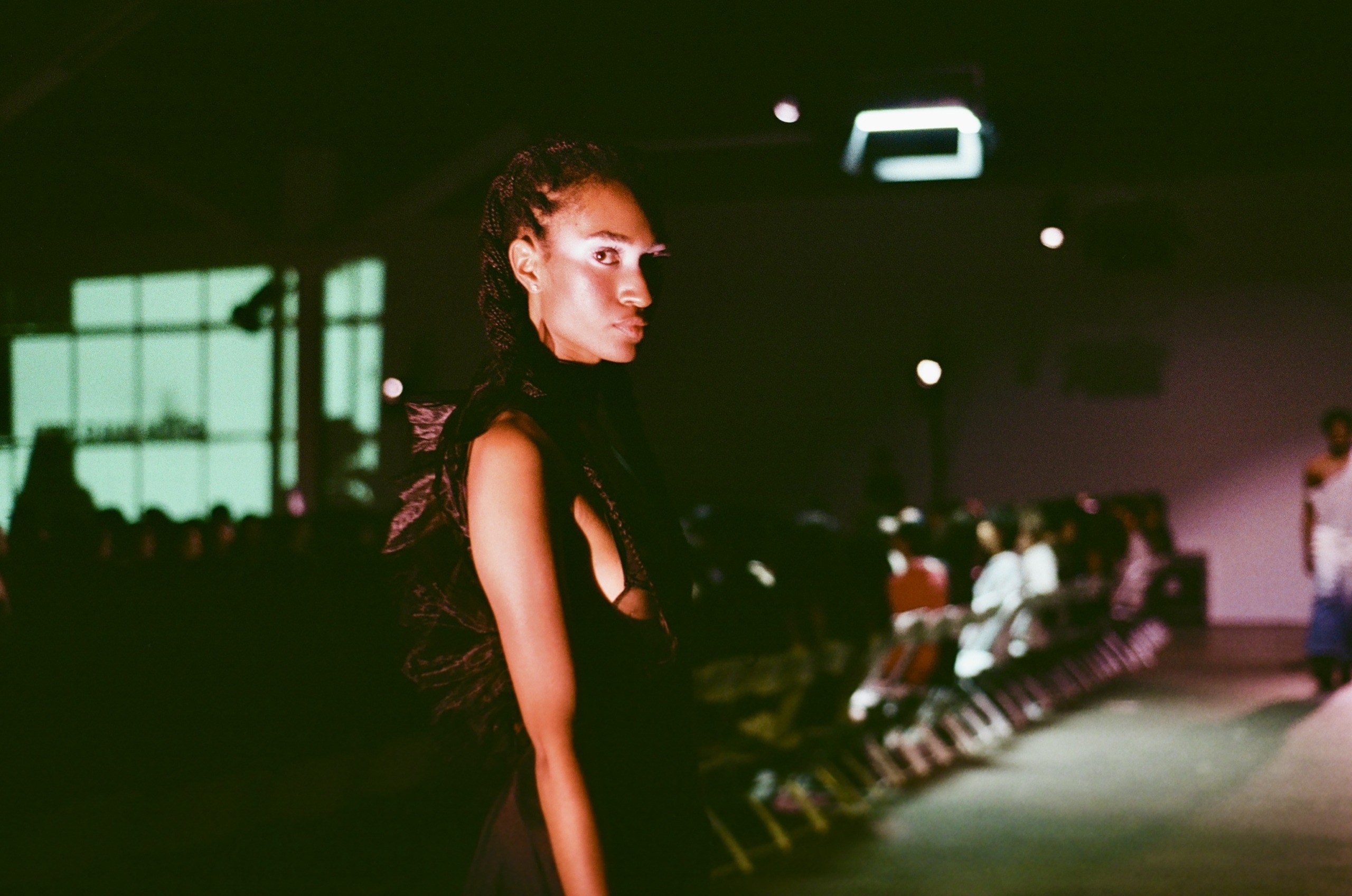
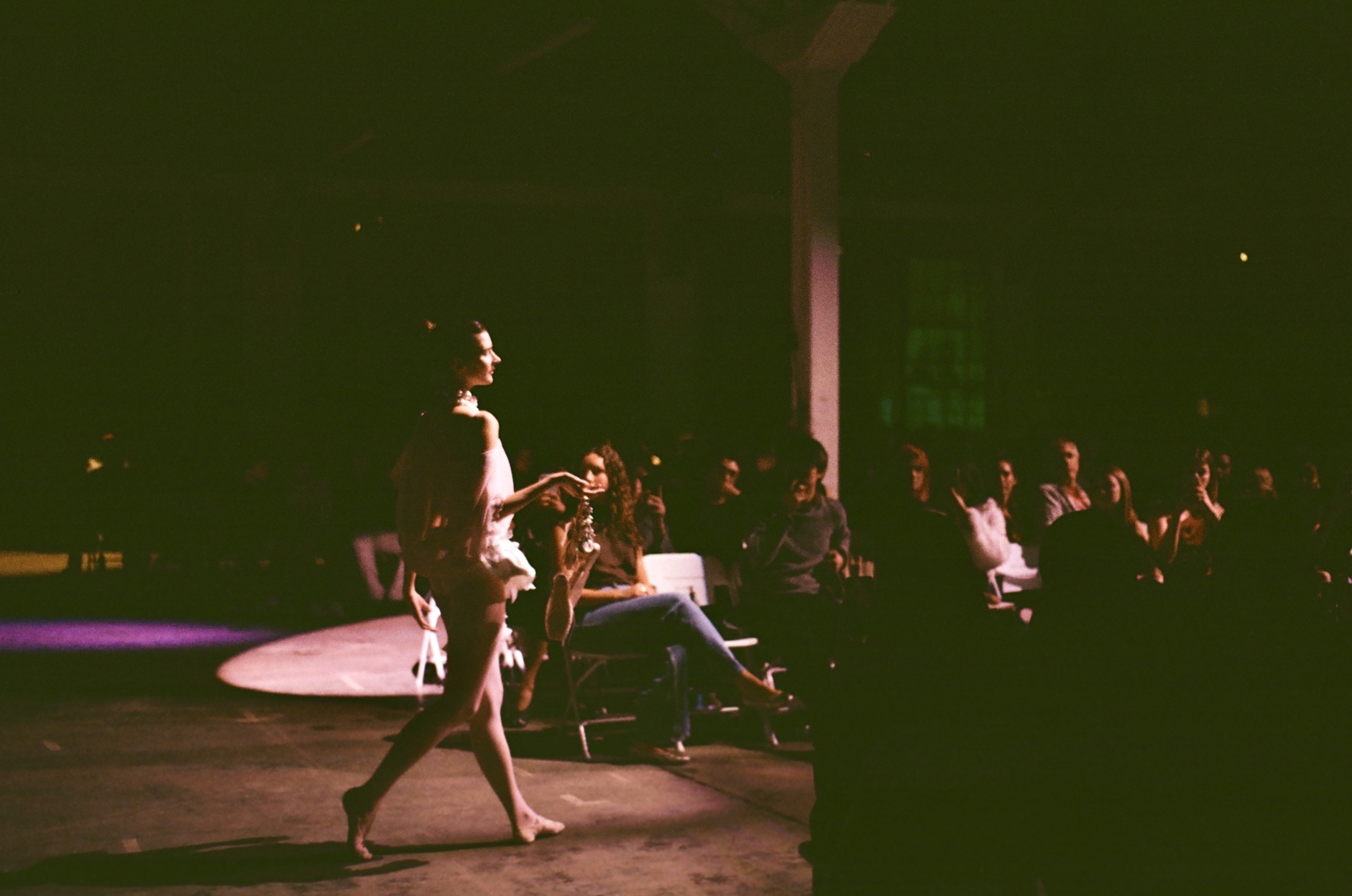
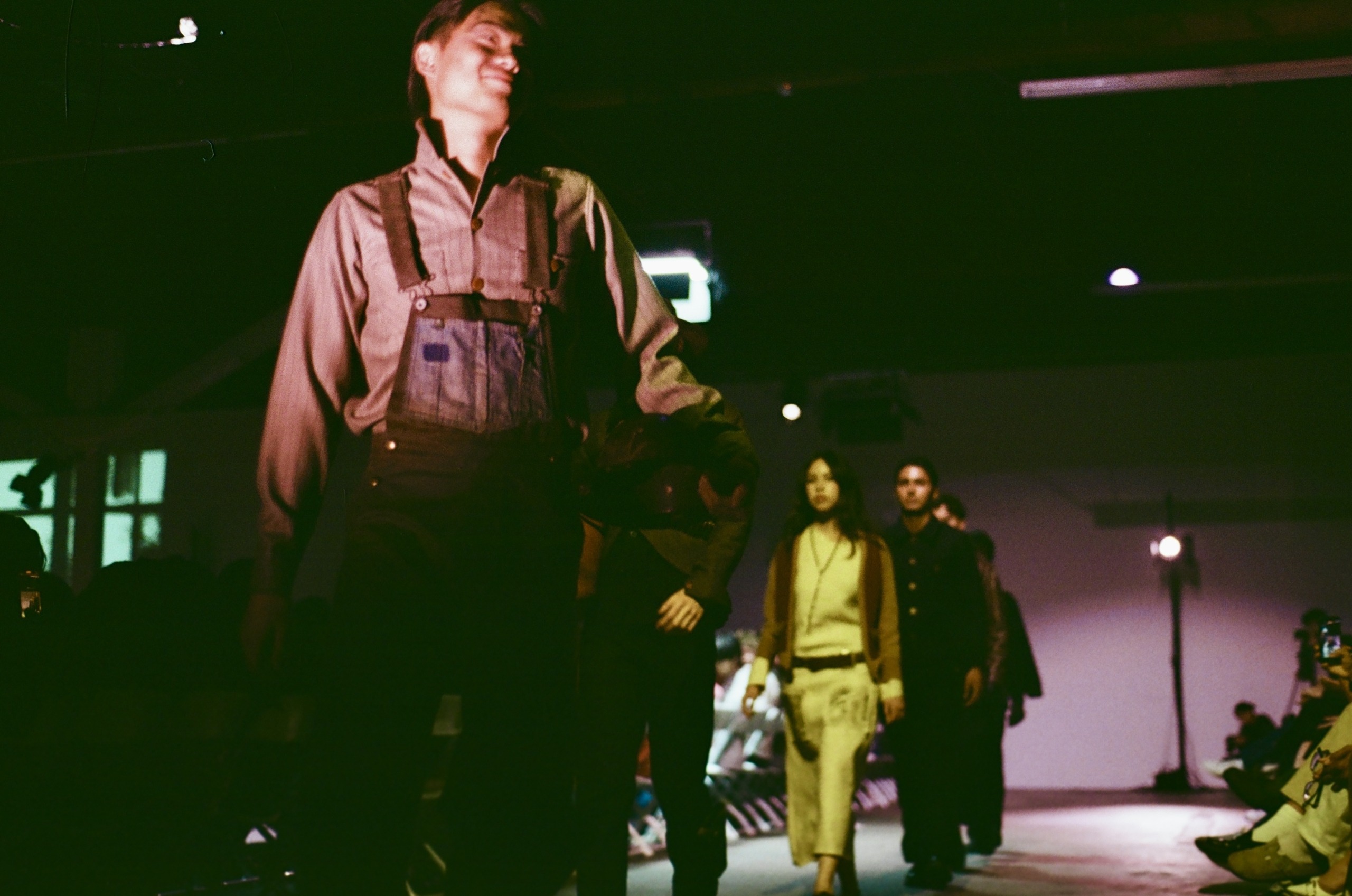
With eerie synthetic beats, clinical purple lighting and a virtual reality feed flickering across the projector screen, USC Fashion Industry Association issued a warning to the audience: “Don’t get too comfortable.”
FIA held its 20th annual fashion show on Saturday night at Mica Studios in the Arts District of Los Angeles.
This year’s theme was “Oculus,” the Latin word for eye. According to a FIA press release, the show examined surveillance in today’s digitized world, exploring the idea of being watched and how those in power leverage their control to invade personal privacy.
Daily headlines, sent straight to your inbox.
Subscribe to our newsletter to keep up with the latest at and around USC.
“It’s just very on the nose in terms of the times, but still broad enough to be able to curate a narrative that designers can still have their own styles within,” said Abriana Stewart, the co-president of FIA and a junior majoring in arts, technology and the business of innovation.
The evening began with attendees mingling over glazed donuts from Donut Hut and matcha from Cafe Dulce, as well as other complimentary beverages. Past the refreshments, FIA opened a second room with Los Angeles-based vendors as well as student vendors, selling an array of items including jewelry, sunglasses and vintage clothing.
Shahir Ali, head of finance for FIA and a sophomore majoring in artificial intelligence for business, doubled as a vendor during the show’s reception, selling shirts from his own brand, Famesh — including “University of Spoiled Children” shirts.
“[Having the vendors] was great because it’s just another way to showcase the fashion community around our area and everyone who’s been in it for the game,” Ali said.
As the show began, a model dressed head to toe in black, her face obscured by a Meta Quest Headset, locked eyes with attendees as they watched themselves reflected back on the projected screen through her gaze.
“We’re all consumers and creators of fashion, and we just wanted to reflect that and flip the audience narrative on it,” Stewart said.
The show featured six collections from seven designers, commenting on various aspects of surveillance.
The first collection, designed by Ly Ngo, a senior majoring in business administration, under her brand Solely Studios, focused on the idea of liminality through the use of veiling and sheer materials. Layering and multitextured looks highlighted the blurring of exposure and concealment in today’s world.
The next collection’s soundtrack contrasted the first collection’s smooth, Sade-infused music, shifting instead to a more upbeat, march-like cadence. Titled “The Pit,” the collection by Eion Nunez, a freshman majoring in cinematic arts, film and television production, examined oil’s influence on early America.
With mining pants, leather jackets and coal smudging on the models’ faces, Nunez said he hoped to cultivate a sense of nostalgia through his work, referencing an era before ubiquitous surveillance.
Designer duo Sunshine Reigns — Jaden Steinhoff, a senior majoring in arts, technology and the business of innovation, and Charlie Segal, a senior majoring in business administration — brought their college-inspired collection, “What the Horse Considers Play the Monkey Considers Business,” to life with one model casually strolling down the runway as if portraying a fraternity brother.
Models for Madeline Stecher, a sophomore majoring in public relations and advertising who designs under the label Ballerine Jewelry, enhanced the light femininity of the pieces through graceful, dance-like movements set to slow piano music.
Dom Jocas, a senior majoring in arts, technology and the business of innovation, presented his label Clandestyn’s “Prêt-à-Lutter” collection, inspired by the sacrifices of those before who fought for freedom. One model held out a trailing sheet that read, “Kill ice, glory to the spring.”
The only non-USC designer in the show, Aubry Sloane Deetjen, was unable to attend in person. Deetjen had her collection shipped to L.A., and her mother oversaw the pieces on her behalf.
“If You’re New Here, You Have to Fight,” a boxing-themed collection, explored the violence inherent in growth and healing processes, its medical-inspired designs representing both internal and external experiences.
Sam Chweh, a graphic designer for the L.A. clothing brand Berlinc, said he appreciated young designers.
“Everyone had their own unique taste and take on fashion,” Chweh said. “That’s what I love about younger designers and younger creatives, because I think we are less [likely] to follow the status quo. We experiment a lot because the world we live in right now is fucked up.”
Stewart said the event will continue its previous collaborations with USC’s diverse creative communities, from the Kaufman School of Dance to the Thornton School of Music to the Iovine Young Academy. The collective effort of over 100 USC students, both from and outside of FIA, allowed this production to happen, according to the FIA press release.
“It was our 20th annual fashion show, so that’s a huge milestone [which holds] a special place in my heart,” Stewart said. “It just continues to show us how we can push our limits and continue to grow as a student [organization].”


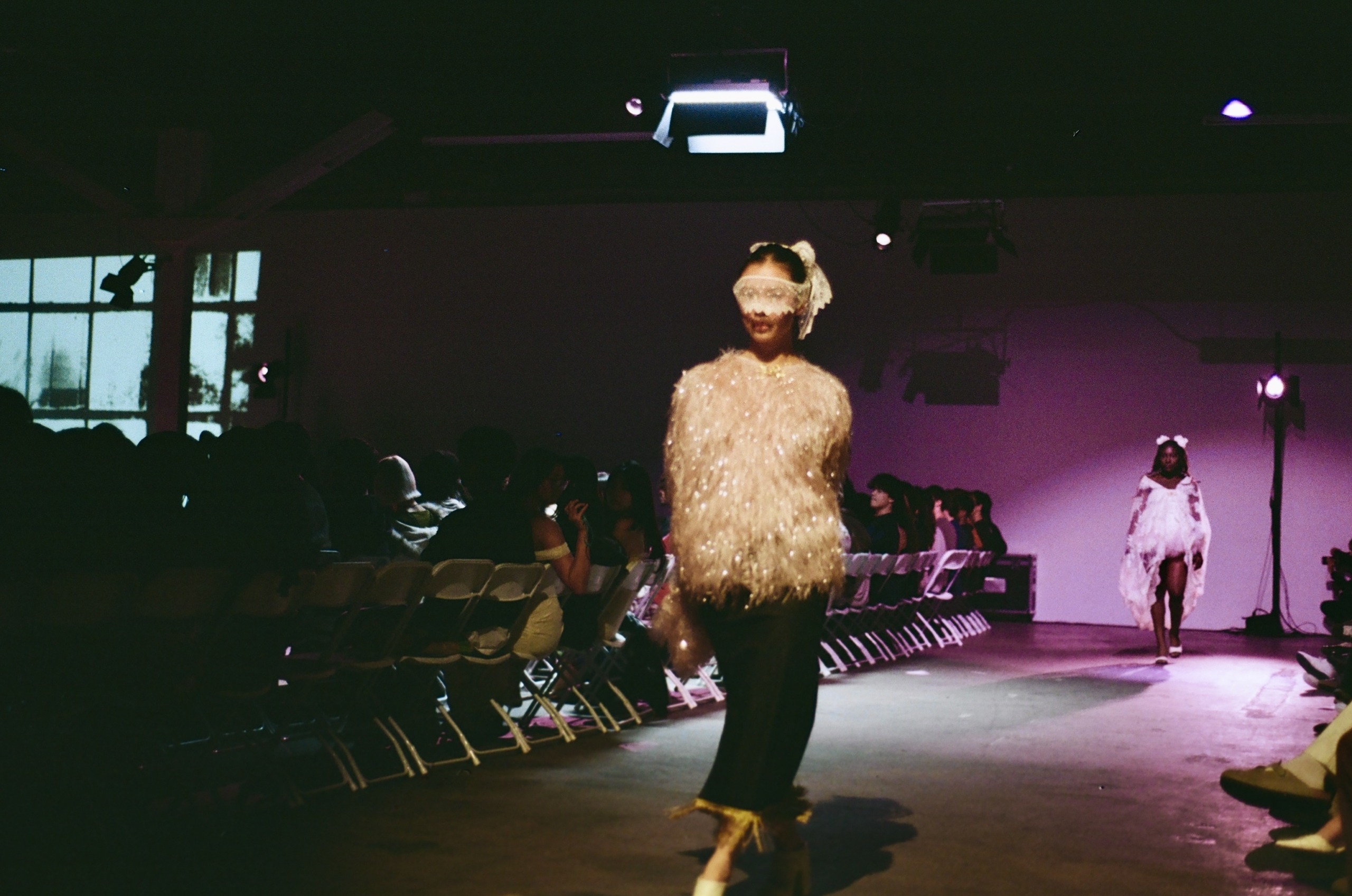 (Tai Sandhu / Daily Trojan)