College is probably the best years of your life
Just one year into college, I hope to carry its magic and experience with me always.
By SAWYER SUGARMAN

Just one year into college, I hope to carry its magic and experience with me always.
When I walked out of the New North Residential College bathroom after my Saturday morning shower, I was delighted to bump into an admitted students tour group in nothing but my towel. After I awkwardly slipped past and collected myself, I was dumbfounded. How have we already arrived at the point in the semester when potential Trojans are scouting my dorm as their new home?
The run-in forced me to confront a truth that I’ve been trying my best to avoid: My freshman year, which has felt like a timeless vortex of fun, is waning right before my eyes. As I inch closer to a teary departure from my friends for summer, I’ve been reflecting on the lifetime resonance of the college experience.
We’ve all heard the all-American college platitude: Your four years of college are the best of your life, you should cherish your finite final school years before you’re dropped off into the real world. But, what is it exactly that makes college so special, and why should the fun end after we toss our caps?
An answer is, literally, right in front of me. When I step out of my room, I’m greeted by hallmates from a diversity of backgrounds and identities, and because of our proximity, interaction comes about naturally. When I need to borrow a shirt or run out of toothpaste, all I have to do is knock on a neighboring door and I know someone will lend a hand.
Some of my most cherished first-year memories were made in the New North halls, bonding with people I may never have crossed paths with under a non-college pretense. The nature of our living situation accelerates socialization, constructing a communal culture most people aren’t afforded after graduation.
Even if you live with roommates, the experience is wholly different after school. Most post-grad adults would probably feel reluctant to make an impromptu visit next door to borrow a going-out top. Beyond that, living facilities typically lack vibrant common spaces that encourage outreach beyond your immediate circle, so it’s no wonder American cultural sentiment favors college community over the isolated mundanity of post-grad life.
College creates the physical circumstances for success as well. Since I arrived on campus last August, I’ve notched north of 10,000 average steps-per-day each month, a marked improvement from my lazier summer numbers, which I will decline to share in this article.
It seems intuitive that walking would yield some physical benefits, but it has a huge bearing on mental health as well. According to the American Psychological Association, hitting the recommended number of active hours per week, 2.5, can reduce risk of depression by a whopping 25%.
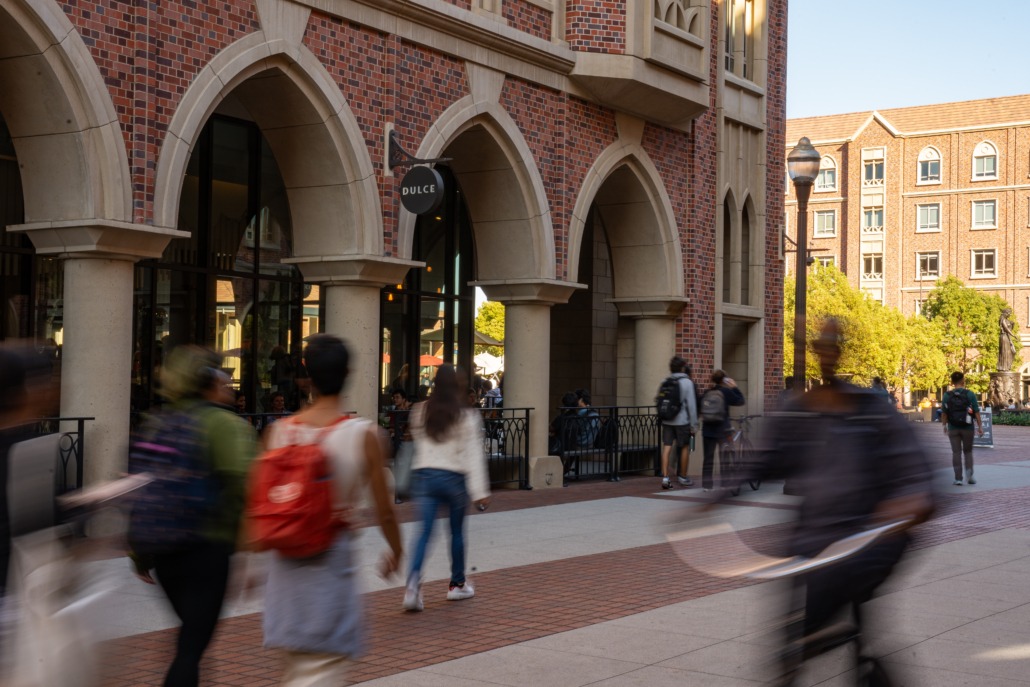
In college, millions of Americans trade in their car-dependent cities for beautiful, walkable infrastructure. Sprawling class buildings and communal commercial spaces, like USC Village, offer perfect third spaces for casual physical and social activity. So, your Tuesday afternoon stroll to Cava may actually be a reason you feel a little bit more unwinded during the school year.
But, the most special piece of college is the premise itself. We come here to learn, create, engage with similarly aged peers, make lifelong friends and explore novel autonomy, all of which all but guarantee some sort of fulfillment. Being able to write recreationally for a community publication is the sort of huge privilege we take for granted during our undergraduate stints.
Maybe I lack authority here, since I’ve only been at USC for a short nine months, but my time on campus has been so transformative in all the best of ways; I can’t help but preemptively mourn my current life. In three years, I will buy my last Trojan Grounds latte, hand in my final Brightspace submission and pen my final Daily Trojan article. When that time inevitably arrives, I refuse to give up on the things that make the college experience so valuable.
While there are admittedly fewer formal outlets for community outreach, unlikely interaction and structured learning after school, opportunities are there if you seek them out, especially if you stay in the cultural hotspot that Los Angeles offers. So, if I were to offer unsolicited advice to a Trojan senior approaching graduation, I would tell them what I hope to internalize by the time I’ve completed my USC run.
As cliche as it reads, learning is continuous, even without a formal curriculum. Though tapping into community may prove more difficult in the coming months, it’s possible to replicate the college social lifestyle with some extra leg work.
Instead of club events and fraternity registers, you may have to host dinners and throw parties, join a run club or pick up a new instrument. The pomp and circumstance of college curate the conditions for fun, but, ultimately, it’s the people that make it whole.
It’s difficult to imagine that my life will ever be better as a fully integrated adult than it is now, and maybe it won’t. Either way, I hope to carry the experience with me, transferring the magic of my best four years into a lifetime of community, education and experience.