PAULI’S SLICE
I trust people who care about food
When you value cuisine, you value the core merits of human nature.

By PAULINA DA SILVA
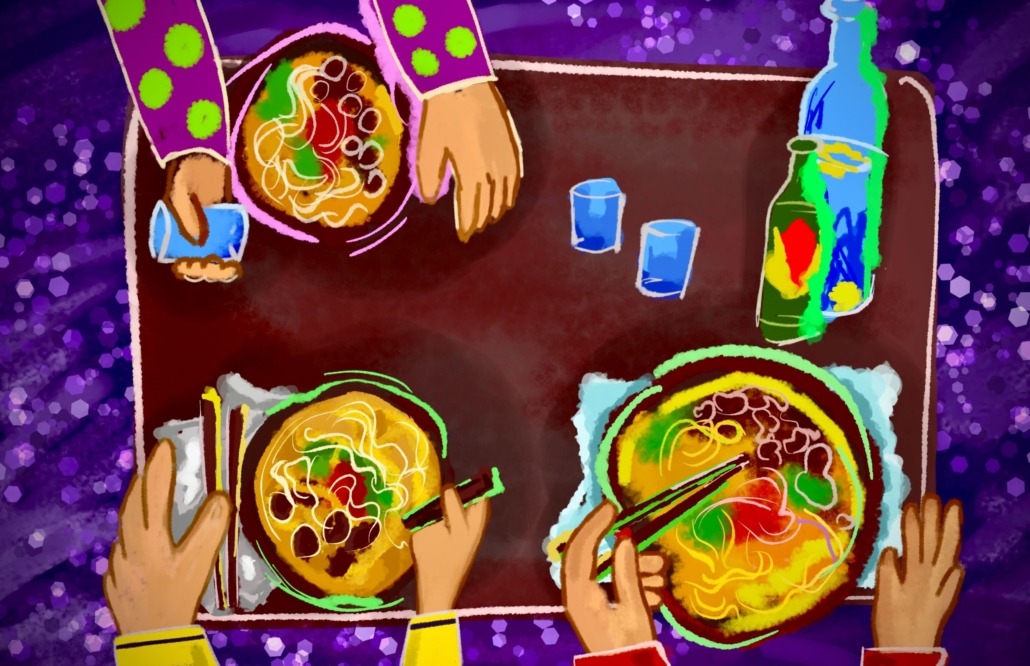

When you value cuisine, you value the core merits of human nature.
“Anyone who cooks, anyone who writes a cookbook, in my view, I’m going to assume that they’re on the side of the angels.”
American chef Anthony Bourdain, my undeniable hero, said it first. My adoration for Bourdain has manifested itself in my primary interest, outside of academics, being cooking.
Since I heard that statement, its simplicity has rung clear in my head. This truth felt instinctively genuine in the way only certain concepts can be.
To cook is to love.
Love is undefinable, at least in the ability to which my words can convey the notion. Rather than defining it, let me set a scene: Love is allowing someone to be in the kitchen with me while I cook, something my control-freak self typically has zero tolerance for.
Love is setting the table with the sole intention of making things beautiful for others. Not in pursuit of praise, but rather for the pure sake of providing enjoyment. It’s knowing someone’s coffee order, peeling someone else’s tangerine and saving the last bite so someone else can enjoy it. Love is to be selfless and sacrificing.
In its most practical form, love is just attention extended outwards. This is precisely why I trust people who care about food.
To care about food is to care about humanity. I don’t mean this in a metaphorical sense, but rather literally.
Humans have very few basic needs, chiefly among them is that we all must eat and drink. Anything beyond the impulses that keep us alive are merely desires not necessary to sustain human life.
Undoubtedly, food is foundational, not a trivial matter.
Yet, caring about food has become countercultural. We live in a world that prizes indifference, as meals are eaten in transit or between obligations. Getting fast food and eating it unceremoniously in your car is no foreign scene.
Food becomes devoid of meaning when it is transformed into a necessary task rather than a pleasurable experience. Convenience fills the void where care once took its rightful place.
It is this absence of intention that reveals something not only about the way we eat, but the way we live. If we pay no attention to something as essential as food, what do we pay attention to?
It would be ignorant of me to not pay mind to who gets to care about food. Is it those with the luxury of time and financial stability? Grounding myself in reality, I understand that to cherish food is an indisputable privilege.
The ability to linger and cook for reasons beyond pure survival is not a universally shared privilege. A matter of time and access influences the way we eat far greater than preference does.
When I speak to placing importance on what we consume, I emphasize it in the least pretentious manner I can. I am not speaking solely to individuals who partake in consuming artistic expressions from Michelin-starred institutions, but to those who indulge themselves in humble, honest cuisine.
In fact, I detest the idea of restaurants charging several hundreds of dollars for abstracted versions of “food” in miniscule portions. However, my opinions of haute cuisine, as the French call it, is an entirely different topic.
Rather, I adore food which tastes like love. Love isn’t an ingredient that can be substituted or replicated by any means. A home-cooked meal or a laborious recipe is never complete without the adoration and efforts of those who make it.
I attribute the current foodie culture to being the reason why we’ve distorted what it means to truly care about food. We, I am guilty of this as well, have turned food into a performance. We document it more than we experience it, ensuring that we can garner content out of each meal. This practice can quickly degrade the true meaning of food.
The moment we prioritize novelty and aesthetics over nourishment and intention is the moment we lose the notion of what it means to care.
To those who are privileged enough to be able to care about food, I urge you to partake in this practice. Reintroduce intention into your daily meals, understand where your ingredients come from and share these seemingly mundane moments with those you hold dear.
When we stop fighting our innate propensity to care, we begin to return to something unapologetically human.
Paulina da Silva is a junior writing about cuisine, culture and community in her column, “Pauli’s Slice,” which runs every other Wednesday.