Man dies at Keck waiting for heart transplant: ‘They just want us to give up’
Rhett Pascual, 53, spent two months in Keck Medicine of USC’s care on life support.
By LIZZY LIAUTAUD
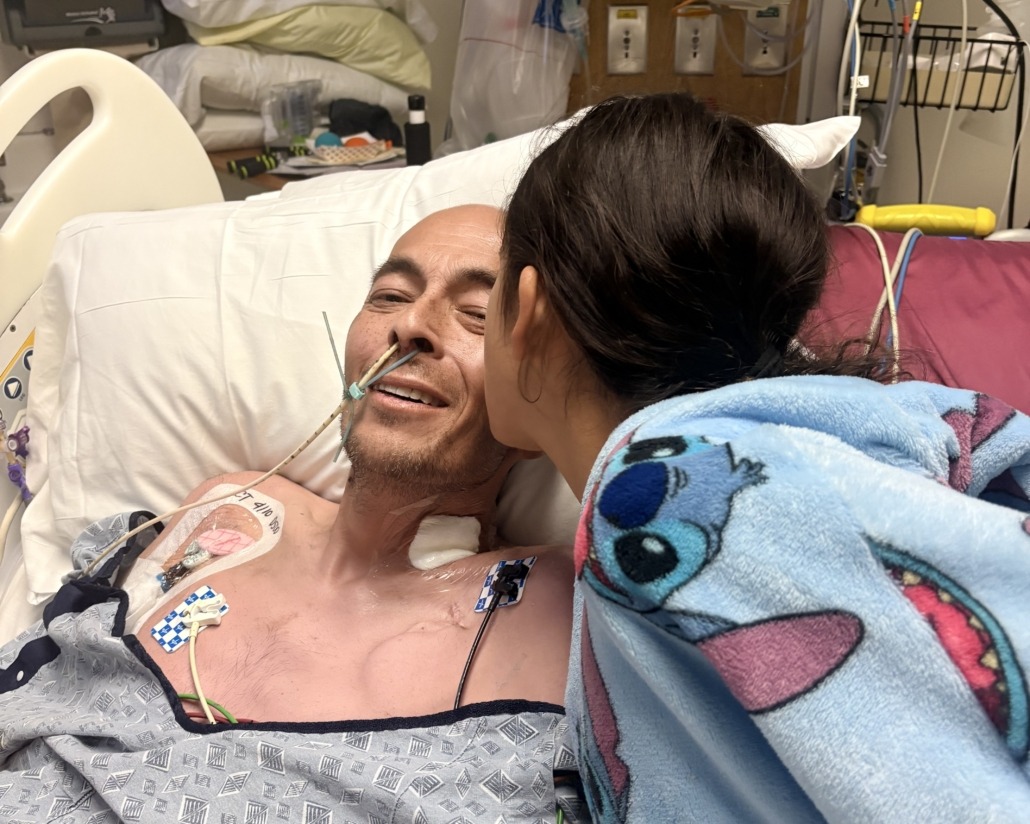

Rhett Pascual, 53, spent two months in Keck Medicine of USC’s care on life support.
Hand-drawn cards, prayers and words of affirmation kept up a positive atmosphere in the hospital room where 53-year-old Rhett Pascual was fighting for his life. Despite being on life support and waiting for a critical heart transplant, Pascual shared jokes with his family and nurses, determined to get strong enough to be placed on the transplant list.
Pascual died on April 21 after two months on life support at Keck Medicine of USC, never receiving the life-saving transplant he was waiting for. His wife, Julia Pascual, said she wished she knew more about why Keck doctors denied the transplant multiple times.
“Sometimes, coming here and listening to the heart transplant team, it’s almost as if they want us to just give up,” Julia Pascual said in an interview with the Daily Trojan on April 14, one week before he passed. “It’s really sad. And then I’m thinking, ‘Wow, for all these other [families] that have to go through this, it’s unbelievable.’”
Rhett Pascual had cardiomyopathy, a rare heart condition characterized by the heart’s difficulty in pumping blood to the rest of the body. Julia Pascual said he started evaluations at Keck in August 2025 and, in February, he was admitted to the intensive care unit after suffering a stroke and heart failure.
His family’s first attempt to place him on the transplant list was denied due to insurance issues. Doctors were concerned that the family would not be able to financially survive without coverage, Julia Pascual said. About a month later, after Keck secured insurance approval, doctors told the family he was too weak to be considered.
“They’re just taking so long, and they just keep on saying, ‘Well, he has … to regain his strength. He has to start walking. He has to be able to survive the surgery,’” Julia Pascual said. “If they saw that he definitely needed a heart transplant, then he should have been on that list a long time ago, versus waiting for him to get better.”
Keck declined to comment on the matter, stating they cannot “confirm or share patient details” due to patient privacy regulations.
Julia Pascual said her husband’s heart was functioning at only 15% of its capacity and his muscles had atrophied to the point he was unable to stand. Doctors recommended to his family to place him on palliative care, a type of specialized medical care that focuses on comfort and pain relief rather than curative treatment.
“This particular physician, a heart failure specialist, was so just mean about it,” Julia Pascual said. “[He said] ‘Give it up … he’s not even worth your time, let’s just pull the plug.’”
His wife and mother said they refused to give up. Rhett Pascual had two kids, a 20-year-old son and a 10-year-old daughter, who sat by their father’s side throughout his hospital stay. Julia Pascual’s brother had recently died, and she said, “We can’t imagine having to go through another death.”
“It’s heartbreaking, but I don’t want the same thing to happen to other families, especially with small children,” she wrote in an April 24 statement to the Daily Trojan after her husband died.
Before he died, Julia Pascual said the family kept advocating for him to be considered for a transplant while helping him build back muscle in hopes of becoming strong enough to get the transplant. He was doing physical therapy and slowly improving in strength the weeks before he died, according to Julia Pascual.
“We are waiting on a miracle … and we are praying that he has the fortitude and the persistence … that he is going to push through and he is going to get back on that list, and he’s going to have a successful heart transplant,” Julia Pascual said. “That is our goal, that is his story. That’s what he wants. That’s what we all want.”
After he died, she wrote in a statement that she wished doctors had been clearer about the time frame for a successful heart transplant. She wrote that if doctors could have given more information about previous patients’ experiences, and she understood how early the process to get a transplant should begin, he could have lived.
The family was not told what his heart function had to be in order to qualify for the transplant, or when they should have started helping him build back the muscle mass he was rapidly losing, she said. By the time they were told he was too weak, the conditioning they did, such as having him lift weights in bed, was not enough to help him regain strength in time.
“The doctors and nurses did a phenomenal job of regulating his heart rate and keeping him comfortable,” Julia Pascual wrote. “Where they lacked was giving a complete picture of what is expected.”
Glen Kelley, a heart transplant advocate and expert in the transplant process, said that there’s a “golden window” for a person to be eligible. Kelley said that getting approved for the transplant takes a while. The hospital needs to confirm that insurance will cover the cost, that the patient has a caretaker and will be compliant with taking medicine as required, among other things.
“You need to be sick enough to need a transplant, but not too sick, so that you could still survive the surgery,” Kelley said.
However, Kelley said the situation the Pascual family went through is unusual.
“I’ve had the good fortune of working with a lot of patients and patient families over the years. I’ve never heard one really turned down,” Kelley said. “That’s an important thing to recognize.”
Julia Pascual said she hopes the story of Rhett Pascual’s death will shed light on the importance of patient, family and doctor communication with medical teams in the future.
“They didn’t want to consider him for a transplant, but he fought and wanted to live,” Julia Pascual wrote. “It was one obstacle after another, but we were determined to prove them wrong with prayer and persistence. His spirit was willing, but his heart and body were too weak.”