FEMININOMENON
‘Roommates’ depicts women friendships
Women deserve comedies that authentically depict the depth of their friendships.

By FIONA FEINGOLD
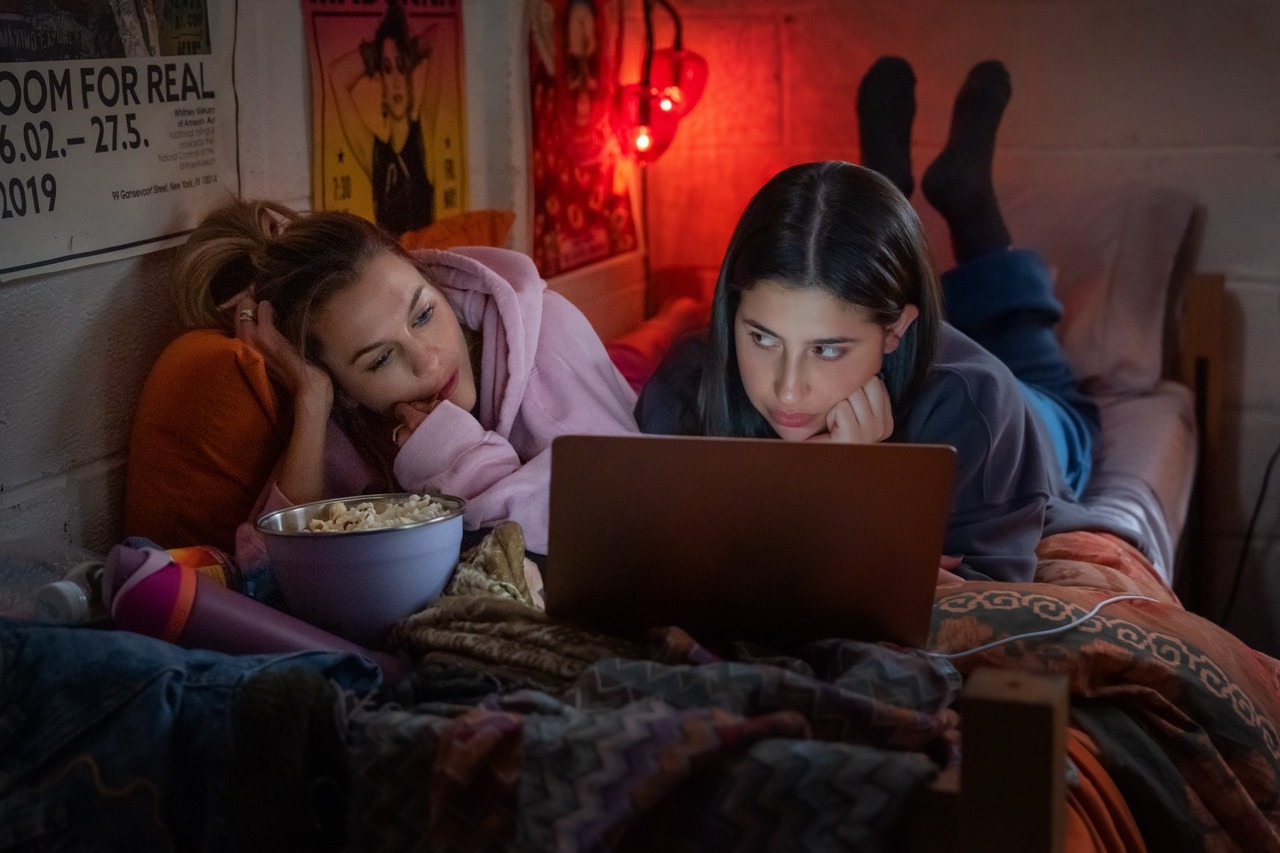

Women deserve comedies that authentically depict the depth of their friendships.
I met my current roommate the same day I moved into my freshman year apartment. Like many freshmen, I was apprehensive to leave my family and hometown friends behind — and starting college in London on a different continent didn’t make that transition any easier. Enter: Kaajal, my next-door neighbor.
Prior to move-in, we had barely talked, and I knew nothing about her that wasn’t immediately visible from her Instagram profile. By the third week of school, I considered her one of my closest friends. We explored the London cafe scene, navigated the Tube and practically shared a closet. I was incredibly lucky to have found my partner in crime so early; we’re now renewing our lease for senior year.
“Roommates” features a similar meet-cute between the titular duo, albeit with a less happy ending. Produced by Adam Sandler’s Happy Madison Productions, the film centers on two college freshmen, Celeste (Chloe East) and Devon (Sadie Sandler), who begin the year as unlikely friends — and end as sworn enemies. According to my roommate, with whom I watched the movie, “Roommates” was pure ragebait.
In typical Adam Sandler fashion, the film is a goofy romp, but Celeste treats Devon progressively worse and worse throughout the film. First coercing Devon into paying for their Panama City spring break trip and then secretly hooking up with Devon’s crush, Celeste retaliates every time Devon attempts to stand up for herself — even when she simply initiates a confrontational conversation about their unequal dynamic.
Perhaps the reason I found “Roommates” mildly refreshing, ragebait and all, is because it captured a real platonic experience. While the film often evoked such bad secondhand embarrassment that I had to seek comfort from my decidedly non-evil roommate, there was some truth to the cringeworthy story, too.
All the women I know have had friends — and friendship breakups — that permanently shape who we are. The movie recounts the all-too-relatable experience of losing a friend who you thought would be a bridesmaid amid the challenging backdrop of adapting to college life. These relationships and subsequent fall-outs are just as emotionally layered as our romantic partnerships, despite the way film and TV shows often focus on the latter.
Freshman year is a breeding ground for “frenemies,” or friends-turned-enemies, but Hollywood has yet to explore that dynamic in depth — although the music industry is rife with diss tracks about these strained relationships.
A staple of the “Roommates” soundtrack is “Girl, so confusing” by Charli xcx, which allegedly comments on Charli xcx’s own former feud with Lorde that was subsequently resolved with the artist appearing on a remix.
“Yeah, I don’t know if you like me / Sometimes I think you might hate me / Sometimes I think I might hate you / Maybe you just wanna be me” is an apt summary of Celeste and Devon’s friendship.
Despite my two-star Letterboxd rating, I almost enjoyed watching the film. Seeing it with my roommate made us both appreciate how lucky we were to be hallway neighbors as freshmen. I don’t know how I would have navigated college without her or dealt with a Celeste of my own. Although “Roommates” didn’t accurately depict our friendship, I’m sure it nailed someone else’s nightmarish freshman year experience.
But on that note, I can point to very few movies that accurately portray the dynamic between my roommate and me, or that of my other friendships. “9 to 5” (1980), “Pitch Perfect” (2012) and “Bridesmaids” (2011) are hilarious movies about women’s friend groups, but they’re outliers. In these films, romance doesn’t drive the narrative, and the women characters all have complicated relationships with each other; there’s real conflict, not just pettily forced competition.
The rest of the industry — and the rest of the comedy genre — consciously deprioritizes these thoughtful portrayals of women’s friendships. Studio executives often deem these dynamics less interesting than a rom-com or a buddy comedy starring two men, which is precisely why fleshed-out, on-screen depictions are so important.
Movies like “Booksmart” (2019), “Lady Bird” (2017) and yes, even “Roommates” all show young women platonically fighting and making up, just as they do in real life. Not every argument is handled gracefully, but the characters always hear each other out. These films portray girlhood as it is, rather than striving to make the experience palatable to a broader audience.
For many young women, layered representations of their real-life struggles are a lifeline and a reminder that others have gone through the trials and tribulations of adolescence and come out the other side. These formative years are often more characterized by our platonic relationships than our romantic ones. As much as I love romantic comedies, is it too much to ask for funny movies about platonic love between women, too?
“Roommates” doesn’t get five stars for its storytelling, but the film deserves credit where credit is due. It would be all too easy for the movie, in its use of hyperbolic comedy, to draw on stereotypes in its depictions of Celeste and Devon, but the characters themselves are three-dimensional — even if they’re annoying. That doesn’t make “Roommates” groundbreaking, but unfortunately, that does make the film leaps and bounds ahead of others in the genre.
Even though “Roommates” was an admittedly painful watch, I can appreciate it for what it is: a film centered around two college girls who drive their own narrative. Portraying the complexities of women’s friendships gives voice to an entire realm of stories that have barely been touched.
Whenever Hollywood’s ready to start treating women’s friendships as more than just a background plot device, hopefully they’ll be a little funnier than “Roommates.”
Fiona Feingold is a junior writing about women in the entertainment industry in her column, “Femininomenon,” which runs every other Friday.