World Elder Abuse Awareness Day observed on campus
The National Center on Elder Abuse at Keck School of Medicine raised awareness about ageism.
By DUO YANG
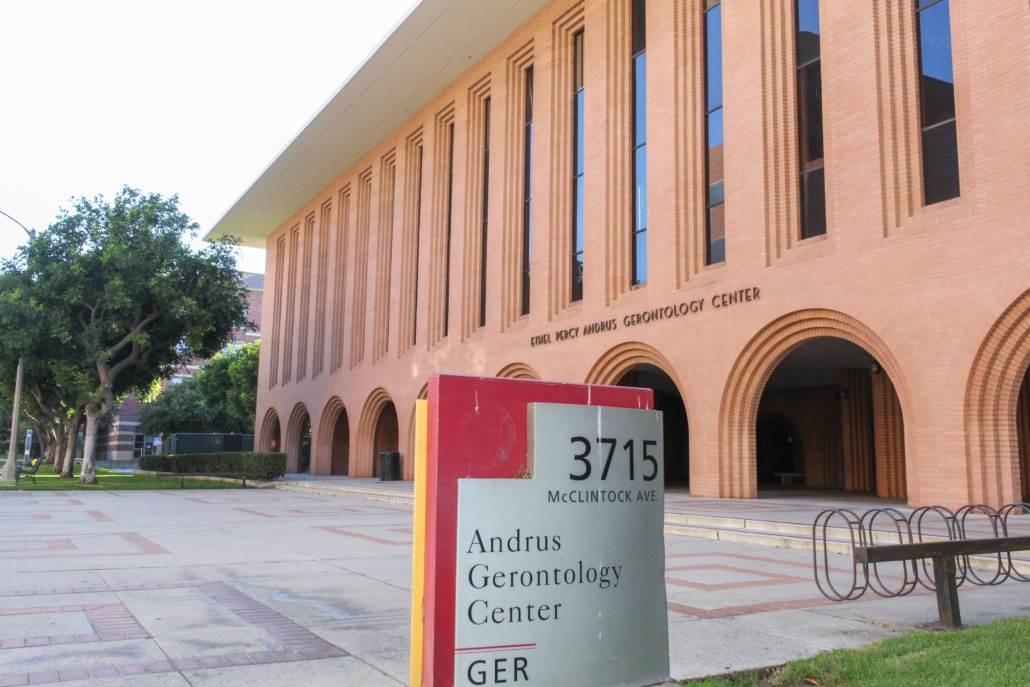

The National Center on Elder Abuse at Keck School of Medicine raised awareness about ageism.
“Ageism is the last socially accepted form of prejudice,” said Paul Nash, an instructional professor of gerontology, in an interview with the Daily Trojan.
The topic of ageism was brought up at an informational pop-up booth set up in front of Tommy Trojan on Tuesday afternoon by the National Center on Elder Abuse at the Keck School of Medicine. The booth was present in anticipation of World Elder Abuse Awareness Day, coming up on June 15.
The NCEA defines abuse as an “intentional act or failure to act that causes or creates a risk of harm to an older adult.” Physical, sexual, emotional, psychological or financial abuse all fall under the umbrella of elder abuse, as well as neglect and self-neglect.
Kimmy Moon, deputy director of the NCEA, said the event’s purpose was to raise awareness of elder abuse and how people can prevent it. According to Moon, elder abuse is frequently overlooked.
“We just live in a very youth-oriented society that focuses a lot [on] child abuse or intimate partner violence, but not so much about the topic of older adults and abuse,” Moon said. “[People] don’t even think that could happen.”
Michael Xu, a technical project assistant of the NCEA, said that while he has family and friends who work in healthcare, he did not know what elder abuse was until he got involved with the center. Xu said that many cases are undetected, and that some older adults don’t understand that their situations are considered elder abuse, attributing circumstances to just being the way things are between them and their family.
“There could very well be an older adult in your life that [has] received or is experiencing abuse,” Xu said. “[As a caregiver], there are ways that you can be even perpetrating elder abuse towards [your family] without knowing yourself.”
The NCEA’s flyers called the impacts of ageism “adverse” and “insidious,” and said it is a “growing concern that impacts everyone across the age continuum.” Impacts of elder abuse include increased fear and anxiety, social isolation, physical ailments, neglected medical needs and financial losses, according to the flyers.
Moon said one of the most overlooked forms of elder abuse is sexual abuse — the issue that pulled Moon toward working for the cause in the first place. She said she encountered the topic while taking a public health class in college, and was stunned by it.
“There’s just an initial shock when people hear about that topic, thinking that it could just never happen to an older person,” said Moon. “That’s an example of how the larger forces that play, like sexism and ageism, can get people to not even think about the issue, and, more importantly, almost create a culture that tolerates the issue.”
Abuse is deeply rooted in the larger issue of ageism, according to NCEA resources, which describe it as ingrained in the cultural fabric and perpetuated by public discourse and media depictions every day.
Nash said the issue of ageism is compounded by the fact that people are often unaware that ageism is a serious issue or how to recognize it.
“If I ran down the street and I started saying something sexist or racist, somebody would challenge me. But if I said something ageist, people might just laugh,” Nash said. “How many birthday cards do you see that make racist jokes, as opposed to how many do you see that make ageist jokes?”
When asked why people do not think about how ageism could one day impact them, Nash said that ageism often uses a process of othering to create a protective barrier that discriminates against people older than them but not against themselves.
“For a woman to perpetuate sexism would be counterintuitive and counterproductive, but for anybody to feed into ageism, [they] just have to engage in othering,” said Nash. “What you’re doing is not just creating that ageist narrative, but you’re also creating a gap between you and what you consider older people. So it’s almost protective in that sense.”
Although combating ageism is hard, Nash said taking actionable steps is more than possible at both the collective and individual levels.
Xu said that NCEA has considered ways for college students to take action, recognizing that many live in environments where they are surrounded only by peers of the same age.
“One of the sayings that we often have is that ‘Everyone is aging,’ so all of us will one day become an older adult,” Xu said. “There’s a lot of opportunity to have conversations more as a college student, maybe having more conversations with your grandparents or even [with] your own parents to just be aware of the common signs of elder abuse.”