How and why the LA population is on the decline
Less immigration and the aging population has worsened county-wide worker shortages.
By RUBY MATENKO
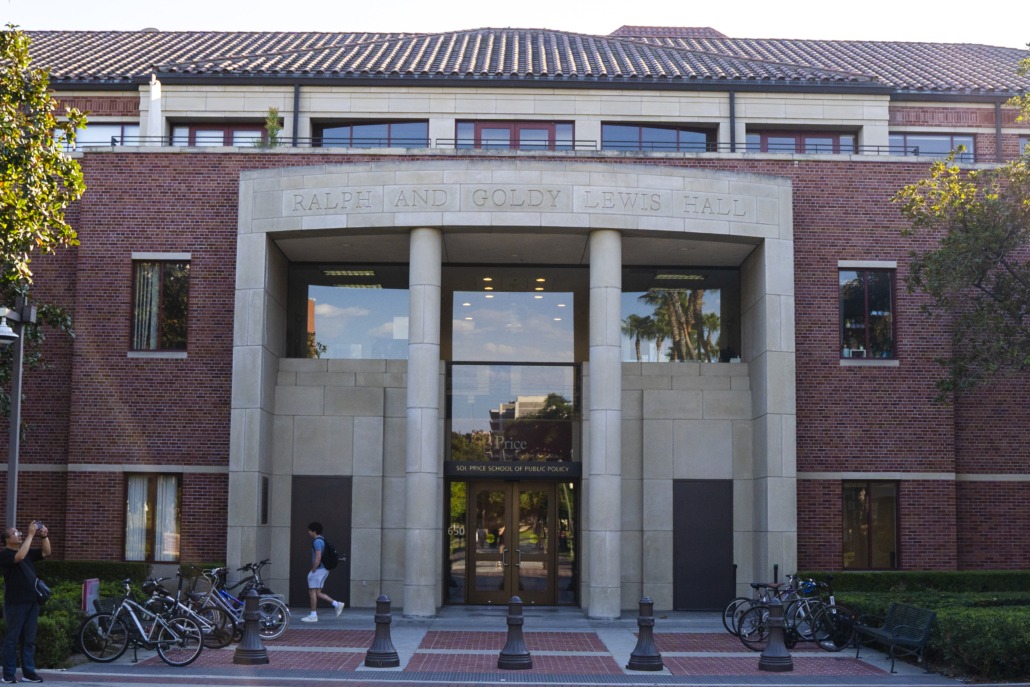

Less immigration and the aging population has worsened county-wide worker shortages.
Under the weight of high living costs, declining immigration and aging residents, the population growth of Los Angeles seems to be slowing, according to a report from the United States Census Bureau. In March, the Census Bureau reported that slow growth is hitting the nation’s largest counties hardest — including L.A., which ranks as the most populous county in the U.S.
Dowell Myers, professor emeritus of public policy, said that, according to the Census Bureau, L.A. is not rebounding as expected following the COVID-19 pandemic. L.A. County was estimated to have more than 10 million residents in 2020, but fell to just under 9.7 million as of 2025, according to the Census Bureau. Slowing population growth reflects a decline in immigration and consequences in the business and housing markets.
Despite California’s many draws, Eric McGhee, policy director and senior fellow at the Public Policy Institute of California, said that the recent population shift is “profound.”
“The thing that makes California a strange place — and L.A. is no exception — is that it’s not like people don’t want to live here,” McGhee said. “It’s a great place to live if you can manage to live here, but it’s expensive, and that’s pushing out a lot of people who are lower income. They just can’t find a way to make it work.”
Declining population slows immigration, workforce
Currently, more people are migrating out of the U.S. than migrating in, a phenomenon which McGhee called “domestic out-migration.” In fiscal year 2025, the net gain of international migration in California was 126,500 people, about half of the previous year, according to the PPIC.
“If we don’t have a lot of immigration, then that domestic out-migration, which has been a real net negative for California for several decades, it really starts to take a bite,” McGhee said.
Immigration has historically represented a large portion of the state’s population. Currently, California is home to almost 11 million immigrants, which makes up more than a quarter of the state’s population, according to the PPIC.
As a result of more U.S. Immigration and Customs Enforcement raids and hostile immigration policy under the Trump administration, there has been a “chilling effect” in immigrant communities, according to the California Budget & Policy Center. The chilling effect involves pervasive fear, leading to immigrants avoiding government services or opting out altogether, leading to less contribution of these groups to daily society.
Due to the increased threat of deportation, those in mixed-status families avoid applying for jobs, traveling or engaging with public services to avoid drawing attention to undocumented relatives, according to the Center.
“That impacts the workforce severely, and it also impacts the housing market, because immigrants require apartments or homes they might purchase,” Myers said.
Myers also said that immigrants are crucial for home construction, estimating that at least 40% of L.A.’s workers in the construction trades are immigrants.
This has lead to a scramble for workers, Myers said. Since unemployment rates are low — decreasing in Los Angeles County to 5.4% in March 2026 — and it is difficult to find workers in L.A.’s older population, it becomes “impossible” when pulling immigrants out of the equation as well.
Slowing population growth not ‘cause for panic’
Still, some experts are not convinced the state is in a crisis yet. Emily Smith-Greenaway, a professor of sociology and spatial science, said that while L.A. has always been highly dependent on international immigration, and recent federal policies have significantly slowed its pace, the reality of L.A.’s population change is layered.
“This is not this mass exodus of people [where] everyone wants to flee L.A.,” Smith-Greenaway said. “We’re not there. It’s much more nuanced than that. … I don’t think it’s cause for panic.”
McGhee added that if population decline became significant enough, California could be faced with a unique circumstance to get people back, with housing prices falling due to the cycle of supply and demand.
“Once you have enough people leave, the cost of housing will come down,” McGhee said. “L.A. is a sunny, beautiful place with nice beaches, and it’s still the kind of place where people want to live, if they can.”
Myers said that he believes the current housing crisis is most likely going to be a key issue for people reaching their 30s. He said young people in general are the most likely to come to L.A., and also the ones most likely to leave.
“By the time people cross age 30, typically, they’re partnered up, and they want to find their own place, and it’s hard to find one that’s affordable,” he said. “It’s those people — especially those who are having kids, and they need more space — they are the ones who are most likely leaving and looking for more affordable places.”
Aging population disrupts ‘dependency ratio’
Smith-Greenaway added that declining populations also tend to be rapidly aging populations, with more older adults present. As young people leave, the city is left with older adults who don’t contribute as much to the economy, a problem that Smith-Greenaway said will require creative policy solutions.
“Against this backdrop of a declining population that often receives most of the attention, what we need to shed more light on is the fact that L.A. County’s population is aging at a pace that I think will have very real economic and social consequences,” Smith-Greenaway said.
The aging population creates a problem with the “dependency ratio,” which is the number of people who do not work or dependents, compared to the number of adults who work, McGhee said.
“We’re working on a report right now that is looking at the growth in labor force participation among older workers,” McGhee said. “But while labor force participation is up among older people — it has been higher over the last 15 years or so, 20 years — it’s just not enough to make a huge dent.”
Younger people who are starting to engage in the workforce and housing markets could be the solution to these problems. According to Myers, potential solutions could involve making college expenses more affordable, since he believes student loan debt is holding back young people across the U.S.
“Young people know how tough the problem is, but they don’t realize how much everybody else depends on them,” Myers said. “[We have to] make some adjustments now to help them establish their careers and establish their lives.”
Smith-Greenaway believed that improving the quality of life could be a potential answer for these changes in population growth.
“As a demographer, we are in the business of enumerating and quantifying, but I think the most successful policies will work to qualitatively shift people’s lives and really try to improve the day-to-day experience for Angelenos and Californians,” Smith-Greenaway said.