It’s okay not to know what’s going on in your head
Rejecting binary labels regarding mental health is pivotal for more nuanced care.
By ARMAND SJARIFFUDIN

Rejecting binary labels regarding mental health is pivotal for more nuanced care.
As human beings, we’ve been hardwired to be at odds with uncertainty. The very concept seems frightening because it goes against a baseline need: understanding what’s going on around us.
As a young child, I gravitated towards psychology because I thought the field rejected this notion of uncertainty and reclaimed agency by helping us understand ourselves better.
I interpreted diagnostic tools as the ultimate extension of this idea. These tools provided an answer to human uncertainty. Nonetheless, as I wrapped up my first year of college, I began to understand the problems that come with unflinchingly following this ideal.
In 2025, several psychologists conducted a literature review on the effect of medical classifications for mental health. They drew on several years of empirical studies and conceptual papers to uncover the harmful implications of diagnostic labels.
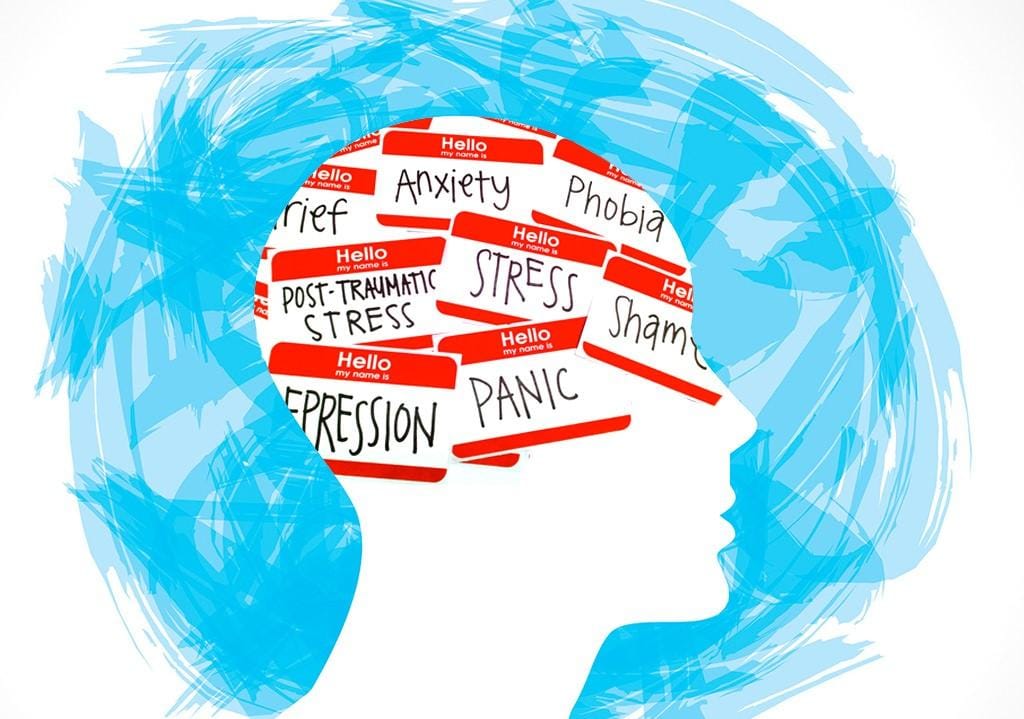
Aside from societal stigma around mental illness, other considerations are often overlooked due to these simplistic designations. Labels are dangerous because they can feel all-encompassing.
People often disregard human complexities in favor of these labels, which often put individuals in unfair boxes without being given a chance to be properly understood.
The study expanded on this concept, showing how psychiatric labels often lead to the misplaced belief that diagnostic labels are clear causes of individual experiences instead of what they should be: descriptive categories based on observed symptoms.
Patients and clinicians alike can begin to associate mental health struggles with labels that appear neatly treatable through standardized forms of care. This often leads them to overlook individual factors that are pivotal in proper healthcare, such as brain chemistry, genetics and personal histories.
Relying on psychiatric labels as clear-cut solutions to mental health can lead to harmful outcomes. Individuals can feel pressured to accept support that is inadequate or abandon efforts of support altogether, outcomes that have become increasingly common among today’s youth.
Additionally, psychiatric labels are often internalized, shaping one’s identity and self-esteem through the confines of what they think they can achieve despite their supposed limitations. A person’s journey to understanding their mental health becomes one born out of shame and fear, instead of out of acceptance and a need to understand the complexity that exists in everyone.
In 2021, in a paper by Leslie Adams, a professor and researcher at Stanford, and colleagues, they revealed an unintended consequence of using standardized categories in psychiatric care: cultural complexity becomes flattened, and individuals are not given the care they need due to symptom presentation that deviates from conventional norms.
It isn’t just the use of psychiatric labels that is harmful, but the backdrop from which they function. Labels reflect an imperfect system that breeds division, whether through the cognitive traps they encourage or their roots that disregard groups that often go unnoticed.
This problem extends to the very foundations from which diagnostic labels emerged. The Diagnostic and Statistical Manual of Mental Disorders, a handbook used to diagnose disorders, has an extremely limited scope, with its roots only looking at American norms and behavioral patterns.
In that same paper, Adams and the other researchers confronted this foundational bias directly, analyzing how race could play a part in demonstrating symptoms of depression.
Researchers used concept maps, or designations for different domains, where Black men could demonstrate evidence of depression. Comparing this to existing criteria in the DSM showed that many depressive symptoms in Black men actually go unnoticed in current depression scales.
In the context of USC, the effect that diagnostic labels carry is more exaggerated due to USC’s highly diverse student body. The use of standardized diagnostic tests only bolsters the unsung barriers to equal access to culturally competent care.
Nevertheless, this highly diverse student body may be the very solution to administering higher-quality care. Embracing this multiculturalism through counseling and healthcare classes can lead to pivotal changes beginning in the classroom.
These changes would introduce the nuances of mental health and how it can manifest in different cultural contexts, thereby directly removing the need to use rigid labels to explain certain symptoms.
Human beings will always be at odds with uncertainty. It forms the root of so many of our innate fears, but it also provides us with the clarity that we don’t have all the answers. A new goal of psychology shouldn’t be to eliminate uncertainty, but to learn how to care for people responsibly in spite of it.